
OpenClaw 2026.3.8: backup + provenance upgrades
OpenClaw v2026.3.8 adds backup/verify commands, provenance receipts, and web search improvements for safer daily agent
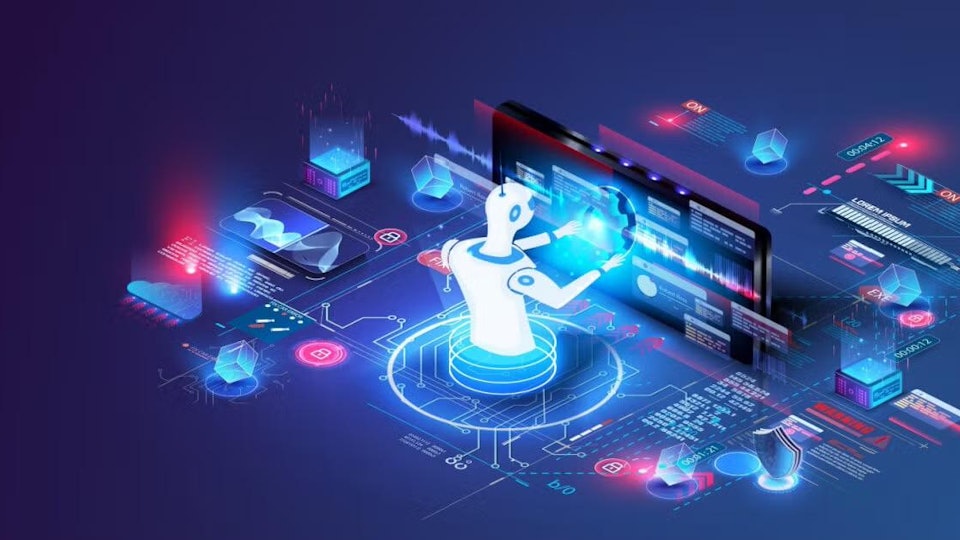
The rapid advancement of artificial intelligence has sparked intense debates about the future of various professions, with software programming being one of the most scrutinized fields. As AI-powered coding tools become increasingly sophisticated, a critical question emerges: Will fully automated programming eventually make human programmers obsolete?
The Current State of AI in Programming
Today’s AI programming assistants, such as GitHub Copilot, ChatGPT, and other large language models, have demonstrated remarkable capabilities in generating code, debugging, and even creating entire applications from natural language descriptions. These tools can write functions, suggest optimizations, and help developers navigate complex codebases with unprecedented efficiency.
However, current AI systems still require human oversight and direction. They excel at pattern recognition and can generate code based on existing examples, but they lack the deep understanding of business requirements, user experience considerations, and system architecture decisions that define excellent software development.
The Promise of Fully Automated Programming
Fully automated programming represents the theoretical endpoint where AI systems can independently:
Several factors suggest we may be moving toward this reality:
The Reality Check
Despite these advances, several significant challenges suggest that the complete automation of programming remains distant:
Creative Problem Solving: Programming often requires innovative solutions to novel problems. While AI can optimize existing patterns, breakthrough thinking typically requires human creativity and intuition.
Understanding Context: Successful software development requires deep understanding of business contexts, user needs, and organizational constraints that extend far beyond technical implementation.
Ethical and Social Considerations: As software increasingly impacts society, human judgment becomes crucial for making ethical decisions about what to build and how to build it responsibly.
System Integration: Modern software exists within complex ecosystems of existing systems, legacy code, and evolving requirements that require nuanced human understanding.
The Evolution of the Programming Profession
Rather than disappearing entirely, the programming profession is likely to evolve significantly:
Higher-Level Focus: Programmers will increasingly focus on system design, architecture decisions, and strategic technology choices rather than writing individual functions.
Human-AI Collaboration: The most effective developers will be those who can work seamlessly with AI tools, using them to amplify their capabilities rather than replace their thinking.
Specialized Expertise: Demand will grow for programmers who specialize in areas requiring deep domain knowledge, such as cybersecurity, AI ethics, and complex system integration.
New Roles: Entirely new roles may emerge, such as AI prompt engineers, human-AI interface designers, and AI system validators.
Implications for Hong Kong and the Region
For professionals in Hong Kong, Singapore, and Malaysia, this technological shift presents both challenges and opportunities:
Conclusion
While fully automated programming remains a possibility for the future, the complete disappearance of programmers is unlikely in the foreseeable future. Instead, we’re entering an era of augmented programming, where human creativity, strategic thinking, and domain expertise become even more valuable when combined with powerful AI tools.
The key to thriving in this evolving landscape is not to compete with AI, but to learn how to collaborate with it effectively. Programmers who embrace this partnership and continue to develop uniquely human skills—creativity, empathy, ethical reasoning, and strategic thinking—will find themselves more valuable than ever.
As we navigate this transformation, the role of organizations like the AiX Society becomes crucial in helping professionals understand, adapt to, and shape the future of human-AI collaboration in technology.
OpenClaw v2026.3.8 adds backup/verify commands, provenance receipts, and web search improvements for safer daily agent

NVIDIA CEO Jensen Huang declared OpenClaw the most important software release ever, as the project
OpenClaw 2026.3.7 adds context-engine plugins, durable channel bindings, and web-search onboarding improvements—plus a gateway auth
HKOEA Consultancy
Licence No. 59684
© 2025 Artificial Intellegence Application Research Society. All rights reserved
by Originals Group – Hong Kong, Malaysia, GBA