Do You Really Know How to Use AI? Or Do You Only Know How to Type into a Chat Box?
Recently, I have been recruiting, and what I am looking for is not just someone
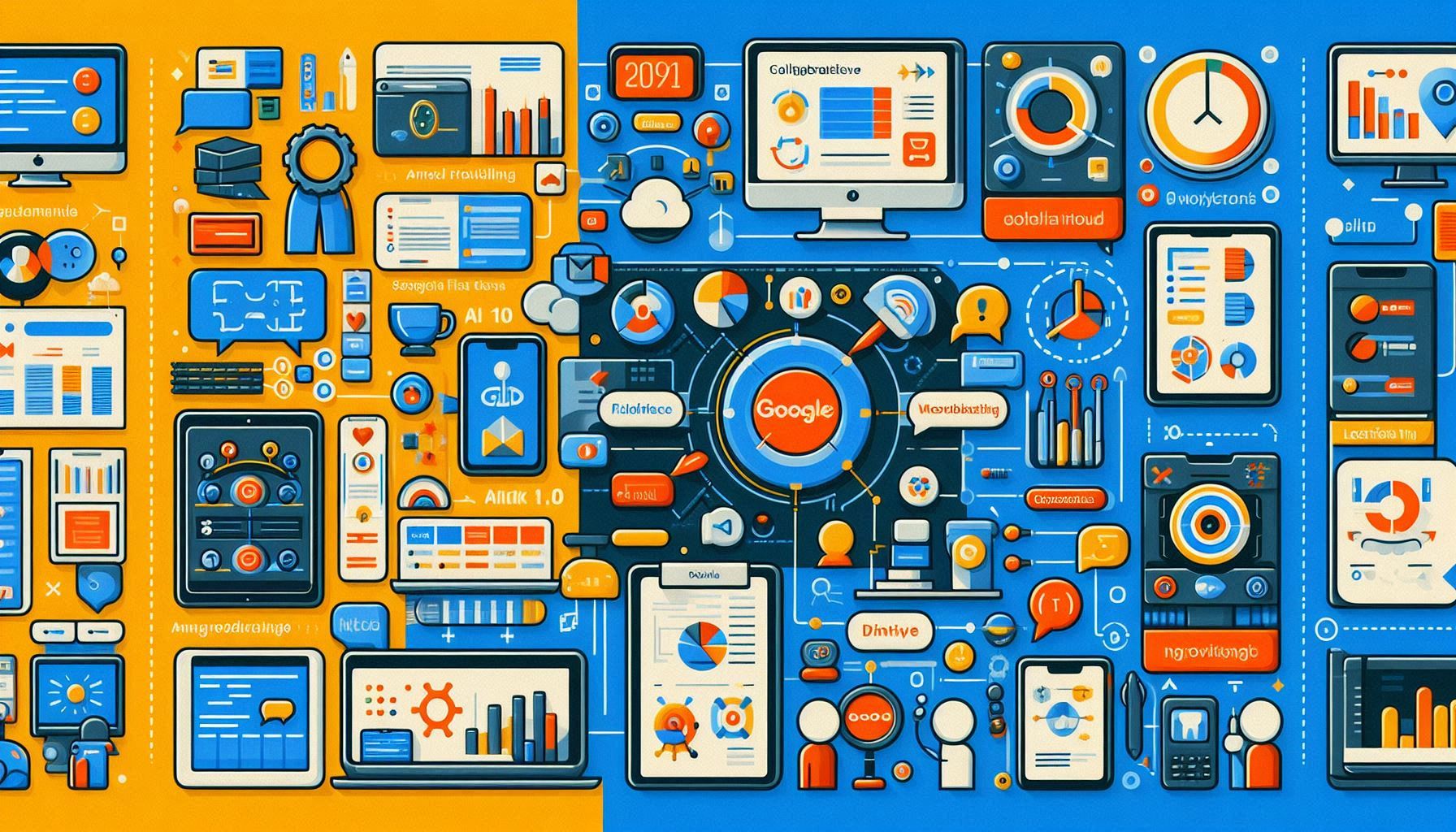
Enterprises today increasingly consider productivity platforms not just as “email + docs” but as end-to-end collaboration and AI ecosystems. On one hand, Google Workspace is embedding its flagship large-language‐model (LLM) Gemini into Gmail, Docs, Sheets, Meet and more. (Google 支援) On the other hand in China (and greater-China enterprise landscape), DingTalk has evolved from a messaging/collaboration “super-app” into a generative-AI enabled platform powered by Qwen/Tongyi models. (阿里雲) For your world—insurtech, health services, enterprise transformations—these two platforms illustrate how AI can shift not only productivity tools but also organisational capability.
In what follows I’ll compare across five major dimensions: (1) AI integration & capabilities; (2) ecosystem & extensibility; (3) enterprise readiness (security, localisation, compliance); (4) strategic fit & geographic/regional nuance; (5) risks, limitations & future outlook. Then I’ll offer a summary with my viewpoint (and how you might apply some of these learnings).
Google has embedded Gemini into Workspace apps: in Gmail, Chat, Docs, Drive, Slides, Sheets and Meet. (Google 支援) For example: you can type “@gemini” in a Chat conversation and get summarisation, next-steps, key decisions. (Google Workspace) Gemini supports multimodal inputs (text, image) and higher-level tasks: research, data-analysis, coding, building “Gems” (specialised assistants) in Workspace. (Google Workspace) From a productivity lens: automatic intelligent replies in Gmail (tailoring to your tone/context) are being rolled out. (blog.google) It also has enterprise-grade protections: e.g., data stays within your org; admin controls; same region/policy structure as standard Workspace. (Google 支援)
In short: Google is embedding generative-AI deeply into the ordinary workflows of docs, mail, chat so that AI doesn’t feel “some separate tool” but part of the daily fabric.
DingTalk has integrated the large-language model Qwen (from Alibaba Cloud) and Tongyi Qianwen to power its AI-assistant capabilities. (阿里雲) Key features: real-time transcription of meetings, automatic summary, to-do lists, document drafting from scratch. (阿里雲) Multimodal: DingTalk’s AI can process images, videos, and large chunks of text (up to 500 pages) via its agent-marketplace. (阿里雲) It supports a marketplace of AI agents—over 200 productivity/industry-specific agents (e.g., legal assistant, approval assistant, sales-insights assistant). (阿里雲) For enterprises in China/international Chinese-speaking context this gives a robust set of scenario-specific bots within one platform.
Google supports “AI Studio” for developers, letting Workspace users and developers build apps on top of Gemini. (Google AI for Developers) Gemini is part of Google’s broader strategy: not only docs/mail/chat but also integration with Sheets, Slides, AppSheet (no-code apps), image/video generation, coding. (Google 支援) For organisations, this means extensibility: you could build custom assistants, integrate domain data (e.g., your insurtech system) and have them operate inside Workspace. From your angle: if you are consulting an accounting firm (as you are) about company-secretary role enhanced by AI—the ability to plug in your domain data (legal documents, policy universe) into a Workspace-AI stack is compelling.
DingTalk offers a low-code platform and a marketplace of AI agents built for specific enterprise workflows. (阿里巴巴集团) It supports “upload image → extract data”, “video summarise”, “approval workflows” and “industry-specific” (legal, sales, admin) bots. Alibaba emphasises: by end 2023 DingTalk had integrated Qwen into 20+ product-lines and 80+ use-cases. (阿里巴巴集团) For your SoSure AI project (insurtech + health services) the appeal: you may need custom agents for policy handling, health-risk summarisation, regulatory compliance. DingTalk’s agent ecosystem offers many plug-ins out-of-box (especially in the Chinese language/regional context).
Google emphasises enterprise-grade data protection: when your org uses Gemini in Workspace, your data stays within your domain; prompts/content not used to train external customer models; existing protections (data region, DLP, admin controls) apply. (Google 支援) As Google introduces more AI features (e.g., Gemini Live) there are also emerging risks: recent reports flagged prompt-injection/phishing risks when AI summarises Gmail threads. (TechRadar) For a global enterprise or consulting firm, the maturity, documentation, integration with enterprise admin controls are strong positives.
DingTalk is widely used in China’s enterprise segment (700 million users by end 2023) and Alibaba emphasises digital-transformation at scale. (Alizila) In China/regional context, compliance with Chinese data-localisation, cloud regulation, ecosystem integration (e.g., with Alibaba Cloud) may be an advantage. That said: For multinational/regulated sectors (e.g., insurance, health) you’ll need to verify data handling, cross-border flows, model governance, auditability of third-party agents. Not all enterprise workflows may yet meet the same level of transparent guarantee as global Western vendors—but the pace of innovation is high.
Google Workspace is designed for global enterprises, multi-language support, cloud-native. For firms operating globally (US, EMEA, APAC) the advantage is standardisation. DingTalk is deeply rooted in China/Greater Bay Area enterprise ecosystem. For your Hong Kong/GBA context (your SoSure AI project, your Chinese-language slides, etc) the local alignment may yield natural synergy. Also Qwen’s Chinese-language strength is notable. (GrabOn)
In insurtech/health services you need: workflows (policy drafting, claims processing, summarisation), compliance/regulation (health-data, risk models), collaboration (agents, underwriters) and often multilingual/multijurisdiction dimension. Google’s Workspace + Gemini might give you global scalability and broad productivity AI (Docs, Sheets, Slides, Meet) with extensibility. DingTalk + Qwen may give you regionally-fit productivity + specialised agents (e.g., approval workflows, legal assistant) faster out-of-box for Chinese-language enterprise. If you are working with Hong Kong insurance firms that have both Chinese and English operations, you might even consider a “hybrid” strategy—choose the platform aligned with each region and integrate via APIs or dual-stack. Given your goal to become CAIO for AI management and strategy: It’s worth mapping for your clients (accounting firm, insurtech) which stack gets them fastest to business value (MVP) vs. global standard.
Google’s partner ecosystem is huge; many enterprises already use Workspace so embedding AI there may feel incremental. DingTalk’s agent-marketplace offers more plug-and-play for Chinese-language enterprise workflows—important for GBA regional clients. Given you’re in Hong Kong and operate across China/overseas elites, being fluent in both worlds (Google global + China local) is an advantage.
Here’s a table-style summary:
Dimension Google Workspace + Gemini DingTalk + Qwen/Tongyi Core Strength Global-scale productivity platform; deep integration with Gmail/Docs/Sheets; strong enterprise security/compliance China/regional enterprise super-app; workflow/agent marketplace for enterprise scenarios; Chinese-language strength Extensibility High via AI Studio, custom “Gems”, broad multimodal tasks Strong for pre-built/industry-specific agents, low-code platform, workflow templates Suitability for Insurtech/Health (HK/GBA) Excellent for global operations, English/Chinese bilingual firms, regulator-aware global clients Very strong for GBA/China-language operations, quick deployment in Chinese enterprise environment Risks Prompt-injection risk, advanced features rolling out gradually, data privacy governance must be checked Regulatory/data-localisation risk (cross-border), vendor lock-in, variable maturity of some features Strategic Advice If your client has global footprint, mix of languages, regulatory complexity → lean Google; build domain data into Workspace-AI workflows If your client is China-GBA based, needs rapid deployment in Chinese workflows, wants plug-and-play agents → lean DingTalk; focus on scenario templates
Given your role—and your project “SoSure AI” in Hong Kong/Greater Bay Area with bilingual, cross-border aspiration—my recommendation would be: adopt a hybrid mindset. Pick the platform that aligns with the region and language of the workflow you are automating. For example:
Putting on my nerd-consultant hat: the real game here isn’t which platform is “better” per se (they’re both very good), but how you embed them into your value chain. Are you using the AI to eliminate repetitive tasks (meeting notes, email drafts)? Are you building domain-specific assistants (insurance policy drafts, health risk summaries)? Are you confident about data governance and compliance as you scale?
In your niche—AI strategy, e-commerce, insurtech—clients are looking for transformation: “We fixed our CRM, now we need AI-powered workflow to respond to leads faster, to summarise claims, to identify health-risks and to integrate policy underwriting with customer data.” Either platform could serve, but the differentiator will be workflow design, domain adaptation, and change-management.
Recently, I have been recruiting, and what I am looking for is not just someone
Not long ago, as the host of a Metro Broadcast radio programme, I sat down
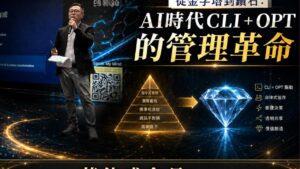
The reaction made me reflect: what people care about most is not how powerful AI
HKOEA Consultancy
Licence No. 59684
© 2026 Artificial Intellegence Application Research Society. All rights reserved
by Originals Group – Hong Kong, Malaysia, GBA