Do You Really Know How to Use AI? Or Do You Only Know How to Type into a Chat Box?
Recently, I have been recruiting, and what I am looking for is not just someone
Originally published in Chinese on HK01 on 2025-11-17 08:00 | By Michael C.S. So | AiX Society
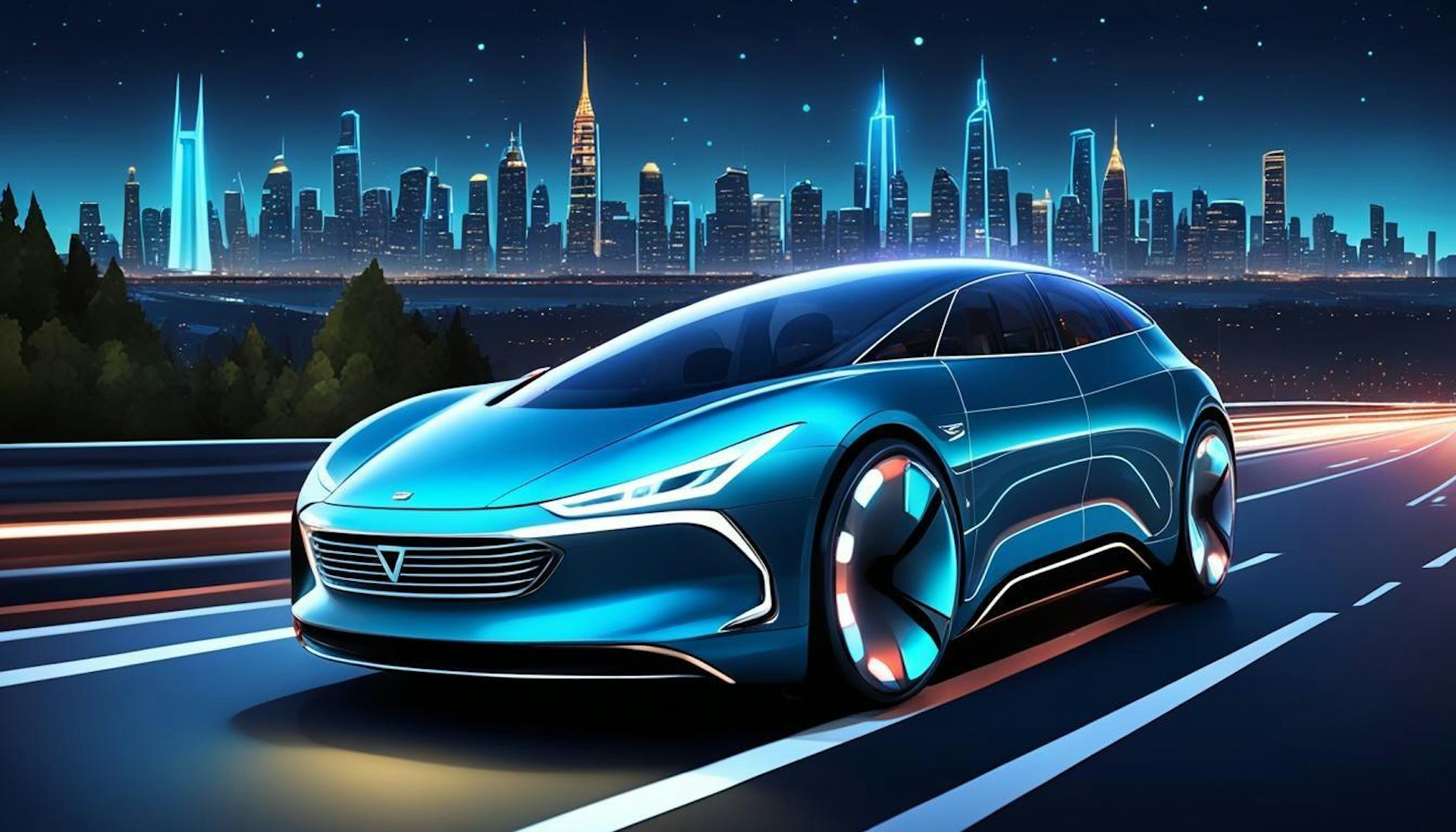
Over the past few years, as I’ve been restructuring various business units and developing new directions, I’ve discovered a common force quietly transforming the underlying logic of every industry — AI-First thinking. It’s not merely a tool upgrade; it’s a fundamental rewrite of how businesses operate. When I redesign company structures, product development, and service models, one company always comes to mind: Tesla. It’s not just synonymous with electric vehicles — it’s a company that uses artificial intelligence to reshape industrial and market rules. Elon Musk’s strategy shows us that “AI-First” doesn’t mean sprinkling a bit of AI onto your products. It means letting AI permeate the entire nervous system of the enterprise, becoming the starting point for every decision and innovation.
In Tesla’s world, every car is more than a means of transportation — it’s a learning node. Millions of vehicles worldwide transmit driving data, imagery, and environmental information back to Tesla every day. This data is analyzed and used for training by Tesla’s Dojo supercomputer, feeding the FSD (Full Self-Driving) system.
Dojo’s design goal isn’t to improve a single feature — it’s to give the entire enterprise the ability to “self-evolve.” Like the human brain, it builds patterns from massive perceptual data, predicts behavior, and corrects decisions in real time. In other words, Tesla isn’t building cars — it’s nurturing a learning organism. This kind of scaled intelligent feedback loop leaves traditional automakers far behind. Toyota and BMW still rely on external chip suppliers like NVIDIA, while Tesla develops nearly all its hardware and software in-house. It’s not a car company — it’s an AI industrial entity fueled by data.
This model has completely flipped production logic. In Tesla’s Gigafactory, robotic arms, sensors, and AI models work in tight coordination. Every component and every weld is monitored and fine-tuned in real time. AI has freed the factory from relying on human experience, replacing it with algorithmic evolution to optimize processes. This isn’t automation — it’s “self-learning” — the factory itself learns how to produce the next generation of products more efficiently.
Observing this transformation, I began to realize that if businesses want to remain competitive in the AI era, they can no longer treat AI as an add-on feature. It must infiltrate the central nervous system of the enterprise. AI-First means redesigning the entire operational framework.
Musk’s ambition extends far beyond automobiles. He’s applying the same AI-First thinking to reshape the energy industry. Tesla Energy and SolarCity’s solar and energy storage systems are powered by an AI platform called Autobidder. It automatically predicts electricity demand, regulates battery output, and even trades in real time on the power grid market to maximize revenue.
Energy dispatch used to require manual judgment from engineers. Now AI can complete it in milliseconds. This means energy has become learnable, predictable, and optimizable — energy itself has become “intelligent.”
Musk often says: “The future energy system will operate like a neural network.” What he really means is that energy flows and data flows will merge into one. From solar panels to battery packs, every kilowatt-hour of electricity has its optimal pathway calculated by AI. This is the ultimate form of AI-First in infrastructure.
If Tesla has rewritten transportation on Earth, SpaceX has rewritten the corridors of space.
AI applications at SpaceX mirror those at Tesla: rocket attitude control, fuel adjustments, and vertical landings all depend on real-time AI model calculations. The Starlink satellite network takes it further, using AI to coordinate thousands of satellites, avoiding collisions and optimizing orbits. The underlying logic of these technologies is consistent — autonomous perception, autonomous decision-making, and self-correction.
What Musk is really doing is making AI the common language between Earth and space, building an intelligent ecosystem that spans energy, transportation, and communications.
What truly fascinates me isn’t just how Tesla uses AI to build cars, but how it uses AI to redefine its “market role.”
Musk never intended to make a living by selling cars. Once FSD achieves full autonomous driving, Tesla will enter its next phase — a Robotaxi network. At that point, Tesla owners can let their idle vehicles automatically pick up passengers and generate revenue. AI handles dispatching, routing, maintenance, and revenue distribution.
Every Tesla will become a small company operated by AI. This is an unprecedented model: the product itself becomes a platform, and the user becomes an investor.
The future of Uber, Lyft, and even traditional car dealerships will face disruption by this AI-First business model.
And this is just the beginning.
Tesla’s electric Semi Truck is about to enter the AI autonomous driving phase. When AI can manage fleet dispatch around the clock, monitor energy, and plan routes, Tesla will officially step into the logistics industry. This means it will no longer just provide vehicles — it will directly operate the transportation business.
The significance of this strategy runs deep: transforming from a producer into an operator.
When a company no longer depends on selling products but instead uses AI to manage a tireless system network, the value and cash flow structure it creates will be fundamentally different. In the future, Tesla may simultaneously be the largest energy company, the largest transportation company, and the largest data company. AI enables it to cross industry boundaries, integrate, and extend itself.
Watching Tesla’s trajectory, I can’t help but reflect on my own situation and that of many Asian businesses.
We’re too accustomed to treating AI as a tool for boosting efficiency, yet few of us position AI as the core of our enterprise architecture.
AI-First doesn’t just mean adopting AI — it means letting AI determine how the entire business is designed, how products are made, and how the organization operates.
This requires a cultural transformation at the leadership level: viewing AI as an assistant to decision-makers, not a replacement for employees.
Business leaders should start asking themselves three questions:
First, is my data clean enough, accessible enough, and capable of driving AI models?
Second, are my processes standardized enough for AI to participate in decision-making?
Third, can my product or service be transformed through AI into a platform, rather than just a one-time transaction?
Tesla has answered these questions through action. It placed AI at the company’s core and reshaped the boundaries of products, energy, transportation, and space. Every step it takes reminds us: AI is not about “enhancement” — it’s about “rebirth.”
In my own journey of restructuring businesses and planning new directions, this AI-First philosophy has become the most important reference point. It makes me think not just about how to introduce technology, but how to give the enterprise itself the ability to learn.
If traditional businesses run on experience, AI-First businesses survive on continuous learning.
Tesla teaches us that if a business can learn how to learn, it can evolve endlessly.
AI is not a future trend — it is the present reality.
And Tesla is the most concrete proof of that reality.
Recently, I have been recruiting, and what I am looking for is not just someone
Not long ago, as the host of a Metro Broadcast radio programme, I sat down
The reaction made me reflect: what people care about most is not how powerful AI
HKOEA Consultancy
Licence No. 59684
© 2026 Artificial Intellegence Application Research Society. All rights reserved
by Originals Group – Hong Kong, Malaysia, GBA