

Do You Really Know How to Use AI? Or Do You Only Know How to Type into a Chat Box?
Recently, I have been recruiting, and what I am looking for is not just someone
Originally published in Chinese on HK01 on 2025-07-12 07:00 | By Michael C.S. So | AiX Society
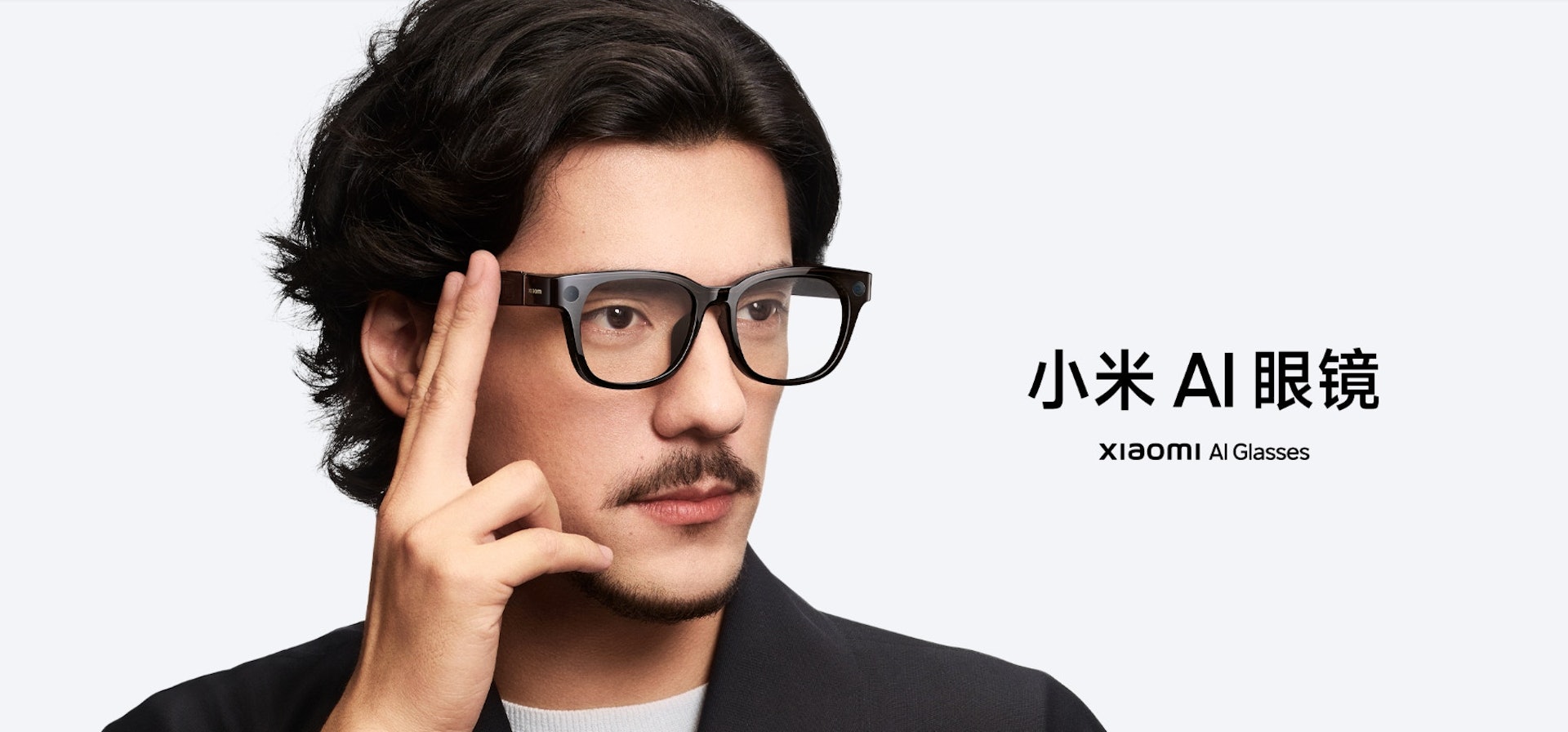
In today’s surging tide of technological innovation, we find ourselves in the midst of a digital revolution led by smart devices. From the bulky desktop computers of the past to the smartphones that are now practically ubiquitous, the form and function of tech products have continuously evolved, profoundly reshaping our way of life. Yet as smart glasses technology matures, a thought-provoking question emerges: could this face-worn smart device upend our existing understanding of personal computing platforms within just five years, replacing the smartphone as the next mainstream digital interaction hub? This article takes a deep dive into the latest technology trends, market conditions, and potential challenges facing smart glasses and smartphones, and explores the likelihood of smart glasses replacing phones based on the latest industry developments.
In recent years, the smart glasses space has been bustling with activity, attracting investment from numerous tech giants and startups alike. This powerful momentum is driven primarily by breakthroughs in two core technologies: artificial intelligence (AI) and augmented reality (AR).
The rapid advancement of AI technology has breathed unprecedented life into smart glasses. Traditional eyeglasses are merely vision aids, but smart glasses can capture surrounding visual and auditory information in real time through built-in cameras, microphones, and various sensors. This massive stream of data, processed by powerful AI chips, can be quickly analyzed and understood, then transformed into valuable information and services for the user. For example, smart glasses can instantly identify objects, faces, and even translate text or speech in different languages. This “what you see is what you get” interaction paradigm elevates smart glasses from simple display devices to intelligent assistants capable of “understanding” the world. The unique first-person perspective of AI glasses makes them an ideal platform for AI applications, delivering more personalized and immersive experiences — an advantage that smartphones struggle to match. The latest market trends show that the deep integration of large AI models with augmented reality technology is driving explosive growth in the smart glasses market, with both online and offline sales booming.
Augmented reality (AR) technology is the core appeal of smart glasses. Unlike virtual reality (VR), which fully immerses users in a virtual world, AR overlays virtual information onto the real world, creating a blended experience. Through the transparent displays of smart glasses, users can see navigation routes, weather information, social media notifications, and even interact with virtual 3D objects within real-world scenes. This seamless blend of virtual and real opens entirely new dimensions for information access and human-computer interaction. Imagine traveling in a foreign country where your smart glasses instantly translate street signs and menus, or performing complex equipment maintenance with step-by-step instructions projected as holographic images right before your eyes. These use cases hint at the enormous potential of AR technology on smart glasses.
Since their inception, smartphones have undergone a remarkable transformation — from simple communication tools to all-in-one “super portals” integrating entertainment, work, and social interaction. Today, smartphones have become an indispensable part of our lives, with staggeringly powerful capabilities and rich applications.
Smartphone development has always been driven by the relentless pursuit of peak hardware performance. From processors and memory to cameras and displays, each generation of products continually pushes the performance ceiling. High-resolution OLED screens, multi-camera systems, and powerful mobile processors enable phones to excel in image processing, gaming, multitasking, and more. Additionally, the widespread adoption of 5G technology has brought unprecedented network connection speeds and stability, providing a solid foundation for cloud computing and real-time interaction.
Beyond powerful hardware, the massive and mature software ecosystem behind smartphones is a key reason they have become so deeply embedded in our lives. Millions of applications cover every aspect of daily life — from social media and online shopping to mobile payments and health management — virtually every need can be addressed on a phone. This rich app ecosystem makes the smartphone a highly integrated personal information hub and life services platform.
Similar to smart glasses, AI technology is also being deeply integrated into smartphones. From voice assistants and smart recommendations to image recognition and natural language processing, AI is making phones smarter and more personalized. For example, a phone can automatically adjust its battery optimization strategy based on usage patterns, enhance photo quality through AI algorithms, and even anticipate user needs by proactively providing relevant information. AI empowerment has transformed the phone from a mere tool into an intelligent companion that understands and serves its user.
Despite the enormous potential of smart glasses, fully replacing smartphones within five years still faces numerous challenges. The outcome of this “replacement battle” will depend on a comprehensive assessment of multiple factors.
Currently, smart glasses still have many technical hurdles to overcome. First is display technology. Achieving a truly immersive and comfortable AR experience requires higher brightness, higher resolution, wider field of view, and optical display solutions that do not obstruct the wearer’s line of sight. Second is battery life. Integrating all high-performance components and batteries into a slim, lightweight eyeglass frame while ensuring all-day battery life is a massive engineering challenge. Many smart glasses currently still rely on external batteries or a phone connection for extended use. Third is computing power. Although AI chips continue to improve, enabling smart glasses to independently handle all smartphone functions — including running complex applications and processing data — still requires more powerful edge computing capabilities.
As a wearable device, the comfort and fashion appeal of smart glasses are critically important. The design aesthetics, weight, and wearing comfort of the glasses directly affect user acceptance. Some current smart glasses on the market are still bulky or lack fashionable styling, making them difficult to integrate into everyday outfits. Additionally, human-computer interaction methods need further refinement. While voice control and gesture recognition are the mainstream approaches, they may not be as intuitive or convenient as a phone’s touchscreen in noisy environments or when precise operations are required. Most importantly, privacy concerns represent a major barrier to smart glasses adoption. Smart glasses with built-in cameras may raise fears about covert recording and invasion of others’ privacy, requiring the industry to establish strict regulations and use technological measures to safeguard user privacy.
A major reason for the smartphone’s success is its vast and mature app ecosystem. For smart glasses to replace phones, they must build an equally rich ecosystem specifically optimized for their form factor. This requires developers to invest significant resources in creating unique applications for smart glasses, rather than simply porting smartphone apps. Currently, smart glasses use cases remain relatively limited, concentrated in specific domains, and lacking the universality and breadth of smartphones.
Smart glasses are generally expensive at present, which is another barrier to widespread adoption. To convince average consumers to buy in, smart glasses must offer unique value beyond what phones provide, at a price the mass market can accept. Furthermore, marketing and consumer education are crucial — helping consumers understand the potential of smart glasses and gradually shifting their perception of personal computing devices.
Apple is reportedly actively developing its first AI smart glasses, targeting a launch by the end of 2026. These glasses are expected to feature cameras, microphones, and AI capabilities — similar to Meta’s Ray-Ban smart glasses and Google’s Android XR glasses — enabling photo capture, video recording, navigation, audio playback, and more, with Siri as the core interaction method. This signals that Apple views smart glasses as a key component of its AI device strategy.
Google has not been sitting idle either. At Google I/O 2025, the company announced partnerships with fashion eyewear brands Gentle Monster and Warby Parker to launch new Android XR smart glasses. These glasses will be powered by Google’s Gemini AI, capable of observing the environment and providing real-time contextual interaction — showcasing Google’s ambitions in the AI and XR space.
Meta, a pioneer in the smart glasses arena, plans to release Oakley-branded smart glasses in 2025 and more advanced AR glasses by 2027. Meta’s Ray-Ban smart glasses have already achieved notable market success, and the company’s continued investment demonstrates strong confidence in the future of smart eyewear.
The active positioning of these tech giants is undoubtedly accelerating the technological iteration and market maturation of smart glasses. In the second half of 2024, the global smart glasses market saw a wave of new product launches. As of January 2025, 23 AI smart glasses models had debuted worldwide — signaling that smart glasses are transitioning from concept to a consumer market on the verge of explosive growth.
Taking a comprehensive view, the likelihood of smart glasses completely replacing smartphones within the next five years may not be as optimistic as some predictions suggest. While smart glasses demonstrate disruptive potential powered by AI and AR and have attracted significant investment from tech giants, they still face many challenges in technological maturity, user experience, app ecosystems, and pricing. The smartphone, as a highly mature and full-featured personal computing platform, is unlikely to see its position shaken in the short term.
However, this does not mean smart glasses have no future. A more realistic development path is likely one of coexistence and convergence between smart glasses and smartphones. In the early stages, smart glasses may serve as extensions and supplements to phones, handling some information display, lightweight interaction, and specific use-case applications. As technology advances, smart glasses will gradually become more independent, encroaching on some smartphone functions such as real-time information access, navigation, and health monitoring. Ultimately, we may see a future of multi-device collaboration, where smart glasses provide immersive AR experiences while phones serve as powerful computing centers and data storage devices — together building a smarter, more seamless digital life.
Five years is both a long and short time in terms of technological development. Whether smart glasses can complete their “comeback” against smartphones remains uncertain. But what is certain is that this technological competition will spark more innovation, bringing us a more convenient and intelligent future.
Recently, I have been recruiting, and what I am looking for is not just someone

Not long ago, as the host of a Metro Broadcast radio programme, I sat down

The reaction made me reflect: what people care about most is not how powerful AI
HKOEA Consultancy
Licence No. 59684
© 2026 Artificial Intellegence Application Research Society. All rights reserved
by Originals Group – Hong Kong, Malaysia, GBA