

Do You Really Know How to Use AI? Or Do You Only Know How to Type into a Chat Box?
Recently, I have been recruiting, and what I am looking for is not just someone
Originally published in Chinese on HK01 on 2026-02-07 07:00 | By Michael C.S. So | AiX Society
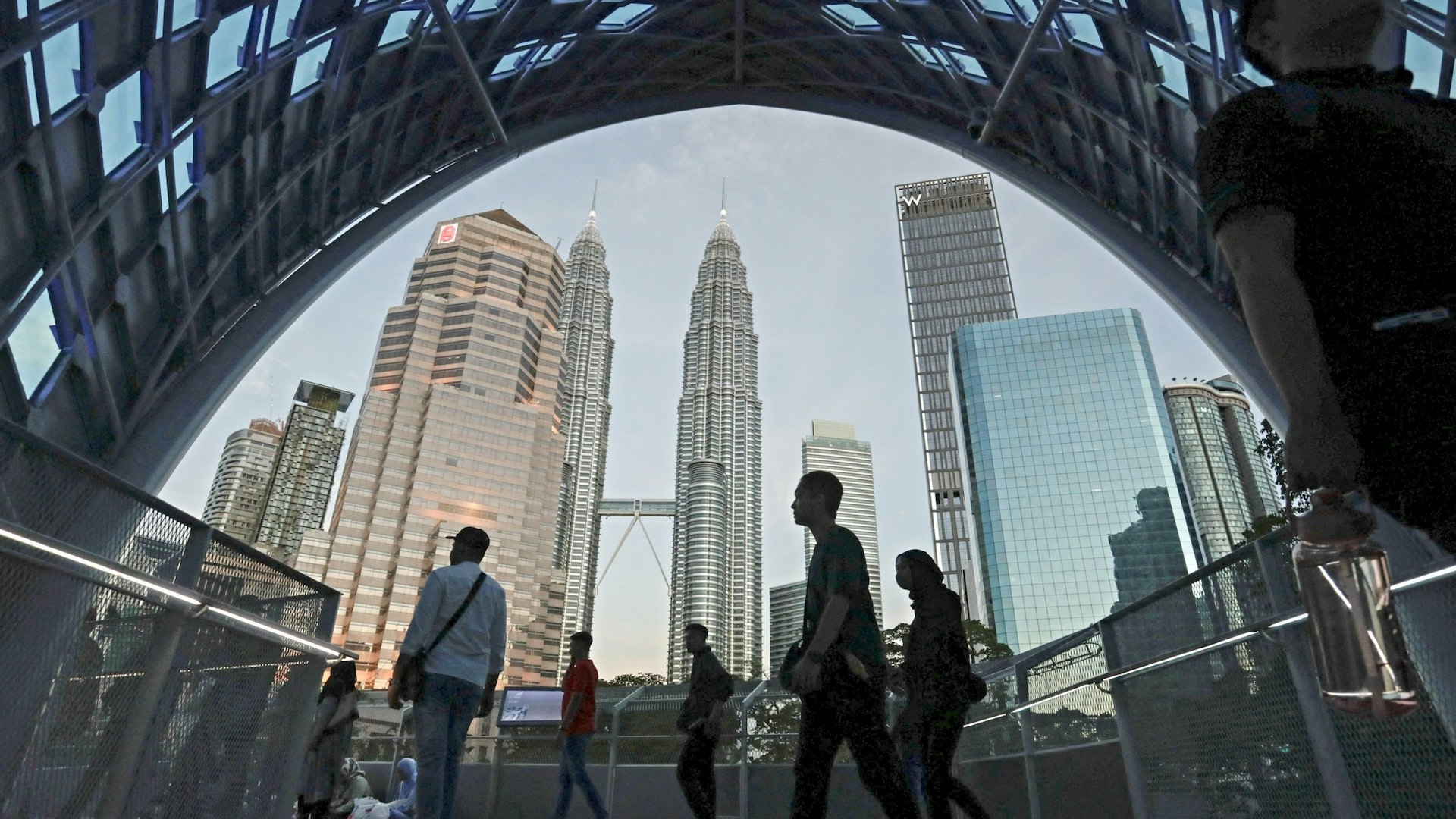
As artificial intelligence becomes the new engine of the global economy, countries everywhere are racing to claim the next “AI strategic high ground.” From Silicon Valley in the US to Zhongguancun in China to Singapore in Southeast Asia, AI investment is booming. Yet if you look closely at where foreign capital has been flowing over the past two years, one name has been quietly rising: Malaysia. Could this country, once regarded primarily as a low-cost electronics manufacturing base, reinvent itself as the tech industry’s new darling in the AI era? This is not mere hype — it is a story of genuine industrial transformation and regional rebalancing.
AI model training, generative AI deployment, and large language model (LLM) operations all depend on massive computing power, which in turn requires extensive data center construction and energy supply. In this global race for computing infrastructure, Malaysia has rapidly entered the international spotlight.
Compared to its neighbor Singapore, Malaysia offers more abundant land, lower industrial land rents, and relatively stable power resources. These conditions have made the country the primary destination for overflow data center demand from Singapore. Johor state, in particular, sits right on the Malaysia-Singapore border — separated by just a single causeway — yet offers electricity and rent at roughly half the price. It has become an ideal choice for numerous cloud and AI infrastructure companies.
According to publicly available data, Johor’s total operational data center capacity was only about 10MW in 2020. By 2024, it had skyrocketed to over 1,500MW. In terms of investment, Malaysia attracted over US$10 billion in data center investment in 2023, with that figure doubling in 2024. Within the next five years, Johor is poised to rival Northern Virginia in the US as one of the world’s most concentrated computing power supply zones.
It is not just infrastructure — the attitude of foreign investors tells the whole story. Tech giants including Amazon, Microsoft, Google, Alibaba Cloud, and NVIDIA have all incorporated Malaysia into their regional cloud and AI strategies. They are not only building data centers but also deploying AI training clusters and local language models. For example, NVIDIA is partnering with YTL to build Malaysia’s first AI supercomputer center and train a local Malay-language large model.
AI is not just about algorithms and data — it also requires physical hardware such as chips, servers, and motherboards. As a major global hub for semiconductor packaging and testing, Malaysia’s hardware manufacturing capabilities are not to be underestimated.
Since the 1970s, Malaysia has attracted investment from American and Japanese companies. Today, it has become a critical node in the global assembly, packaging, and testing supply chain. Penang, often called the “Silicon Valley of the East,” boasts a complete electronics manufacturing ecosystem and a deep pool of engineers. By current estimates, Malaysia handles approximately 13% of global chip packaging and testing capacity and continues to upgrade its technical capabilities — moving from traditional assembly toward advanced packaging and chip design support.
International giants such as Intel, Texas Instruments, ON Semiconductor, ASE Group, and Infineon all continue to expand production locally. Intel alone has invested US$7 billion in recent years to build a 3D packaging facility, making it a core part of its global advanced packaging operations. These companies are not only manufacturing but also conducting technology transfer and talent training, laying a solid foundation for Malaysia’s AI hardware chain.
At the same time, local semiconductor firms like Inari, Unisem, and Globetronics play important roles in the global supply chain. This “foreign investment + local enterprise” dual-engine model gives Malaysia the ability to rapidly take on AI hardware manufacturing.
In the AI era, talent is the scarcest resource. While Malaysia produces a steady annual output of engineering graduates and has strong mid-level technical talent — especially in electronics — it still faces a notable shortage in high-end skills such as AI algorithms, cloud architecture, and big data analytics.
The government is well aware of this. It has set a target to cultivate 60,000 highly skilled engineers by 2030 and is promoting the popularization of STEM education. It is also actively encouraging women to enter engineering fields to help bridge the talent gap.
Meanwhile, Malaysia is developing industry-academia collaboration platforms. For instance, CREST (Collaborative Research in Engineering, Science and Technology) connects universities with enterprises to cultivate professionals skilled in both AI and engineering. Companies like NVIDIA and Arm have also begun signing cooperation agreements with local universities to assist with curriculum upgrades and technology transfer.
However, the brain drain of top talent remains a reality. Many leading engineers choose to work in Singapore or Australia. If Malaysia hopes to become a participant in the upper tiers of the AI value chain, how it fosters an innovation culture and encourages startup growth will be a critical test over the next five years.
Malaysia’s geographic location naturally positions it as a “middleman.” Situated at the heart of Southeast Asia, facing the Strait of Malacca, connected eastward to Taiwan and Japan, southward to Singapore and Indonesia, and northward to China and Thailand, it is a natural hub for data transmission, supply chain diversification, and the movement of people and goods.
Compared to Singapore, Malaysia holds advantages in land and energy costs. The two countries are increasingly forming a “complementary dual-core” arrangement. Many data centers are physically located in Johor but still use Singapore as a springboard for capital allocation, legal registration, and regional operations integration, creating a cross-border symbiotic ecosystem.
More crucially, Malaysia maintains a neutral foreign policy and enjoys good relations with China, the US, Japan, South Korea, and Taiwan alike. At a time when global supply chains are being forced to reorganize, it has become one of the few countries capable of simultaneously attracting Chinese, American, and Japanese investment. This “everyone is welcome” stance makes it a rare landing ground for cross-border AI collaboration.
Malaysia did not attract this wave of investment by luck. It is the result of nearly a decade of government efforts to develop infrastructure and industrial support systems.
On the policy front, the government offers tax incentives (such as Pioneer Status and Investment Tax Allowances), industrial land rent subsidies, renewable energy grid-connection incentives, and has established a one-stop investment facilitation service — the Digital Investment Office — to help foreign companies set up quickly.
On the hardware front, the country has multiple tech parks and dedicated data center zones, including Cyberjaya, Sedenak, and Batu Kawan, all providing “plug-and-play” infrastructure and communications networks. In recent years, the government has also accelerated fiber optic and 5G network construction to address previous shortcomings in digital infrastructure.
Most importantly, Malaysia has a long-term industrial plan. The New Industrial Master Plan 2030 (NIMP 2030) and the National AI Roadmap both explicitly designate semiconductors and AI as national strategic industries, setting specific targets for exports, investment, and talent development. This transformation from a “manufacturing nation” to an “innovation nation” is no easy feat, but the direction is right.
Malaysia is not trying to replace Singapore, China, or Silicon Valley. It is pursuing a strategy of “filling gaps + integration” — using low costs and high efficiency to take on infrastructure and manufacturing, while gradually moving up toward technology and innovation.
For enterprises, it is the most cost-effective data center location for the next decade. For manufacturers, it is a vital node amid supply chain restructuring. For startups and R&D units, it may not yet be fully mature, but it already shows potential worth betting on.
For investors, the key is not chasing short-term trends but understanding the logic behind this structural shift: as AI becomes an “Industrial Revolution-level” technology, Malaysia stands at the beginning of a new cycle. This is not just a story about land and electricity prices — it is a microcosm of digital geopolitics and industrial rebalancing.
Will Malaysia become Southeast Asia’s new AI darling? It has already taken a seat at the table. Most people just have not realized the game has already begun.
Recently, I have been recruiting, and what I am looking for is not just someone

Not long ago, as the host of a Metro Broadcast radio programme, I sat down

The reaction made me reflect: what people care about most is not how powerful AI
HKOEA Consultancy
Licence No. 59684
© 2026 Artificial Intellegence Application Research Society. All rights reserved
by Originals Group – Hong Kong, Malaysia, GBA