

From Interview to Intelligence: How DingTalk A1 Turns Staff Interviews into Structured Decisions with AI Tables
Hiring and internal staff interviews are deceptively expensive processes. Not because of salary costs, but
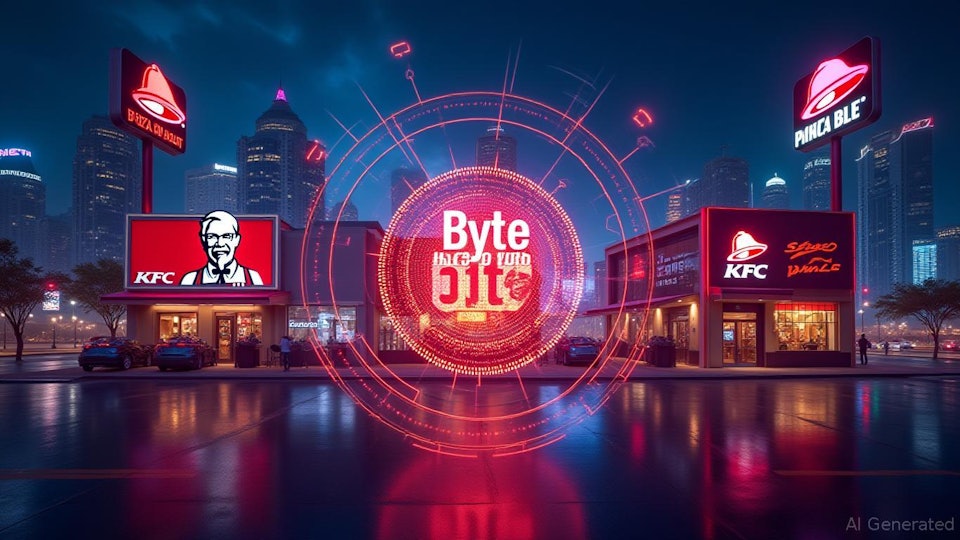
In the past two years, I’ve been particularly interested in one question: which major enterprises have actually implemented and effectively applied artificial intelligence in their daily operations? We see numerous AI-related news, visions, and demo videos every day, but how companies actually deploy, execute, and validate efficiency—these are the core issues that management should focus on. Recently, my research into Yum! Brands’ technology platform Byte by Yum has strengthened my confidence in the integration of AI with corporate operations. This is not just a concept, but a transformation that is actually happening in over 60,000 restaurants worldwide.
By: Michael C.S. So (AiX Society President – AI Application Research Society)
This topic is not just professional curiosity for me, but also personal continuation. Fourteen years ago, I founded an Italian organic restaurant where I attempted to combine technology with logistics concepts, implementing a “farm-to-table” operational model. I used e-commerce systems to connect with local farm suppliers and considered how to optimize ordering and inventory management. Although artificial intelligence wasn’t widespread then, my pursuit of “data-driven restaurant efficiency” has similarities with today’s Byte by Yum platform.
Yum! Brands is one of the world’s largest restaurant groups, owning renowned brands including KFC, Pizza Hut, Taco Bell, and The Habit Burger Grill. This enterprise serves over 150 countries and manages more than 59,000 restaurants. Facing such a massive operational system, Yum officially launched Byte by Yum in 2025, an AI-driven platform designed specifically for global stores, attempting to systematize, digitize, and automate all operational processes through technology.
The concept behind Byte by Yum is to integrate various software tools previously used by different brands (such as POS systems, inventory management, staff scheduling, delivery coordination, and digital ordering systems) into a unified SaaS platform. This not only saves management costs but makes technology upgrades, data sharing, and global deployment much simpler. Byte has already gone live in over 25,000 restaurants worldwide, covering all brands in the United States, processing over 300 million digital orders.
From a technical perspective, the AI models applied by Byte by Yum cover multiple fields including machine learning, predictive analytics, computer vision, voice recognition, and natural language processing. In supply chain management, it can automatically predict ingredient demand and procurement timing based on regional historical sales data, weather, festivals, and promotional activities, significantly reducing waste, avoiding stockouts, and improving inventory turnover. This system allows store managers to rely on data rather than experience to make optimal decisions.
In kitchen and delivery operations, the intelligent back-kitchen management system developed by AI company Dragontail, which Yum acquired in 2021, has now been integrated into the Byte platform. This system can analyze orders, cooking time, and delivery distance in real-time, automatically arranging cooking sequences and delivery coordination to ensure products are delivered to customers with optimal quality and timing. According to official statistics, Pizza Hut stores that implemented Dragontail showed significant improvements in both customer satisfaction and revenue.
In human resource management, Byte provides AI-driven scheduling tools that offer suggestions to store managers based on customer traffic predictions and staffing needs, improving efficiency while reducing labor costs. Furthermore, Yum has also deployed a module called “AI Restaurant Coach,” an intelligent assistant that proactively suggests optimization directions based on operational performance, helping frontline managers maintain operational standards and consistency even under complex pressures. These tools not only assist in decision-making but also improve employee job satisfaction and retention rates.
In customer experience, Byte supports mobile applications and online ordering platforms developed and uniformly maintained by various brands. Through these systems, customers can customize products, make reservations, receive real-time notifications, and promotional information. Yum reports that App users have significantly higher average order values than in-store diners. Using Taco Bell as an example, the brand achieved mobile reservations, self-service pickup, App personalized recommendations, and membership point systems through the Byte framework, resulting in a 30% year-over-year increase in member activity.
Particularly noteworthy is the implementation of voice AI. Yum collaborated with NVIDIA, utilizing its voice recognition platform Riva to build voice ordering systems. This system has already launched at some Taco Bell drive-thru locations, capable of understanding different English accents, quickly completing orders, providing upselling suggestions, while reducing manual pressure and error rates. According to preliminary data, the voice ordering system can reduce drive-thru wait times by approximately 10-20% while maintaining high accuracy.
In Mexico, Yum also implemented WhatsApp chat ordering service (Tictuk technology), with over 90% of users being first-time digital ordering customers, demonstrating AI’s expansion potential in emerging markets. Additionally, Byte provides order progress tracking, intelligent recommendations, and customer behavior analysis modules, enabling brands to formulate marketing strategies more precisely and dynamically adjust pricing based on data.
As of 2024, Yum’s quarterly digital order volume continues to reach new highs, with Q2 global digital sales approaching $8 billion, accounting for over half of total sales. KFC’s digital sales (excluding China) grew 20% year-over-year, while in the US market, self-service kiosk usage increased by 40%. These figures show that the Byte platform is not just improving efficiency but has become an important engine driving revenue growth.
For me, Yum’s success has three key points:
First, establishing a unified yet flexible platform architecture. Many enterprises during digital transformation often allow departments to procure tools independently, causing system fragmentation and upgrade difficulties. Yum uses Byte to integrate its brands, ensuring data connectivity and module reusability while allowing different markets to activate different functions as needed, maintaining flexibility.
Second, embracing the balance between open innovation and internal control. Yum chose to collaborate with technology partners like NVIDIA and AWS to accelerate technology experimentation and implementation, but key modules still retain internal training and deployment capabilities, ensuring sustainable evolution and data sovereignty.
Third, using AI to solve actual problems, not technology for technology’s sake. They didn’t pursue “the strongest models” or “most advanced algorithms,” but started from problems like “how to handle long wait times,” “how to reduce inventory waste,” and “how to retain new customers,” breaking them down step by step for gradual improvement. This AI implementation logic is worthy of reference by all enterprise managers.
Byte by Yum is not just a simple technology project, but a comprehensive upgrade engineering covering technology, operations, and organizational coordination. When AI moves out of laboratories into restaurant kitchens and drive-thru windows, when an AI assistant can schedule employees, suggest to customers, and alert managers, then the entire business world will enter a new phase of “AI-enabled operations.”
I believe AI is redefining what “efficiency” means. Yum’s example proves that traditional industries, with the right strategy, can also lead in the AI wave. For each of us as business operators, the question isn’t whether AI can do it, but how we’re prepared to use it.
The implementation of AI restaurant technology like Byte by Yum represents a fundamental shift in how quick-service restaurants operate. From automated inventory management to personalized customer experiences, these AI-powered solutions are setting new industry standards. The success of KFC AI implementations, Pizza Hut AI systems, and Taco Bell’s voice ordering demonstrates the practical value of restaurant automation in today’s competitive market.
Yum Brands digital transformation serves as a compelling case study for other restaurant chains considering AI adoption. The measurable improvements in customer satisfaction, operational efficiency, and revenue growth validate the investment in AI restaurant technology. As the restaurant industry continues to evolve, platforms like Byte by Yum will likely become essential for maintaining competitive advantage in the digital age.
This comprehensive approach to AI integration—from supply chain optimization to customer interface enhancement—shows how traditional businesses can successfully leverage artificial intelligence to drive growth and improve operations. The Byte by Yum case study demonstrates that with proper planning and execution, AI restaurant technology can deliver significant returns on investment while enhancing both employee productivity and customer satisfaction.
Hiring and internal staff interviews are deceptively expensive processes. Not because of salary costs, but
In the modern enterprise, the friction isn’t just in doing the work — it’s in

In today’s digital workplace, instant messaging is no longer a support tool—it has become the
HKOEA Consultancy
Licence No. 59684
© 2025 Artificial Intellegence Application Research Society. All rights reserved
by Originals Group – Hong Kong, Malaysia, GBA