
HKPC Speech: 40% Cost Reduction, 10x Market Growth — The Practical Logic of Expanding AI into Malaysia
HKPC speech by Michael So on expanding AI into Malaysia — covering 40% cost reduction,
Originally published in Chinese on HK01 on 2025-10-11 07:00 | By Michael C.S. So | AiX Society
From 2023 to 2025, I served as a Visiting Assistant Professor at Lingnan University, teaching courses on corporate innovation and social entrepreneurship. Recently, I was also invited to deliver an AI-themed keynote at a master’s program, discussing my personal learning journey and career growth. This experience prompted me to systematically review the latest teaching and research developments in AI across Hong Kong’s eight publicly funded universities. Rather than a traditional “research report,” this is better described as an “observation and synthesis” aimed at decision-makers and the public — seeking to answer two practical questions: What has Hong Kong’s academic community accomplished in AI over the past few years? And how can these efforts translate into industrial competitiveness and talent dividends?
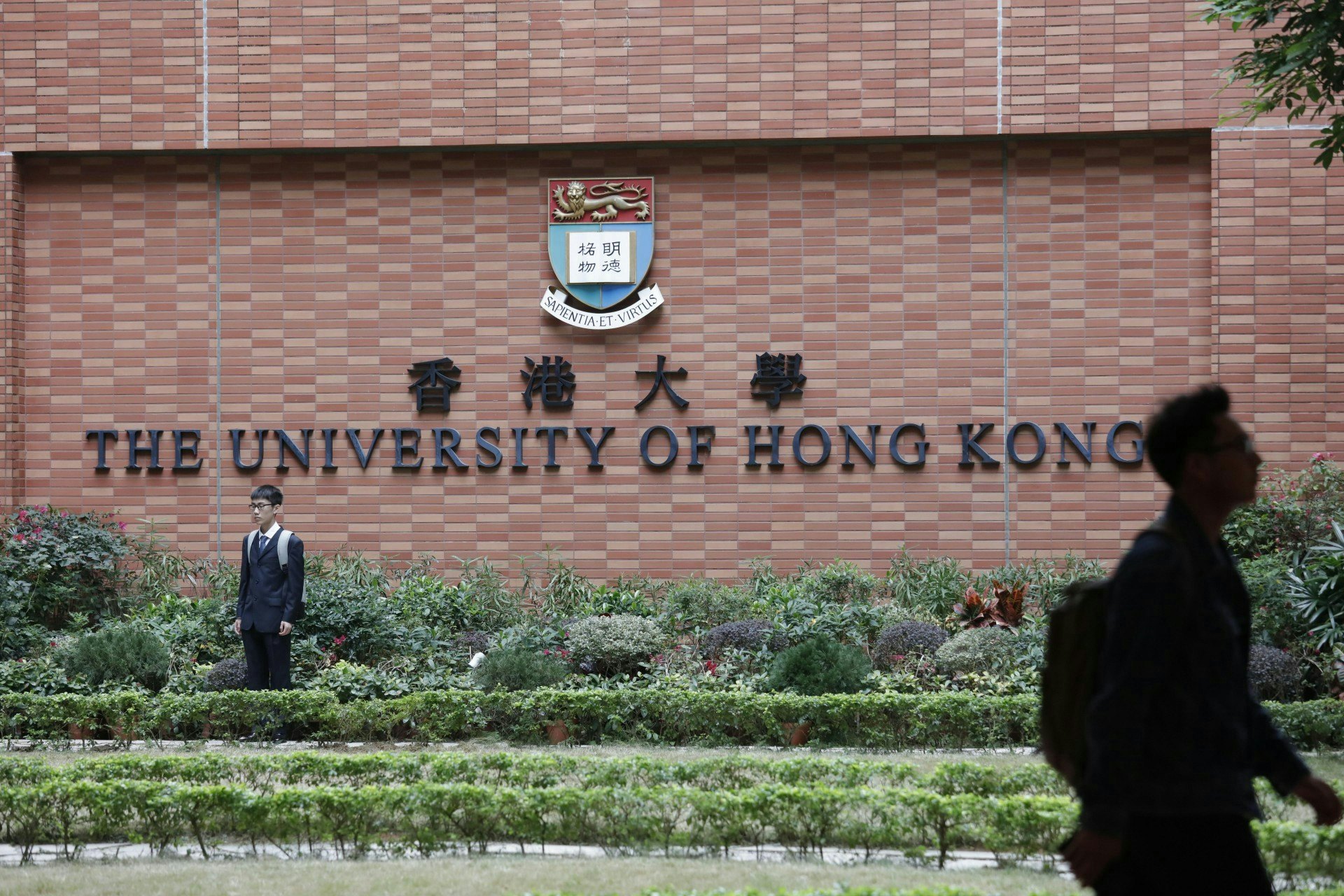
HKU established the “School of Computing and Data Science” in 2024, elevating AI and data science to a university-level strategic priority. The most notable achievement is the Faculty of Medicine team’s development of Vitogram, an intelligent stethoscope that turns a smartphone into a medical-grade heart sound analyzer with high accuracy and clear clinical applications, winning international invention awards. This paradigm of “from research directly to clinical application” exemplifies Hong Kong’s AI translation capabilities.
On the application front, HKU spans insurtech (risk pricing and anti-fraud), building services engineering (energy efficiency optimization), and digital forensics (collaboration with law enforcement), demonstrating its cross-disciplinary collaboration strength. In teaching, HKU has launched university-wide AI literacy courses alongside specialized AI master’s programs, aiming to make “AI literacy” a foundational skill while offering advanced courses to bridge academic and industry needs.
CUHK emphasizes interdisciplinary collaboration, achieving internationally recognized results in medical robotics and Graph Neural Networks (GNN): its surgical robotics research has won awards at top international conferences, and its GNN research received the Best Paper Award at a leading data mining conference. These are not “conceptual demonstrations” but deployable core algorithms and systems engineering.
On the teaching front, CUHK pioneered Hong Kong’s first undergraduate AI program as early as 2019 and has since expanded to multiple master’s and doctoral programs covering healthcare, finance, IoT, robotics, and more — with substantial funding and international consortium projects. This “research-curriculum-industry” closed loop gives CUHK a first-mover advantage in cultivating advanced AI talent.
HKUST focuses on generative AI and the localized development of multimodal foundation models. It has taken the lead in establishing a research center that brings together local and overseas universities to build foundational capabilities for vertical domains such as law, healthcare, and creative industries. The key question is whether Hong Kong can develop its own foundation models and data governance frameworks rather than relying solely on external APIs.
On the talent development track, HKUST maintains rigorous training in science, engineering, and computing on one hand, while offering executive education programs like “Generative AI for Business Applications” on the other, enabling corporate leaders to quickly embed model capabilities into workflows — such as knowledge management, customer service automation, and R&D support — with “affordable and effective” as the benchmark.
CityU has established a new AI research platform focusing on smart cities, education technology, and trustworthy AI (encompassing safety, ethics, and explainability). Trustworthy AI is not a bonus feature but an “entry ticket”: financial services, public services, healthcare, and regulation-intensive industries all require systems that are auditable, traceable, and risk-controllable.
On the teaching side, CityU has launched master’s programs covering autonomous driving, generative AI, and trustworthy AI, addressing the industry’s need for “immediately deployable” talent. In research output, CityU has developed practical applications in knowledge graphs and text mining — such as patent and literature analysis platforms — forming a bridge from academia to industry.
PolyU has made AI a compulsory component of its undergraduate curriculum, emphasizing a “scenario-native” approach. Take construction site safety monitoring as an example: through visual recognition and behavioral analysis, real-time risk alerts are issued on work sites, reducing costs while improving safety compliance.
In education innovation, PolyU has invested in immersive teaching environments (such as HiVE), using AI-driven simulation and assessment to cultivate the ability to “learn through real-world tasks.” At the postgraduate level, it offers specialized degrees in AI and big data, targeting cross-disciplinary students from engineering, business, and design backgrounds.
HKBU’s positioning is not about “hard-core model research behind closed doors” but rather innovation at the intersection of media and data: AI-generated content, news automation, audience analysis, and brand communication science. In an era of the content economy, short-form video, and multi-platform distribution, AI’s value across the entire chain — from planning and production to editing and distribution optimization — is increasingly evident.
HKBU’s relevant master’s programs ground both communication expertise and AI engineering in practice, cultivating hybrid talent who understand both narrative and algorithms. For the cultural and creative industries, this represents a niche where Hong Kong can break through.
Lingnan has strengthened its data and AI education in recent years, launching the Doctor of AI and Society (DAIS) program along with multiple modules in business intelligence and data analytics. Its value lies in approaching the governance and organizational change challenges of AI adoption from a humanities and social sciences perspective: How can data ethics and process design ensure that AI genuinely improves efficiency rather than creating organizational friction?
In applied research across finance, marketing, and supply chain management, Lingnan places greater emphasis on “strategic and behavioral” insights, offering SMEs actionable implementation roadmaps. This complements the “technology-driven” approach of research-intensive institutions.
EdUHK treats AI as a tool for educational transformation: adaptive learning, formative assessment, automated feedback, and instructional design support. Its undergraduate program in “Artificial Intelligence and Educational Technology” fills Hong Kong’s gap in AI EdTech specialists, carrying critical significance for the digital transformation of K-12 and adult education.
On the productization track, EdUHK prioritizes evidence-based pilots with schools, turning research into replicable lesson plans and toolkits so that AI genuinely enters classrooms and teacher workflows.
Tier One: Foundational Capabilities and Research Excellence — Led by HKU, CUHK, HKUST, and CityU, this tier focuses on core algorithms, medical robotics, trustworthy AI, and foundation models — the “hard-core” frontiers that produce international publications and platform-level technologies.
Tier Two: Scenario-Driven Industry Translation — PolyU, CityU, HKU, and others have established demonstrable applications in construction, smart cities, financial risk, forensics, insurance, and healthcare, co-creating with government, regulators, and leading enterprises to shorten the distance “from paper to revenue.”
Tier Three: Talent Development and Literacy at Scale — HKU incorporates AI literacy into general education; EdUHK, HKBU, and Lingnan spread AI capabilities across education, media, and business management, building a broad base of “AI-literate” individuals and cross-disciplinary collaborators.
Over the past three to five years, a common trend across all eight universities has been the shift from “standalone projects” to “platform ecosystems”:
Funding and Policy: Government innovation and technology funds, the InnoHK platform, and public-private partnership projects in healthcare and urban management have made large-scale cross-institutional and cross-border collaboration routine.
Corporate Co-Creation: Enterprises in finance, insurance, construction, healthcare, and cultural and creative industries are partnering with universities to co-define problems and validate solutions, guided by the principles of “data accessibility + regulatory compliance + scenario scalability.”
Translation Mechanisms: Knowledge transfer offices, startup accelerators, and alumni funds form a closed loop supporting the journey from prototype to production. Meanwhile, a growing number of academic researchers possess “bilingual” skills — fluent in both academic and business language.
The bottom line is pragmatic: computing power and data governance are the critical factors determining whether Hong Kong can scale its AI ambitions. If Hong Kong can establish local advantages in privacy-preserving computation, federated learning, data exchange standards, and regulatory technology (RegTech), its AI applications will have far greater global scalability.
From medical robotics and smart education to generative foundation models and the full-chain upgrade of the content industry, Hong Kong’s eight major universities have formed a complementary division of labor within the AI ecosystem. This is not a single-point explosion but a structural, long-cycle capability building effort: research must continue to break through, applications must address real needs head-on, and talent must be cultivated both broadly at the base and deeply at the top.
Standing at the watershed moment of 2025, if we adopt “trustworthy, usable, and scalable” as the shared language for AI governance and industrialization, and connect universities, enterprises, government, and communities into a cohesive network, Hong Kong is fully positioned to become Asia’s most substantive AI testing ground and demonstration zone within the next five years.
HKPC speech by Michael So on expanding AI into Malaysia — covering 40% cost reduction,
By Michael So I recently held a lunch-and-learn session at the office centered on two
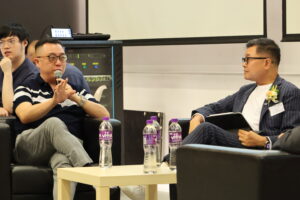
Last Tuesday (June 23), I had the privilege of serving as a panelist at Saint
HKOEA Consultancy
Licence No. 59684
© 2026 Artificial Intellegence Application Research Society. All rights reserved
by Originals Group – Hong Kong, Malaysia, GBA