
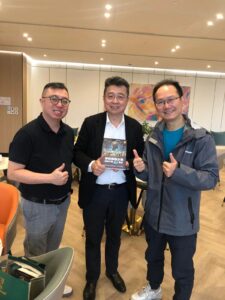
Michael So Shares AI Publication at Hong Kong Legislative Council with Councilors Lau Chi-pang and Chan Hok-fung
AiX Society Founding Chairman Michael So recently had the honour of presenting his latest AI
Originally published in Chinese on HK01 on 2025-07-08 10:06 | By Michael C.S. So | AiX Society
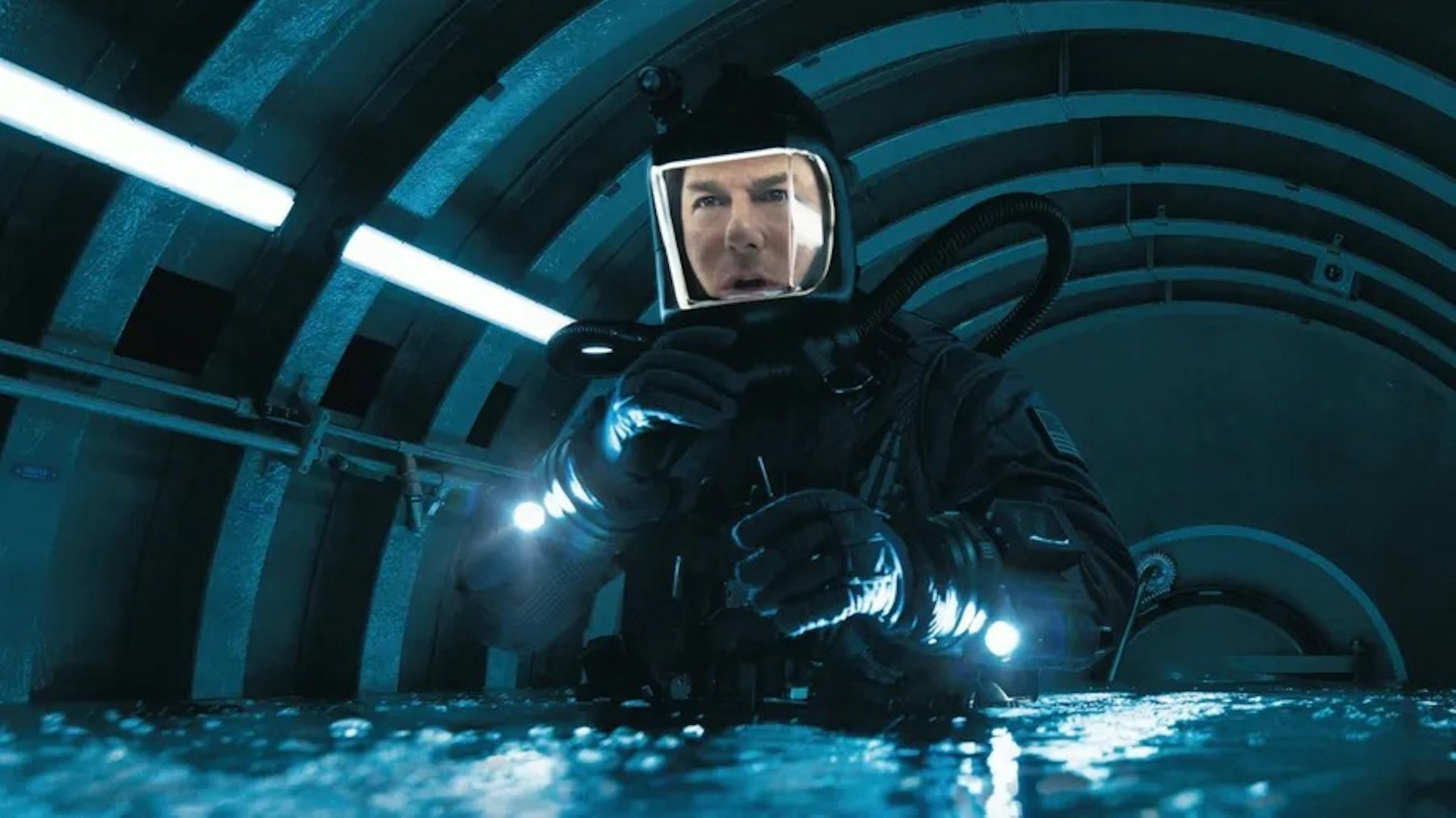
In the second part of the film Mission: Impossible – Dead Reckoning, audiences witness a stunning scene: the core data of the world’s most dangerous AI program — The Entity — is hidden inside a top-secret data center located in a rock cavern in South Africa. The entire facility is buried deep within a mountain, using cold springs for cooling and severed network connections to ensure the highest level of both physical and digital security.
This plot is actually far closer to reality than we might imagine.
In the era of generative AI, the training, operation, and storage of every model requires massive data center support. These AI data centers not only occupy large areas and consume enormous amounts of electricity, but also have extremely high requirements for constant temperature, seismic protection, and cybersecurity. The question is: does Hong Kong, one of the most densely populated cities in the world, still have space to accommodate this future data infrastructure?
The answer may lie right beneath our feet.
Hong Kong actually possesses vast untapped rock cavern resources. According to the Civil Engineering and Development Department, more than two-thirds of the territory’s land has rock cavern development potential. The government proposed a “Cavern Master Plan” as early as 2017, designating 48 “Strategic Cavern Areas” reserved for future urban infrastructure use.
Some caverns have already been used for sewage treatment (such as the Stanley and Sha Tin projects), successfully freeing up surface land. But this is only the beginning. If we envision rock caverns as “data vaults for the AI era,” the entire planning philosophy and economic calculus changes completely.
Rock caverns possess several unique advantages that make them ideal sites for data centers:
These characteristics are almost identical to those of the rock cavern data center depicted in the film.
In the second part of Mission: Impossible‘s seventh installment, the rock cavern is portrayed as the only place on Earth where one can access the AI’s core source code. The production team drew on real-world facility logic in their design: natural cooling, hydraulic channels, physical isolation, electromagnetic shielding, and a “disconnected system” unable to connect to external networks.
This is not merely artistic effect. In practice, countries such as Switzerland, Japan, Finland, and Singapore have long used rock caverns as data centers, proving their advantages in operational stability, security, and energy efficiency. As Asia’s financial and digital hub, Hong Kong has sufficient technical capability and strategic conditions to realize such deployments.
One of the biggest challenges for AI data centers is power supply. While locating AI data centers inside rock caverns can enhance security and energy efficiency, the massive computational demands still require stable, high-capacity power grid support.
Currently, approximately one-quarter of Hong Kong’s electricity comes from the Daya Bay Nuclear Power Station. This facility, operational since 1994, has supplied Hong Kong with over 300 billion kilowatt-hours of electricity and remains a pillar of local energy security. In the era of AI computing, this kind of “predictable, zero-carbon, stable” power source will be more important than ever before.
However, we must also consider:
All of these require advance integrated planning — for example, building energy storage facilities, introducing distributed energy sources, and improving power management strategies.
If the Hong Kong government is genuinely committed to promoting the innovation and technology economy and AI applications, it should incorporate “rock caverns + AI data centers” into future urban planning as early as possible, establishing a dedicated body to coordinate the following directions:
Establish rock cavern data center pilot zones: For example, select cavern areas in Sha Tin, Tai Po, or the Northern New Territories, and collaborate with CLP Power and HK Electric to deploy energy and cooling networks.
Introduce industry participation and leasing models: The government excavates cavern spaces and builds standardized data center modules that enterprises, research institutions, and tech startups can lease or co-operate.
Pair with sustainable energy solutions: Such as energy storage systems, water-cooling pipelines, solar panel deployments, and hydraulic auxiliary facilities to enhance energy self-sufficiency and stability.
Use cinematic scenarios as policy communication and education tools: Leverage popular culture to make abstract infrastructure strategies tangible and accessible, attracting public support and corporate investment.
When classified data in the movies is buried deep in a South African rock cavern, it is actually reminding us that the most stable and secure data centers are not the ones that look the most dazzling — they are the most solid, the most energy-efficient, and the most silent.
Hong Kong is currently facing multiple pressures: land saturation, intensifying competition in AI and innovation technology, and energy planning transformation. If we are bold enough to look further ahead — not just at the surface-level “Northern Metropolis” or “Innovation and Technology City,” but into the deep subterranean spaces within the rock — then we may be able to build an AI infrastructure future that is safe, stable, and full of imagination.
It is time for Hong Kong’s underground to become the foundation of a smart future.
AiX Society Founding Chairman Michael So recently had the honour of presenting his latest AI

Introduction You’ve decided to implement WuKong in your organization. Congratulations—you’ve taken the first step toward

## Introduction In today’s rapidly evolving business landscape, digital transformation is no longer optional—it’s existential.
HKOEA Consultancy
Licence No. 59684
© 2026 Artificial Intellegence Application Research Society. All rights reserved
by Originals Group – Hong Kong, Malaysia, GBA