

HKPC Speech: 40% Cost Reduction, 10x Market Growth — The Practical Logic of Expanding AI into Malaysia
HKPC speech by Michael So on expanding AI into Malaysia — covering 40% cost reduction,
Originally published in Chinese on HK01 on 2025-10-07 00:00 | By Michael C.S. So | AiX Society
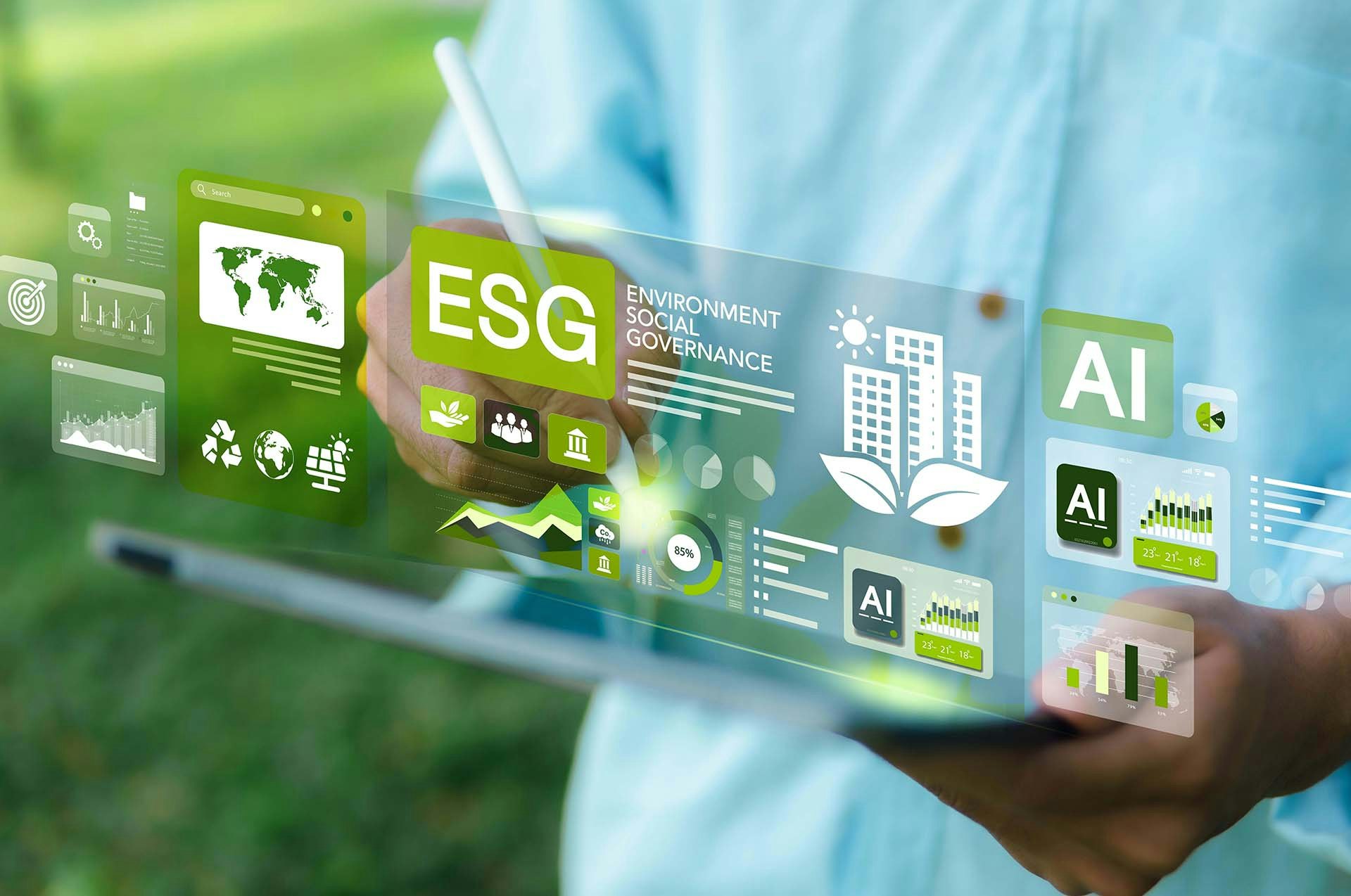
In recent years, attending various ESG (Environmental, Social, Governance) discussion forums, I’ve noticed that the Environmental (E) pillar always commands the most attention — carbon emissions, energy transition, and green finance dominate the conversation. Social (S) issues also claim significant coverage through topics like diversity and inclusion, and labor rights. Yet the “G” — Governance — is consistently overlooked. However, without sound governance, even the most impressive environmental commitments and social initiatives risk becoming empty promises. Now, artificial intelligence (AI) is quietly making its way into boardrooms and regulatory departments, bringing new tools to corporate governance. How to harness this technological force to enhance transparency, accountability, and fairness is a question that businesses need to take seriously.
In the past, boards relied on management reports and limited data to make decisions, inevitably creating blind spots. AI can process massive datasets in real time, providing directors with more comprehensive risk and trend analyses. Some multinational banks already use AI systems to review contracts and identify compliance risks within seconds, dramatically reducing the labor costs of their legal departments.
Recent surveys also show that roughly two-thirds of directors are already using AI to varying degrees to assist with meeting preparation or scenario simulations. These tools enable boards to think more proactively: “What would happen to our profitability if oil prices rose 20%?” or “Would a supply chain disruption impact our operations?”
Of course, AI is not a crystal ball — its role is to assist, not replace, human judgment. This leads to another critical point: boards must establish oversight mechanisms for AI tools themselves, ensuring that algorithms are fair and transparent, and preventing them from becoming “black boxes.”
Compliance is at the heart of corporate governance, but with thousands of regulatory updates and internal rules to track every day, manual monitoring is virtually impossible for global enterprises. AI’s value in this area is particularly significant.
Natural Language Processing (NLP) can read the latest regulations in real time and automatically cross-reference them with a company’s internal processes. AI systems can scan employee emails and transaction records to detect potential signs of money laundering, fraud, or harassment, alerting the compliance department to intervene at the earliest opportunity.
Take the insurance industry as an example: some companies use AI to detect claims fraud by comparing databases and identifying anomalous patterns, blocking tens of millions of pounds in fraudulent claims within a single year. AI not only improves monitoring efficiency but also frees up compliance professionals to focus on higher-level risk assessment.
Another critical aspect of corporate governance is information transparency. AI is being applied in investor relations (IR) — for instance, by building AI chatbots that allow shareholders to query financial data or ESG metrics anytime and receive instant, accurate responses.
Additionally, AI can analyze the issues investors care about most, helping management respond in a targeted manner during quarterly reports or shareholder meetings, avoiding the trap of giving irrelevant answers. This data-backed approach to communication helps build trust and aligns with governance requirements for accountability.
AI’s predictive capabilities make risk management more forward-looking. Whether it’s anomalies in financial transactions, supply chain disruptions, or geopolitical risks, AI can provide early warnings through real-time monitoring and pattern analysis before a crisis unfolds.
For example, shipping companies use AI platforms to predict port delays and adjust routes in real time, while insurance companies use AI models to identify high-risk customer segments and tighten controls preemptively. These practices enable businesses not just to “respond to risks” but to “anticipate them” — fulfilling the modern governance expectation of directors’ “duty of care.”
Today’s governance goes beyond finances to encompass culture and fairness. In human resources, AI can help detect biases in hiring or promotion processes. For example, it can analyze whether job descriptions are overly “masculine” in tone, deterring female applicants, or detect whether certain groups consistently score below average in performance reviews.
Of course, AI can also replicate existing biases due to imbalanced training data. Amazon once had to completely shut down a recruitment AI system because it favored male candidates. This reminds us that AI’s role in governance must be accompanied by rigorous oversight and continuous review.
Once AI enters corporate governance, the biggest challenge is “trust.” Shareholders, employees, and regulators will all ask: Are the algorithms fair? How is the data collected? Can the results be explained?
As a result, many companies have begun establishing AI ethics committees or internal “AI audit systems” to ensure algorithmic transparency and accountability. The governance of AI itself is gradually becoming a new topic under the “G” in ESG.
In ESG discussions, “G” may rarely be in the spotlight, but it is the foundation that supports both “E” and “S.” The new tools AI brings are injecting fresh momentum into corporate governance through transparency, accountability, and fairness.
Whether it’s board decision-making, compliance monitoring, shareholder communication, risk management, or diversity and inclusion, AI can enhance both efficiency and quality. But the real challenge lies in establishing governance over AI while using it.
Companies that skillfully leverage AI to strengthen governance will stand out in the ESG era — not merely as “compliant,” but as truly “trustworthy.”
HKPC speech by Michael So on expanding AI into Malaysia — covering 40% cost reduction,

By Michael So I recently held a lunch-and-learn session at the office centered on two

Last Tuesday (June 23), I had the privilege of serving as a panelist at Saint
HKOEA Consultancy
Licence No. 59684
© 2026 Artificial Intellegence Application Research Society. All rights reserved
by Originals Group – Hong Kong, Malaysia, GBA