
Jensen Huang Calls OpenClaw the Most Important Software Release Ever
NVIDIA CEO Jensen Huang declared OpenClaw the most important software release ever, as the project
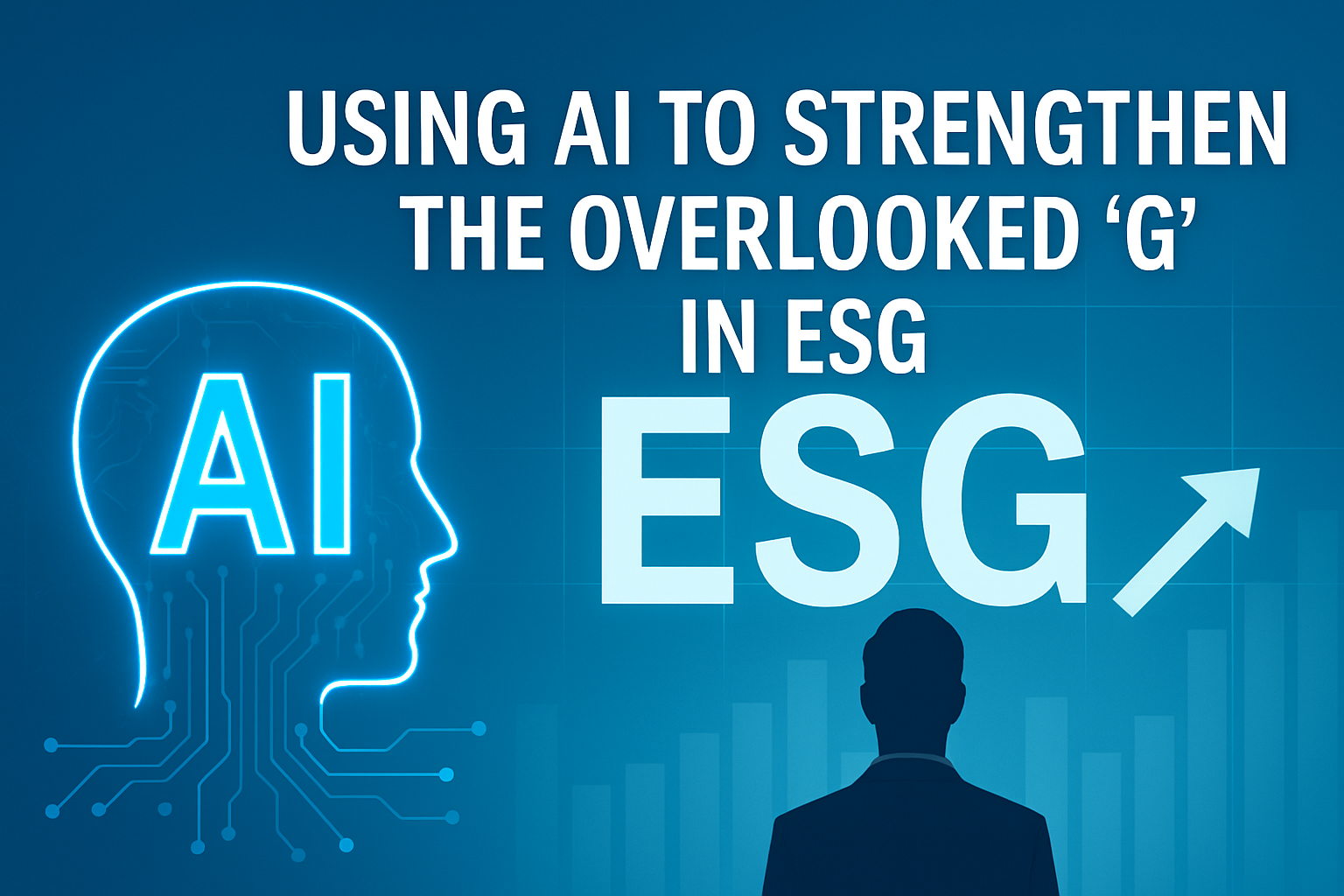
AI in Governance: Strengthening the Overlooked ‘G’ in ESG
Environmental initiatives often dominate ESG (Environmental, Social, Governance) conversations, but the “G” – Governance – is just as critical for sustainable and ethical business operations. Good governance ensures companies are run with transparency, accountability, and fairness. Now, a new ally is emerging to strengthen corporate governance: artificial intelligence (AI). From the boardroom to compliance departments, AI is being tapped to enhance decision-making, oversight, and inclusivity in organizations. This article explores how AI supports the governance pillar of ESG – an often under-discussed yet vital component – with real-world examples of AI-driven governance improvements. It also examines why trust, transparency, and ethics in AI usage have become indispensable parts of modern governance.
AI-Powered Insights for Board Decision-Making
Corporate boards are increasingly experimenting with AI to inform their strategic decisions. Traditionally, board decisions relied on limited datasets and human intuition. Today, AI can process vast amounts of data in real time, giving directors deeper insight into market trends, customer behavior, and financial patterns. These data-driven insights help eliminate blind spots and bias in the boardroom. For example, JPMorgan Chase’s board uses an AI system called COiN to review complex legal documents in seconds – a task that once took legal teams thousands of hours. By flagging compliance issues and risks early, such tools ensure that management and directors get timely, accurate information to base decisions on.
More boards are warming to AI’s potential. By 2025, about two-thirds of corporate directors reported using AI for board work in some form. These applications range from generating meeting prep materials to real-time analytics. Some boards are even using AI for predictive analysis and scenario planning – running simulations on how market shifts or geopolitical events might impact the company. The result is more informed, forward-looking decisions, bolstering the governance practice of strategic foresight. Yet directors acknowledge that AI is not a crystal ball – it augments rather than replaces human judgment. Algorithms must be used responsibly, with oversight to prevent over-reliance or misuse. Board oversight itself must adapt to ensure AI tools are transparent, fair and aligned with ethical standards, reinforcing stakeholder trust in these high-tech boardrooms.
Automated Compliance and Ethical Oversight
One of the most promising governance uses for AI is compliance monitoring and ethical oversight. Large organizations face a labyrinth of regulations and internal policies – from anti-fraud rules to codes of conduct – and violations can be costly. AI is transforming how companies monitor compliance by acting as an always-on audit assistant. AI compliance monitoring continuously analyzes activities and communications, tracks regulatory updates, and issues real-time alerts to catch potential misconduct or control gaps early. This proactive approach marks a huge leap from traditional audits that happen only periodically.
In practice, AI-driven systems can scan employee emails, chat messages, transactions and other records to flag suspicious patterns or keywords that might indicate fraud, harassment, or other policy breaches. A bank using AI can automatically detect a series of unusual money transfers that hint at money laundering – and immediately alert compliance officers for investigation. Natural language processing algorithms can parse new regulations or legal texts as they’re published, summarizing the changes in plain language and mapping them to the company’s policies. This means compliance teams can quickly understand evolving laws (say, a new data privacy rule) and ensure company practices stay in line, sidestepping the risk of fines or reputational damage.
Real-world cases already show AI’s impact on governance through compliance. In finance and insurance, firms are deploying AI to automate compliance processes and flag potential legal issues before they escalate. JPMorgan’s COiN system reviews legal contracts to ensure regulatory terms are met. Similarly, insurers like Zurich Insurance use AI models to detect fraud, scanning claims for anomalies and comparing data across databases to catch duplicative or fake claims. Zurich reports that by combining AI-driven anomaly detection with human investigators, it prevented millions in fraudulent claims. Such outcomes underscore how AI can strengthen corporate integrity – a core goal of governance – by acting as a tireless watchdog that watches out for unethical behavior or compliance slip-ups.
AI doesn’t eliminate the need for human oversight; it amplifies the effectiveness of compliance teams. With mundane scanning and cross-checking tasks automated, compliance officers can focus on higher-level analysis and swift remediation of issues. The result is a governance win-win: greater assurance that ethical standards are upheld, and a corporate culture where doing the right thing is actively enforced with the help of intelligent tools.
AI and Shareholder Transparency
Good governance also means maintaining transparent communication with shareholders and other stakeholders. Here too, AI is proving to be a useful aid, particularly in the realm of investor relations and corporate disclosure. Companies are beginning to leverage AI to improve how they engage and inform shareholders, ensuring that investors have timely, relevant information – a practice that builds trust and satisfies governance expectations of transparency.
One development is the use of AI-powered chatbots and virtual assistants on investor relations websites. These AI agents can field inquiries from investors 24/7, providing instant answers drawn from company filings, earnings reports, and FAQs. Instead of shareholders sifting through lengthy PDF reports for a specific figure, they can ask the AI assistant and get an immediate, verified response. This not only makes life easier for investors but also frees up human IR teams from answering repetitive questions, allowing them to focus on more strategic communications.
AI is also being used to gauge and improve shareholder engagement. Natural language analytics can parse investor questions and behavior to reveal what topics investors care about most. Some companies now analyze real-time data on investor queries and site searches to spot emerging concerns or frequently requested information. If many investors are asking about supply chain risks or a new sustainability initiative, the IR team can proactively address those points in the next shareholder letter or earnings call. These AI-driven insights into investor sentiment enable management to be more responsive and transparent, aligning with governance principles.
Beyond direct communications, AI is helping companies prepare clearer disclosures and reports. AI tools can quickly summarize financial data or draft portions of reports, ensuring consistency and highlighting key facts. Some firms use AI to simulate tough investor questions so executives can practice frank, transparent answers before meetings. All these applications strengthen the flow of information between a company and its owners, reinforcing accountability. In an era when investors expect not just strong profits but also ethical conduct and ESG progress, AI-assisted transparency is becoming a smart extension of governance. It demonstrates to shareholders that the company embraces innovation to keep them informed and engaged.
Predictive Analytics for Stronger Risk Management
Risk management is a cornerstone of corporate governance – boards must foresee and mitigate threats ranging from financial perils to cybersecurity breaches. AI’s ability to crunch massive datasets and detect subtle patterns makes it a powerful tool for predictive risk management. In essence, AI can help companies identify threats before they become crises, giving leadership precious time to respond.
Take financial risks: banks and financial services have long used algorithmic models, but modern AI brings more agility. AI systems can monitor transactions and market data in real time, issuing alerts at the first sign of trouble. If an AI platform notices an unusual spike in transaction errors at a bank or suspicious trading activity, it can instantly flag it for investigation – potentially stopping fraud or errors before major damage occurs. Similarly, AI can scour global news and social media to warn of emerging geopolitical risks or economic shifts that might hit the company’s strategy.
Scenario analysis is becoming more sophisticated with AI. Insurance companies feed years of claims data into machine learning models to detect patterns of fraud or cyber incidents that humans might overlook. This allows them to focus on high-risk cases and bolster controls in vulnerable areas. Another example is in supply chain and operational risk: logistics platforms use AI to automate management of complex logistics, flag potential supply chain disruptions, and even optimize route planning. AI-generated insights help the company’s leadership react faster – if the AI predicts a factory shutdown in a certain region will delay shipments, managers can swiftly re-route orders or stockpile inventory. The board and executive team thus gain a clearer real-time picture of operational risks and can make decisions to maintain business continuity.
Crucially, AI-driven risk tools enhance not only detection but also decision-making under uncertainty. By providing more precise forecasts and data-backed risk assessments, AI helps governance bodies avoid guesswork. Directors can ask, “What happens to our earnings if oil prices spike 20%?”, and an AI model can quickly present several scenarios with probabilities. This kind of insight used to take analysts weeks to compile; now it’s available on-demand. The upshot is a more resilient organization – one that not only responds to risks better but may also get ahead of them. For governance, that means fulfilling the duty of care by safeguarding the company’s future in a proactive, technologically savvy way.
Using AI to Boost Diversity, Equity and Inclusion
High-quality governance today goes beyond financial metrics – it extends to fostering an ethical, inclusive corporate culture. In recent years, stakeholders have pressed companies to improve diversity, equity, and inclusion (DEI) in their workforce and leadership, seeing this as a governance issue tied to long-term performance and fairness. AI can be a double-edged sword here: if designed poorly, it can perpetuate biases – but if used thoughtfully, AI can help root out bias and promote DEI in hiring and promotions.
Bias detection and mitigation tools are emerging as part of HR governance. Advanced people analytics platforms can sift through years of HR data to uncover patterns of potential bias. AI can highlight if certain demographic groups consistently get lower performance scores or are passed over in promotion cycles, flagging issues that might otherwise stay hidden in spreadsheets. This gives HR and boards a fact-based view to take corrective action – perhaps retraining managers or revising criteria to ensure fairness in talent decisions. An illustrative case is GoDaddy: the web services company uses an AI-based “promotion flagging” system to identify employees who may be eligible for promotion but were overlooked, prompting managers to review them for advancement. By relying on data rather than gut instinct or memory, GoDaddy aims to mitigate the risk of unconscious bias in promotions and improve diversity in leadership ranks.
AI is also tackling bias in recruitment. Natural language processing is used to analyze job descriptions for biased wording – for instance, too many macho-coded terms that might discourage female applicants. Textio, an AI-powered writing tool, helps recruiters rewrite postings in more gender-neutral language, a practice that companies have adopted to attract a wider talent pool. In tests, Textio revealed that many executive job ads skewed heavily masculine in wording, reinforcing why fewer women applied to those roles. By revising such language, organizations can signal a more inclusive culture from the first interaction with candidates. At the same time, companies are cautious about AI in hiring after lessons learned: Amazon famously scrapped an AI recruiting tool that was found to be biased against women, because it had been trained on past hiring data that reflected male dominance in tech. This cautionary tale is now practically required reading for HR and tech teams. It underscores that AI is not inherently unbiased – it will mirror the data it’s trained on, so companies must apply rigorous oversight and diverse datasets when using AI in HR.
When implemented carefully, AI can actually become a guardian of fairness. It can enforce consistency in how resumes are screened or how performance is evaluated, thus reducing the chance for individual prejudices to creep in. And by continuously monitoring outcomes (e.g. hiring rates, pay equity, promotion velocity across groups), AI analytics can measure progress on DEI goals – holding management accountable, which is what governance is all about. In short, AI offers tools to help align a company’s practices with its values, ensuring equal opportunity within the organization. This integration of AI into DEI efforts signals a broader trend: ethical governance and technology governance are converging. The board’s oversight of culture now includes oversight of algorithms.
The Trust Factor: Ethical AI as a Governance Imperative
As AI becomes entwined with governance functions, one topic towers above all: trust. Shareholders, employees, and regulators will only endorse AI in corporate management if these systems are used transparently and ethically. Thus, governing the use of AI itself has become a new responsibility of corporate governance – often referred to as AI governance.
Leaders are acknowledging that AI must be fair, transparent, and accountable to serve as a reliable governance aid. In practical terms, this means boards and executives should establish clear policies on AI usage: How are algorithms making decisions? What data are they trained on? How do we audit their outputs? Some companies have begun forming AI ethics committees to vet new AI tools for bias and compliance. Others are instituting regular audits of AI systems – essentially applying the same rigor to AI that they would to financial controls. This push for AI transparency is not just internal; it’s also about communicating openly with stakeholders. For instance, if a company uses AI to screen job candidates or to manage its supply chain, disclosing that and explaining the steps taken to prevent bias can enhance stakeholder trust.
Regulators, too, are circling. Around one-third of executives in a recent survey named ethical risks of AI as a top concern – things like biased outcomes, privacy issues, or lack of explainability. These worries are driving new guidelines and laws (in the EU, for example, the draft AI Act) that will demand accountability for automated decisions. Transparency in AI is foundational to building trust: organizations should be able to clearly explain what data they collect, how AI models use it, and how those results impact people. If an AI denies someone a loan or flags an employee for misconduct, governance best practice is to be able to justify why, in human-understandable terms.
With great power comes great responsibility. AI can supercharge governance, but boards must oversee AI just as they do other enterprise risks. This includes training themselves – yet many managers using AI report having little formal training in ethical AI use. Experts recommend that boards invest in AI literacy and ethics training for directors and executives, so they can ask the right questions and set the right guardrails. Organizations have a responsibility to implement AI ethically to avoid legal liability, protect their culture, and maintain trust. In the end, strong governance of AI will determine whether AI lives up to its promise or undermines the very ethics we expect it to uphold. Companies that get it right can both harness AI’s benefits and earn a reputation for trustworthy innovation – a competitive advantage in the ESG era.
Conclusion
Governance may not grab headlines like climate initiatives do, but it is the backbone that holds a company’s principles and practices together. Artificial intelligence is injecting new capabilities into this backbone – be it through sharper boardroom insights, tireless compliance monitoring, improved stakeholder transparency, smarter risk management, or more equitable HR decisions. The stories above show AI’s potential to support sustainable and ethical operations, the very heart of ESG governance. A board equipped with real-time analytics can navigate uncertainties better; a compliance team aided by AI can enforce ethics more rigorously; a company using AI to communicate can strengthen investor trust; and inclusive AI-driven HR policies can build a diverse leadership for the future.
Yet, the AI-in-governance journey is just beginning, and it must be pursued responsibly. Governance isn’t just about using AI – it’s about using it wisely and justly. As companies embrace AI in their governance toolkit, those who also champion transparency and ethics in AI usage will set themselves apart. They will demonstrate that technology and trust can go hand in hand. In doing so, they not only bolster their own resilience and reputation, but also shine a light on the often unsung “G” in ESG – proving that good governance, enhanced by smart tech, is essential for truly sustainable business success.
NVIDIA CEO Jensen Huang declared OpenClaw the most important software release ever, as the project

OpenClaw 2026.3.7 adds context-engine plugins, durable channel bindings, and web-search onboarding improvements—plus a gateway auth

OpenClaw 2026.3.2 adds a first-class PDF tool, safer onboarding defaults, and major security hardening for
HKOEA Consultancy
Licence No. 59684
© 2025 Artificial Intellegence Application Research Society. All rights reserved
by Originals Group – Hong Kong, Malaysia, GBA