

What Diabetes Fears Most Is ‘Feeling Fine’: How AI Became My Around-the-Clock Health Sentinel
By Michael C.S. So | AiX Society By then I had already been diagnosed with
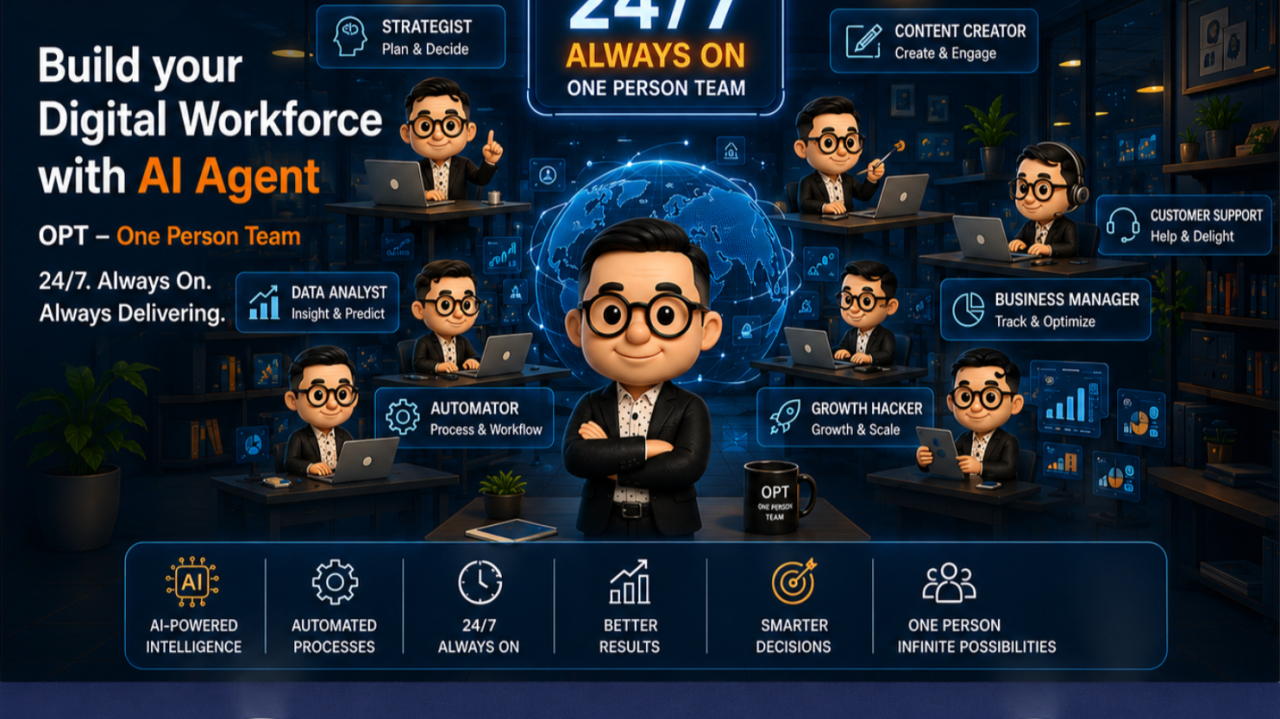
How AI-powered digital employees are solving Hong Kong’s triple crisis — multilingual service, heavy workloads, and a deepening talent shortage
Introduction: The Unspoken Crisis in Hong Kong’s Workplace
Hong Kong has always prided itself on being a global hub — a place where East meets West, where Cantonese, English, and Putonghua flow through the same office corridors, and where business never sleeps. But beneath this vibrant exterior, a quiet crisis is unfolding.
In 2026, Hong Kong’s workplace is caught in a triple bind. First, the city’s multilingual reality — serving local Cantonese speakers, mainland Chinese clients, and international customers simultaneously — creates an operational complexity that strains even the most experienced teams. Second, Hong Kong consistently ranks among the world’s most overworked cities, with professionals routinely logging 50–60 hour weeks, and service expectations that demand round-the-clock responsiveness. And third, the talent shortage is reaching critical levels: over the past three years, Hong Kong received nearly 600,000 talent scheme applications and approved more than 410,000 [1], yet the gap between open AI-related positions and qualified candidates continues to widen [2].
The solution, increasingly, is not hiring more people — it’s deploying digital employees. These AI-powered virtual workers are stepping into roles that humans either cannot fill fast enough or should not be doing in the first place. This article explores three key areas where digital employees are fundamentally reshaping how Hong Kong businesses operate.
For any Hong Kong business that deals with customers — whether retail, finance, hospitality, or professional services — the language challenge is immediate and relentless. A typical day might involve a Cantonese-speaking local customer asking about product specifications, a Mandarin-speaking mainland client negotiating a bulk order, and an English-speaking overseas partner requesting a service update. Each requires not just language fluency but cultural nuance, tone appropriateness, and context understanding.
Traditional approaches — hiring separate teams for each language, or relying on junior staff to “muddle through” — are no longer viable in a tight labor market. Digital employees powered by large language models (LLMs) now handle this effortlessly. A single AI agent can switch between Cantonese, English, and Putonghua in real time, maintaining consistent quality across all three languages without the fatigue, turnover, or scheduling complexity of human teams.
Take customer service on WhatsApp, the dominant messaging platform in Hong Kong. In 2026, businesses are deploying AI chatbots that integrate with WhatsApp Business API to handle inquiries 24/7 — answering FAQs, processing orders, and even managing complaints in multiple languages [3][4]. These systems can be built with zero code using platforms like Alibaba Cloud’s Bailian and Chat App service, ingesting knowledge from existing PDFs and Excel files to power intelligent Q&A [5]. The result: a small team of human agents can oversee AI-driven conversations across hundreds of simultaneous customer interactions, stepping in only when escalation is needed.
For Hong Kong’s SMEs — which make up over 98% of the city’s businesses — this is transformative. A 30-person trading company can now offer the same 24/7 multilingual service that previously required a dedicated customer service department of 10 or more people [6]. Digital employees don’t call in sick, don’t need overtime pay, and don’t struggle with the 3 AM shift.
Ask any Hong Kong business owner what consumes the most time, and the answer is almost always the same: paperwork. From drafting quotations and sales contracts to processing invoices and reconciling accounts, the city’s businesses are buried in repetitive document work that is essential but low-value.
Digital employees are changing this dramatically. AI agents can now generate professional quotations in seconds based on a few input parameters, draft contract templates that comply with Hong Kong’s legal framework, and process incoming documents — extracting key data points, flagging anomalies, and populating internal systems — all without human intervention. The Hong Kong Productivity Council (HKPC) reported that AI adoption among local enterprises has reached nearly 90%, with document automation being one of the top use cases [7].
In the financial services sector, which employs over 270,000 people in Hong Kong, digital employees are automating KYC (Know Your Customer) document checks, insurance claim processing, and regulatory reporting. A single AI agent can review hundreds of pages of documents in minutes, cross-referencing data across multiple systems — something that would take a human team days to complete. According to the Hong Kong Science and Technology Parks Corporation (HKSTP), the “AI+” wave is driving a fundamental redefinition of job roles across industries, with repetitive processing tasks being the first to be automated [2].
The ROI is compelling. Industry reports suggest that AI digital employees can reduce operational costs by up to 80% for document-heavy workflows [8]. For a mid-sized Hong Kong trading or logistics company processing hundreds of invoices and quotations weekly, the savings translate directly into competitive pricing and faster client response times — critical advantages in a market where speed often determines who wins the deal.
Perhaps the most underestimated challenge facing Hong Kong businesses is not a shortage of information, but its fragmentation. Customer inquiries arrive via WhatsApp, order confirmations come through email, contracts live in cloud storage, and internal notes are scattered across shared drives and personal devices. Finding the right piece of information when you need it can take hours — or sometimes never happen at all.
Digital employees excel at solving this problem through AI-powered knowledge management. By connecting to existing data sources — email inboxes, cloud drives (Google Drive, OneDrive, DingTalk Drive), WhatsApp chat histories, and internal databases — AI agents can build a unified, searchable knowledge base that any employee can query in natural language. Instead of digging through folders, a team member can simply ask: “What was the pricing we quoted to Client X last month?” and get an instant, sourced answer.
This capability is particularly powerful in Hong Kong’s fast-paced service economy. A real estate agency handling dozens of property inquiries across WhatsApp groups, a logistics firm tracking shipment updates across email threads, or a professional services firm managing client communications across multiple channels — all benefit from having a “digital brain” that never forgets and never loses context.
Research indicates that 85% of Hong Kong enterprises are expanding their AI adoption scope, yet many projects struggle to move from pilot to production due to data governance challenges [9]. The key differentiator for successful deployments is not the sophistication of the AI model, but the quality of data integration. Digital employees that are designed to work with existing tools — rather than requiring businesses to overhaul their entire IT infrastructure — are seeing the fastest adoption rates.
Challenges and Considerations
Despite the clear benefits, the path to digital employee adoption is not without obstacles. Data trust remains a significant concern in Hong Kong: businesses worry about the security of sensitive customer information when it is processed by AI systems, and about compliance with the Personal Data (Privacy) Ordinance [9]. The talent shortage extends to AI itself — companies struggle to find professionals who can deploy, manage, and optimize these systems effectively [7].
There is also the question of job displacement. While digital employees are designed to augment rather than replace human workers, certain roles — particularly those focused on repetitive data entry and basic customer service — will inevitably shrink. The Hong Kong government has acknowledged this challenge, with initiatives like the “AI+ Power” exhibition and the HKPC’s AI adoption programs aimed at helping businesses and workers navigate the transition [7][10]. The key is reskilling: shifting human workers from repetitive tasks to higher-value roles that require judgment, creativity, and emotional intelligence — areas where humans still outperform AI.
Outlook: The Digital Employee Is No Longer Optional
For Hong Kong businesses in 2026, the question is no longer whether to adopt digital employees, but how quickly they can do so. The city’s unique combination of multilingual demands, grueling work hours, and an intensifying talent war creates a perfect storm that only AI-powered solutions can address effectively.
Digital employees are not replacing the human spirit of Hong Kong’s workforce — they are freeing it. By handling the repetitive, the multilingual, and the mundane, they allow Hong Kong’s professionals to focus on what they do best: building relationships, closing deals, and driving innovation. In a city that has always thrived on efficiency and adaptability, the digital employee is not just a tool — it is the next chapter of Hong Kong’s business evolution.
The businesses that embrace this shift will not only survive the talent crunch — they will redefine what it means to be competitive in one of the world’s most demanding markets.
References
[1] 2026 香港职场生存报告:正在被悄悄”优化”掉的三类人 — 网易 — https://m.163.com/dy/article/KSM1CR4D05531TUH.html
[2] 香港科技园招聘会 2026 号召全港「Reimagine AI+」 — HKSTP — https://www.hkstp.org/zh-cn/park-life/news-and-events/news/hkstp-career-fair-2026-reimagine-ai-plus
[3] 2026 年 WhatsApp AI 客服5款对比 — 网易 — https://m.163.com/dy/article/KSTJKIKU05563YRU.html
[4] 2026WhatsApp API服务商5款深度评测 — 网易 — https://m.163.com/dy/article/KTCA8S0I05563YRU.html
[5] 0代码搭建 WhatsApp 智能回复机器人 — 阿里云 — https://help.aliyun.com/zh/chatapp/use-cases/whatsapp-ai-chatbot-configuration-process
[6] 2026 年 AI 成为”数字员工”,中小企业用得起吗? — 今日头条 — https://m.toutiao.com/a7612603740276736550/
[7] 香港生产力促进局发布《2025年香港企业AI应用趋势调查》 — 网易 — https://m.163.com/dy/article/KCJ3GG17055645XW.html
[8] 《2025AI数字员工服务生态白皮书》发布:玄晶引擎揭秘,降本80%的转型密码 — 百家号 — https://baijiahao.baidu.com/s?id=1849460864469762970
[9] 数据信任问题阻碍香港AI智能体的大规模落地 — 腾讯网 — https://view.inews.qq.com/wxn/20260512A04BJF00
[10] 创新科技及工业局局长出席「AI with HKPC」智慧AI方案展开幕礼致辞 — HKSAR Government — https://sc.isd.gov.hk/TuniS/www.info.gov.hk/gia/general/202602/05/P2026020500301.htm
[11] 从一场干货满满的政企对话透视香港AI新机遇 — 紫荊 — http://locpg.hk/20260414/19a4dc09c48f4a2a942149dde926dde4/c.html
[12] 商业AI规模化时代降临!AI+Power 6月4-5日揭幕 — DTDATA — https://www.dtdata.cn/news/show/4429.html
By Michael C.S. So | AiX Society By then I had already been diagnosed with

On the morning of my fiftieth birthday, a letter was waiting in my inbox. There

By Michael C.S. So | AiX Society My first reaction was that it was spam.
HKOEA Consultancy
Licence No. 59684
© 2026 Artificial Intellegence Application Research Society. All rights reserved
by Originals Group – Hong Kong, Malaysia, GBA