From Pyramid to Diamond: The Management Revolution of the AI Era
By Michael So I recently held a lunch-and-learn session at the office centered on two
In the modern enterprise, the friction isn’t just in doing the work — it’s in capturing, understanding, and acting on what matters amidst noise. Answers hidden in meeting chatter, strategies buried in spreadsheets, action items lost in chat threads: all of these are classic productivity bottlenecks.
DingTalk — the business collaboration suite from Alibaba — is tackling this by fusing AI hardware, AI tables, and customizable AI agents to turn passive work artifacts into actionable knowledge. The DingTalk A1 hardware device, deeply integrated into the DingTalk platform, becomes your voice entry point; AI tables and agents transform that voice into structure, insight, and execution.
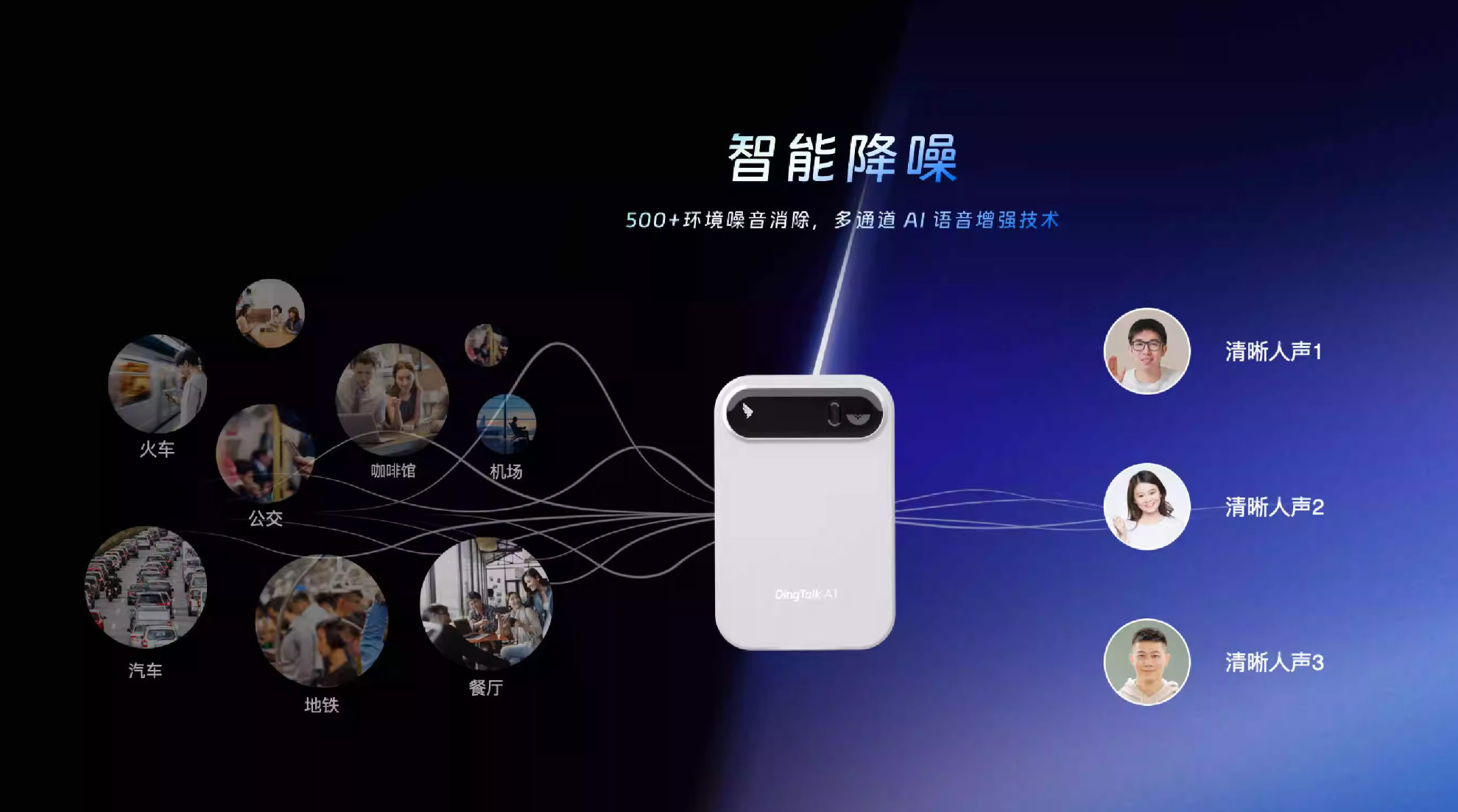
DingTalk A1 isn’t just another voice recorder. It’s better thought of as a pocket-sized AI meeting assistant.
Behind its sleek form factor — card-thin at about 3.8 mm, with six high-sensitivity microphones and bone-conduction pickup — lies an AI-powered pipeline that listens, understands, and transforms spoken communication into structured data.(DingTalk)
At its core:
These features alone make it a formidable tool for meetings, interviews, sales calls, and training sessions. Yet A1’s real power is unlocked when paired with the DingTalk AI ecosystem — especially AI tables and AI agents.
Most businesses rely on structured data — tables, spreadsheets, dashboards — to capture performance metrics, track tasks, and coordinate work. But creating, cleaning, and analyzing these tables is often manual drudgery.
DingTalk’s AI Tables evolve this model. Instead of static sheets that depend on human input, AI tables become smart canvases where:
A practical example: imagine a sales meeting captured via A1 where multiple commitments, deadlines, and customer preferences are voiced. After the meeting, instead of manually filling a CRM or task table, the AI detects:
And then populates an AI table for your team. This eliminates manual entry while improving accuracy and shared understanding.
Templates are where scale meets efficiency. In DingTalk’s AI ecosystem, templates for AI tables and agents act like pre-trained workflows that guide AI inference toward desired outputs.
These templates are not static forms. They are semantically rich structures that teach AI how to interpret and categorize input. For example:
The ability to choose or customize templates means teams can adapt AI models to domain contexts like HR interviews, client negotiations, project retrospectives, or quality assurance standups. Instead of building AI from scratch, organizations assemble intelligence through templates.
This isn’t just a convenience; it is strategic. Templates act as AI interpretive taxonomies — they codify what matters and teach the model to recognize patterns in enterprise language that humans care about.
If AI tables are the structure and templates are the semantics, AI agents are the automation layer that acts on structured data.
Custom AI agents in DingTalk can:
Unlike static automation rules (e.g., “send reminder if task overdue”), AI agents understand context. They can look across conversations and data, recognize patterns, and suggest or execute actions. In an HR context, for instance, an AI agent can automatically:
The customization comes from how organizations define roles, goals, and behaviors they want their AI agents to embody. Agents aren’t mindless macros; they’re context-aware workers.
This deep integration is possible because DingTalk’s ecosystem is built as an AI collaboration platform, not just a communication app. The brand calls this “AI work intelligence” — where AI doesn’t sit on the edge but is part of the operational fabric of the organization.(iThome)
Let’s walk through how this plays out in a real scenario.
Picture a product team with daily standups, review sessions, and cross-team syncs. Traditionally:
But with DingTalk A1 + AI Tables + AI Agents:
Human time spent? Minimal. Organizational alignment? Significantly improved.
In a sales context, this could mean:
In HR, interviews automatically produce scorecards and candidate summaries. In consulting, client debriefs produce professional deliverables without busywork.
This shift transforms meetings from memory burdens into intelligence assets — information that is instantly usable, discoverable, and tied into workflows.
Two further aspects amplify A1’s value:
Multilingual Translation: In global teams, language barriers erode clarity. A1’s real-time transcription and translation features mean conversations in different languages are all transformed into a common structured format. This reduces miscommunication and elevates inclusivity.(DingTalk)
Edge-AI Processing: Security and responsiveness are core enterprise needs. A1’s on-device AI processing enables low-latency transcription and reduces dependency on cloud uploads — important for privacy and regulated sectors.(DingTalk)
What makes this approach compelling is not just efficiency — it’s knowledge continuity.
Traditional workflows are brittle because knowledge sits in people’s heads. When someone is absent, information dissemination suffers. With AI tables and agents capturing structured intelligence at the source:
In this sense, DingTalk A1 doesn’t merely replace manual note-taking — it augments organizational memory. Meetings become indexed, calls become searchable knowledge artifacts, and decisions become linked to follow-ups.
As AI becomes entrenched in daily work, the boundaries between communication, knowledge, and action blur. Tools that treat AI as an overlay are short-lived; the ones that make AI native to data flow hold lasting advantage.
DingTalk’s design — marrying A1’s capture capabilities with AI tables and customizable agents — points toward that future: where every human interaction spontaneously generates structured insights, and systems are intelligent collaborators, not just passive tools.
It’s an innovation model that doesn’t just automate tasks, but captures meaning, structures knowledge, and triggers action intelligently — a leap from doing work to making intelligent work happen.
By Michael So I recently held a lunch-and-learn session at the office centered on two
Last Tuesday (June 23), I had the privilege of serving as a panelist at Saint

In recent years, a striking term has emerged in the technology world: biocomputing. At first
HKOEA Consultancy
Licence No. 59684
© 2026 Artificial Intellegence Application Research Society. All rights reserved
by Originals Group – Hong Kong, Malaysia, GBA