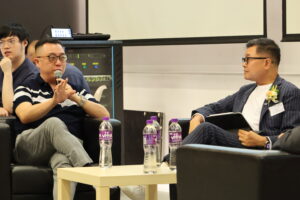
Thank you to Saint Francis University, Joanna Kwok 郭美德 for her invitation!
Last Tuesday (June 23), I had the privilege of serving as a panelist at Saint
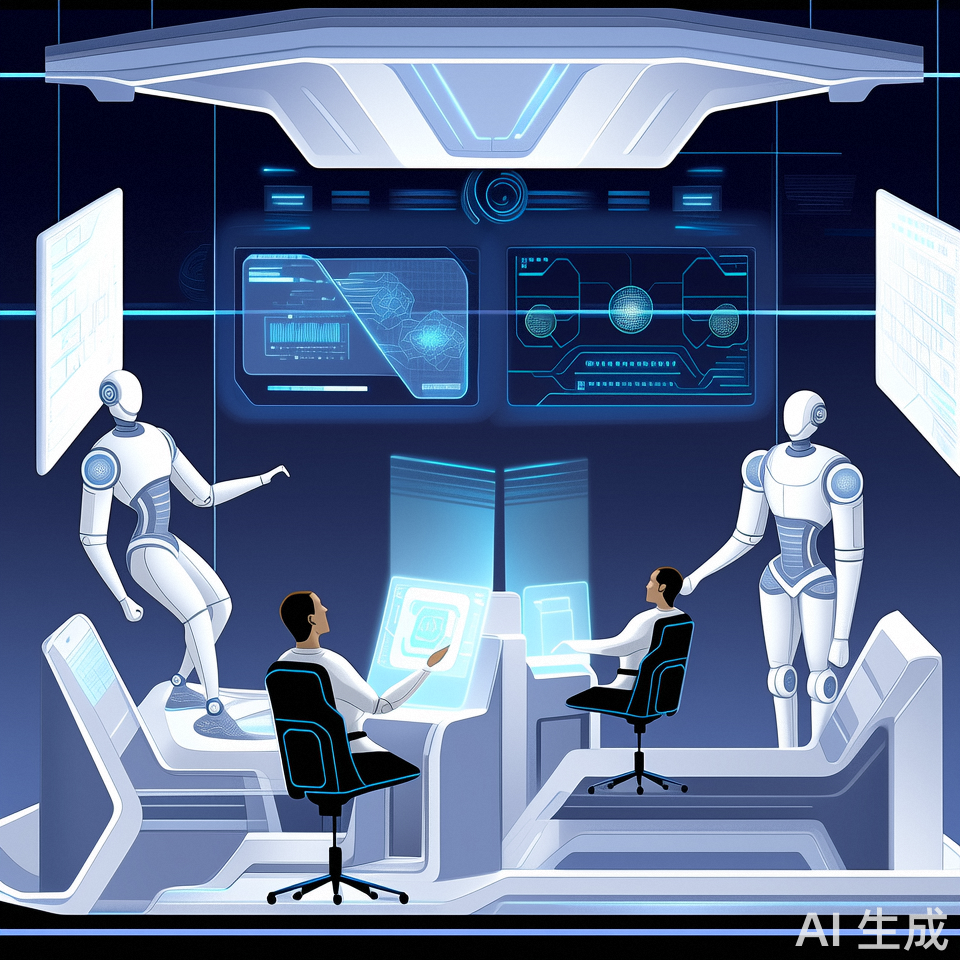
Discover how to design an AI Human Hybrid Management System and build future-ready teams with AI-savvy talent. The AI Human Hybrid Management System is crucial for integrating technology with human skills.
Integrating an AI Human Hybrid Management System will empower teams to achieve more than they ever thought possible.
Understanding the AI Human Hybrid Management System enables organizations to thrive in a rapidly changing environment. The AI Human Hybrid Management System fosters collaboration between AI and human employees.
An AI Human Hybrid Management System is essential for the future of work.
Giving Work Its Soul Back—Recently, I’ve begun expanding our AI Transformation consulting services and preparing to hire several new employees within the company. This process has given me deep insight into the fact that future team management is not just about hiring the right people, but also about understanding how to enable humans and AI to work together effectively through an AI Human Hybrid Management System.
In our case, we must consider not only whether employees can operate AI tools, but whether they possess the ability to design AI workflows, are willing to establish standard operating procedures (SOPs), and know how to collaborate with AI using data and logic. This realization is exactly why I’m writing this article. Understanding the AI Human Hybrid Management System is crucial in today’s workplace.
The AI Human Hybrid Management System requires a mindset shift among leaders and teams to fully leverage its potential.
To maximize the effectiveness of an AI Human Hybrid Management System, it’s essential to share knowledge and experiences across teams.
Introducing AI into a business isn’t just about reducing headcount; it’s a “truth detector” for the entire management system. Teams without clear processes will only become more chaotic after adopting AI, because AI excels at amplifying human behavior—making good outcomes better and bad ones worse.
I often remind managers: AI doesn’t solve chaos; it simply reveals where the problems lie. If a team lacks clear responsibilities, proper data tracking, or decision transparency, AI will ruthlessly expose these weaknesses.
Organizations that embrace the AI Human Hybrid Management System will see significant improvements in productivity and innovation.
Creating an effective AI Human Hybrid Management System involves continuous training and development of both AI tools and human talent.
In the context of the AI Human Hybrid Management System, employees must adapt to new processes that integrate AI capabilities.
Recruitment today goes beyond asking, “Do you understand AI?” Instead, the key question is: “Are you willing to let AI assist in your work?”From my hands-on consulting experience, employees who truly collaborate well with AI share three traits:
The AI Human Hybrid Management System is not just about technology; it’s about empowering people to work alongside AI effectively.
AI-savvy talent doesn’t necessarily need to be programmers—they just need logical thinking and the ability to clearly articulate processes. These individuals drive automation and ensure organizational knowledge isn’t trapped in individual minds.
In an AI Human Hybrid Management System, the collaboration between human insight and AI efficiency drives innovation and growth.
Organizations adopting an AI Human Hybrid Management System are better equipped to navigate the complexities of modern business.
The implementation of the AI Human Hybrid Management System requires careful planning and testing to ensure success.
Ultimately, the AI Human Hybrid Management System lays the foundation for innovation and adaptive learning within organizations.
In the AI era, hard work alone is no longer a core competitive advantage. What truly matters is: “Can you design systems that enable AI to do more for you?”
Therefore, performance evaluation must evolve. Traditional companies measure output volume; forward-thinking companies should assess “system-building capability.”
For example:
Ultimately, the success of an AI Human Hybrid Management System hinges on the willingness of teams to work collaboratively with technology.
These new metrics will form the language of management in the AI age.
Implementing the AI Human Hybrid Management System requires collaboration and communication across all levels of an organization.
Designing AI workflows shouldn’t be left solely to technical teams. Those who understand the business best should lead the design.From my consulting work, I’ve distilled four key steps:
My principle: “AI drafts, humans finalize.” Once properly trained, AI allows humans to focus on strategy, creativity, and high-level decision-making.
As companies adopt the AI Human Hybrid Management System, they will find new ways to enhance efficiency and reduce costs.
It’s common for companies to use multiple AI tools simultaneously—but this brings challenges: scattered data, unclear permissions, redundant operations.
Therefore, we must build an “AI Hybrid Management System” that assigns clear roles, data flows, and task logic to each AI tool. In short, management must extend beyond people to managing an “AI team”—an invisible but constantly working virtual workforce.
This is the new challenge for future leaders: AI Governance.
Implementing an AI Human Hybrid Management System can significantly enhance productivity and foster collaboration between human and AI agents.
To succeed, the AI Human Hybrid Management System must align with the company’s overall strategy and objectives.
I’ve met many employees who feel anxious at the mention of AI, fearing replacement. But the truth is, AI doesn’t replace people—it replaces those unwilling to learn.
AI amplifies both your strengths and your laziness. True security doesn’t come from avoidance, but from learning to harness it.
The role of leadership is to foster a culture that allows for experimentation and mistakes, giving employees space to gain confidence. When AI becomes part of daily work, humans can refocus on creating real value.
To build a successful AI Human Hybrid Management System, teams must actively engage in designing workflows that leverage AI capabilities.
AI can make work faster, but it cannot make work meaningful. The soul of an organization still lies in those who are willing to think critically and continuously improve processes.The hybrid model of AI and human management represents an upgrade in corporate culture—from “How do I do this?” to “How do I design a system to do this?” This is not merely a technological revolution, but a transformation in management philosophy.For me, AI will not replace humans—it simply empowers those who are prepared to go further, faster.
AI Human Hybrid Management System empowers organizations to evolve and adapt, ensuring long-term sustainability in an ever-changing landscape.
A comprehensive AI Human Hybrid Management System addresses the challenges of scattered data and unclear permissions, ensuring effective oversight.
Embracing an AI Human Hybrid Management System allows companies to transform anxiety into opportunity, fostering a culture of continuous learning.
With an effective AI Human Hybrid Management System, organizations can ensure that AI enhances human creativity and decision-making processes.
Last Tuesday (June 23), I had the privilege of serving as a panelist at Saint
In recent years, a striking term has emerged in the technology world: biocomputing. At first

誠邀各位企業創辦人、CEO、CXO、CTO 及管理層參加 AiX Society 領袖交流早餐會。 在 AI First 時代,企業正面臨前所未有的轉型機遇與挑戰。我們將透過輕鬆而深入的早餐交流,分享 AI Agent、Digital Workforce 及企業 AI 轉型的最新趨勢與實戰經驗,並與來自不同行業的企業領袖建立高價值人脈網絡。
HKOEA Consultancy
Licence No. 59684
© 2026 Artificial Intellegence Application Research Society. All rights reserved
by Originals Group – Hong Kong, Malaysia, GBA