

HKPC Speech: 40% Cost Reduction, 10x Market Growth — The Practical Logic of Expanding AI into Malaysia
HKPC speech by Michael So on expanding AI into Malaysia — covering 40% cost reduction,
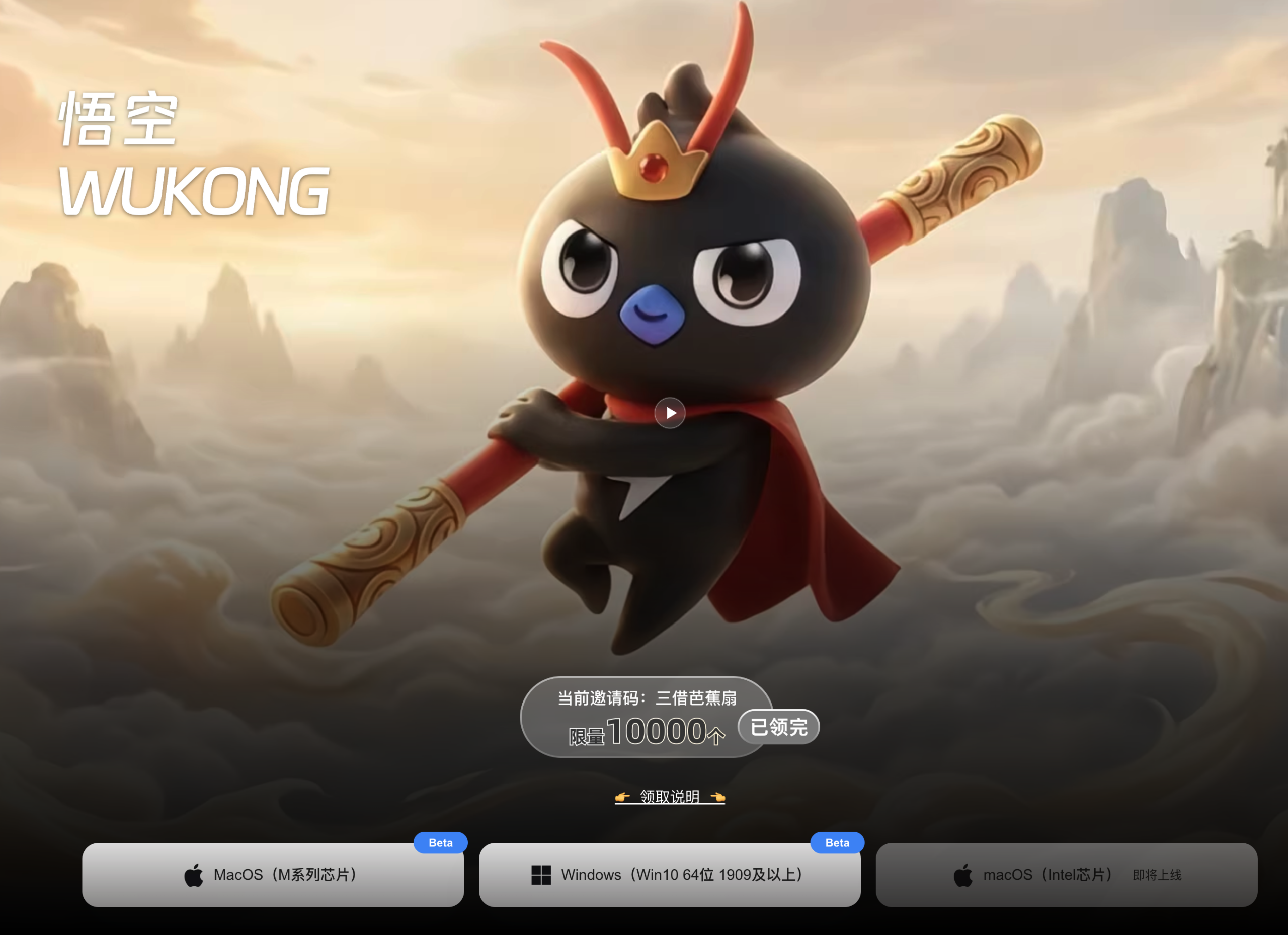
Alibaba’s DingTalk has taken a bold step into the future of enterprise computing by launching a safe OpenClaw-integrated system that combines hardware terminals, a virtual computer layer, and a CLI-first architecture. The result: employees no longer need to learn how to use software — they simply tell AI what they need, and the system executes.
In this vision, DingTalk exposes every enterprise capability as machine-readable commands instead of clickable buttons. HR onboarding, approval workflows, customer outreach, and even IoT control on factory floors all become functions that AI agents can call through CLI instructions. Humans stop learning where to click; they simply state intent and let AI orchestrate thousands of precise operations behind the scenes.
Under the hood is a new AI-native operating layer which continuously records reasoning paths, content generation, code execution, and multi-modal inputs and outputs. Every AI action becomes auditable and feeds a growing enterprise knowledge graph, so the system improves with each task it performs. Instead of software features being frozen in releases, the company itself turns into a constantly evolving programmable organism.
For 40 years, human-computer interaction has swung between extremes: cryptic DOS commands, friendly Windows GUIs, and now natural-language LLM chats. DingTalk’s OpenClaw-style CLI is the fourth leap: a return to the command line, but this time the ones typing commands are AI agents, not end users. Humans keep talking in plain language; the AI translates those requests into compressed CLI instructions that the enterprise infrastructure can execute with millisecond precision and minimal token cost.
This compression is strategic. Instead of making AI “look at” a graphical interface and simulate clicks, DingTalk decomposes its entire platform into tens of thousands of atomic capabilities — create groups, fetch attendance, issue announcements, push alerts — each mapped to a deterministic command. Command compression increases reliability, reduces hallucinations, and lets AI chain tasks into robust workflows that span teams, systems, and devices.
DingTalk’s OpenClaw-like strategy does not stop at software; it extends CLI control into physical devices and virtual computers. The same command substrate that runs on laptops and phones is designed to embed into watches, terminals on shop floors, and even machine tools in factories, turning every endpoint into an AI-controllable execution node.
On top of this, a virtual computer layer emerges: cloud-hosted, AI-first environments where every business process — from document generation to financial checks to HR operations — runs as composable CLI tasks. Users no longer manage app windows or learn menu trees; they inhabit a persistent workspace where conversational instructions spin up agents, trigger jobs, and coordinate resources.
The radical promise of this architecture is simple: people work in CLI without ever learning CLI. Employees express intent in natural language, while AI agents handle the mapping to granular commands, permissions, and error handling. What used to require learning CRM dashboards, marketing automation suites, spreadsheets, and IT portals now collapses into a single conversational front-end.
Each time AI executes a task, the system logs what it did, why it did it, and how it performed, allowing compliance teams to review actions and engineers to refine policies. Over time, best practices become encoded as reusable recipes that any employee can invoke with a sentence, effectively productizing organizational know-how.
Letting AI issue real commands against real systems demands a fortress-level safety design, and DingTalk’s approach layers defenses at multiple levels. A semantic risk-control layer inspects intent, detects malicious or risky patterns, and can block or reshape commands before execution. Damage-scope limitations prevent high-impact actions from ever being taken without strict constraints and approvals.
Execution interception then introduces human-in-the-loop confirmations for sensitive operations, alongside pre-run simulations that show what a command would do before it actually runs. A batch circuit-breaker monitors wider behavior, automatically pausing agents that appear confused, out-of-distribution, or engaged in cascading failures.
The most tangible impact appears when you look at frontline scenarios. In pilot programs, business owners have used the system to run fully automated marketing campaigns, handle real-time customer inquiries, and guide visitors into their shops — running 7 days a week, 20 hours per day, without manual intervention.
Similarly, in recruitment scenarios, hiring managers only needed to specify the target role. The AI system parsed job requirements, matched candidates from the CV database, generated ranking reports, and even drafted personalized outreach scripts, shrinking a multi-hour process to minutes while boosting match accuracy.
The strategic endgame of DingTalk’s OpenClaw strategy is the fully programmable enterprise. Once all services — from HR to finance, from operations to factory control — are exposed as CLI-addressable capabilities, the company stops being a static, digitized organization and becomes a dynamic, reconfigurable system.
Analysts forecast that by 2027, more than 30% of core business processes will be autonomously driven by AI in leading enterprises. In that landscape, DingTalk’s safe CLI and virtual computer stack are less a feature and more a new kind of operating infrastructure for work. If this model succeeds, the next generation of employees may never learn software at all — they will simply learn how to ask the right questions, while AI and CLI quietly take care of the rest.
Sources: South China Morning Post, Bloomberg, Alibaba Cloud, SCMP Tech
HKPC speech by Michael So on expanding AI into Malaysia — covering 40% cost reduction,

By Michael So I recently held a lunch-and-learn session at the office centered on two
Last Tuesday (June 23), I had the privilege of serving as a panelist at Saint
HKOEA Consultancy
Licence No. 59684
© 2026 Artificial Intellegence Application Research Society. All rights reserved
by Originals Group – Hong Kong, Malaysia, GBA