

HKPC Speech: 40% Cost Reduction, 10x Market Growth — The Practical Logic of Expanding AI into Malaysia
HKPC speech by Michael So on expanding AI into Malaysia — covering 40% cost reduction,
Originally published in Chinese on HK01 on 2025-08-02 07:00 | By Michael C.S. So | AiX Society
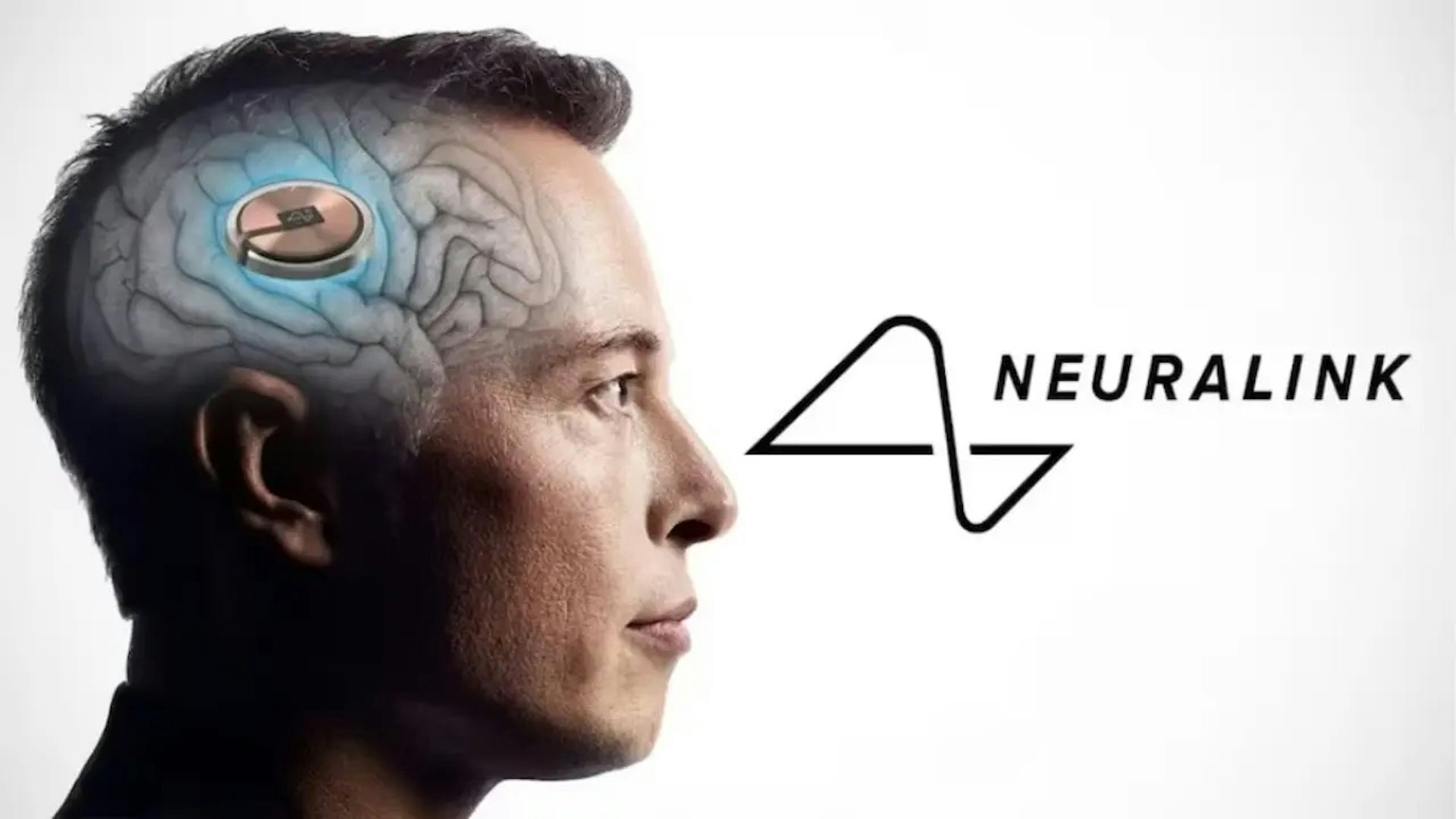
Neuralink, the brain-computer interface company co-founded by Elon Musk, announced exciting new developments in the summer of 2025. The company is dedicated to developing implantable devices that allow the human brain to connect directly with computers, with the goal of helping severely disabled patients regain basic abilities. In its June update, Neuralink showcased two major breakthroughs: enabling paralyzed individuals to “speak” again, and restoring sight to the blind. These advances mark a major milestone in brain-computer interface (BCI) technology, bringing hope to millions of disabled people worldwide and turning what was once confined to science fiction into emerging reality.
We have been interacting with computers through keyboards, mice, and even voice input for decades. But have you ever wondered: is there a more intuitive, faster, and more brain-aligned way to communicate with computers? The things we think about, the images we remember, the meanings we want to express — could they be transmitted directly, without using our hands or mouths? And is speech really the fastest and most effective way for humans to communicate? Are language and sound truly our best tools for conveying meaning?
Neuralink’s emergence is both a challenge to and a response to these questions. Their answer is to install an invisible “wire” inside the brain.
Neuralink’s first application helps people who cannot speak or move interact with the world through “telepathic communication.” This technology allows them to control a mouse, type, and even converse with loved ones using nothing but their thoughts. In 2024, the first test subject, Noland Arbaugh — a young man paralyzed from the shoulders down — was able to control a computer with his brain after receiving the implant. He could play board games, browse the internet, and send messages to friends.
Another participant, Brad, an ALS patient who had lost the ability to speak, can now use the chip combined with voice synthesis software to reconstruct his own voice and communicate with his family once again. These real-life cases demonstrate how technology can gently restore lost abilities to people.
Neuralink’s second vision is Blindsight — an experiment that transmits image signals directly into the brain’s visual cortex. This technology could help people with damaged eyes or optic nerves “bypass the damage and see again.” Initially, users may only be able to discern light and dark or outlines, but for someone who has never seen the world, such a change would be nothing short of rebirth.
Future versions may even provide night vision or infrared sight, breaking through the natural limits of human sensory perception. These devices would no longer be mere medical tools, but extensions of human capability.
Neuralink’s core technology comprises three key elements: ultra-thin flexible electrode threads, an automated implantation robot, and the N1 chip with built-in high-density circuits. These microelectrode threads, only a few microns in diameter, can be precisely implanted into specific brain regions to pick up neural signals. The N1 chip converts these electrical signals into digital data and wirelessly transmits them to an external computer.
This digital brainwave data is then decoded in real time by AI models to identify the user’s intent. For example, when a user wants to move the mouse or type text, the AI system responds based on patterns in neural activity. This mechanism employs deep learning and nonlinear algorithms, enabling the system to translate brainwaves into actions in real time.
The AI also has self-calibration capabilities, handling situations such as electrode failure or changes in neural patterns, making the overall control process more stable and fluid. For visual applications, AI must also convert images captured by cameras into neural signals in real time and write them into the brain’s visual cortex. This “visual data to neural stimulation” conversion also relies on extensive AI training.
For the average person, BCI technology is no longer just a medical tool — it could become a digital extension of everyday life. Imagine being in a meeting without needing to take notes, because your brain is already synced with a note-taking system that automatically records key points. Or while traveling, you simply “think” and can instantly translate the local language, search for directions, or even have a brainwave conversation with a tour guide robot.
Students could directly “download” learning materials. Creators could instantly convert ideas into visuals or music. Office workers struggling with attention deficit or anxiety might use BCI to access meditation guides or cognitive adjustment tools for real-time self-regulation.
These applications could not only free our hands and overcome language barriers, but also have the potential to become a natural interface between AI assistants and our brains — allowing us to communicate, create, and learn without typing or speaking.
These devices don’t just help patients — they also herald an era of “silent input.” We may no longer need keyboards or voice commands. A single thought could be enough to search for information, operate a computer, or even communicate synchronously with an AI assistant. Musk calls this “conceptual-level telepathy,” representing high-speed information exchange from mind to mind.
Imagine a future where students can directly “download” knowledge, journalists can record interview notes via brain control while walking, and office workers can rapidly reply to emails with their thoughts alone — none of this is fantasy anymore, but a clearly marked stop on the technology roadmap.
If we truly no longer need to open our mouths to interact with computers, will communication between people become faster and better? This question is actually more complex than it seems.
The high-speed channel built between brainwaves and AI could also be applied to interpersonal transmission in the future: using thoughts to directly send messages, concepts, or even emotions to another person. This might reduce misunderstandings and speed up comprehension, but it could also diminish the richness of non-verbal communication — language, eye contact, body language. Human emotional expression often lies not in the “content,” but in the “tone and context.”
Furthermore, when people can communicate without speaking, will we become more disconnected? Or will we instead build a deeper kind of “cognitive connection”?
We may enter a “silent society”: people appear quiet on the outside while thousands of words of thought race through their minds at high speed. In such a society, emotions and thoughts no longer need to be explained — they are shared directly. This also raises ethical and privacy challenges, because thoughts would no longer be absolutely private.
When we connect our thoughts to the internet, does that also mean the brain could become “hackable”? This is one of the most pressing concerns surrounding brain-computer interfaces today.
Neuralink’s Link chip currently uses primarily one-way transmission (brain to computer), but achieving sensory input or AI synchronization in the future would require two-way communication — which also means the risk of intrusion or signal manipulation.
If someone could remotely “read” or “write” thoughts in your brain, our current definition of privacy would be completely rewritten. Thoughts would no longer be the last refuge; even memories, feelings, and preferences could be intercepted or analyzed.
Therefore, the development of brain-computer interface technology must be accompanied by entirely new information security mechanisms — not just cryptography, but brain-level encryption, firewalls, and permission management systems. Neuralink has also emphasized that security is a priority, stating that the entire system is designed to prevent external direct access to user brain data, employing local decoding and endpoint isolation.
But this remains an open question — once “thoughts can be hacked,” how do we defend ourselves? Who will regulate this? The “cybersecurity experts” of the future may not only protect data, but also protect our very thoughts.
This is a true engineering case study of the AI+ era. Although brainwave sensors have existed for years, the real technical challenge was never “reading the signals” — it was whether we could decode and understand the meaning and intent behind those signals. Neuralink’s breakthrough operates precisely at this level, combining AI, neuroscience, and chip technology to enable humans to interact naturally with computers using their thoughts for the first time.
The potential of this technology may extend beyond human communication. If we can successfully decode intent and emotion in the human brain, could we someday also interpret the thoughts and feelings of animal brains? Could we know when a dog is frightened, why a horse suddenly refuses to jump, or whether a dolphin is sending a warning signal?
This is not just a technological challenge — it is also an ethical and philosophical one. If humans can understand the thoughts of other species, should we also grant them greater respect and rights? And will our definitions of “intelligence” and “communication” change as a result?
The future of brain-computer interfaces is not only about how we use technology, but about how we redefine ourselves and our relationship with other living beings.
We use technology every day: smartphones, computers, mice, touchscreens. But if these devices are no longer necessary, technology will no longer be just a tool — it will become a part of us.
What Neuralink brings is not just efficiency — it is a revolution that redefines the relationship between humans and technology. It forces us to reflect: What is the essence of communication? What is free will? And are the limits of humanity truly bounded only by our imagination?
The era of brain-computer interfaces has already quietly begun, and every one of us is a witness to this new age.
HKPC speech by Michael So on expanding AI into Malaysia — covering 40% cost reduction,

By Michael So I recently held a lunch-and-learn session at the office centered on two
Last Tuesday (June 23), I had the privilege of serving as a panelist at Saint
HKOEA Consultancy
Licence No. 59684
© 2026 Artificial Intellegence Application Research Society. All rights reserved
by Originals Group – Hong Kong, Malaysia, GBA