

Thank you to Saint Francis University, Joanna Kwok 郭美德 for her invitation!
Last Tuesday (June 23), I had the privilege of serving as a panelist at Saint
Originally published in Chinese on HK01 on 2025-08-10 07:00 | By Michael C.S. So | AiX Society
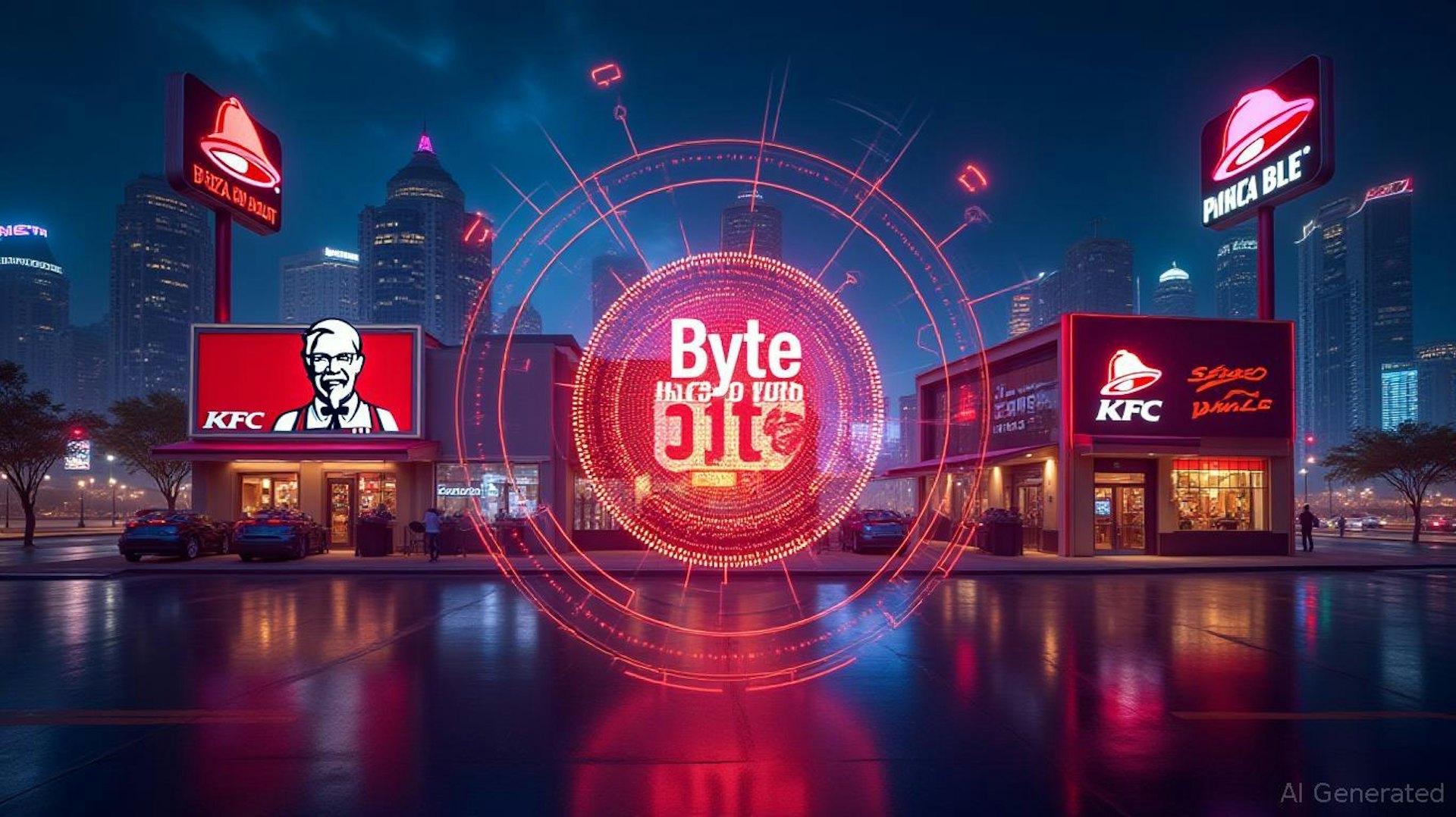
Over the past two years, I have been particularly fascinated by one question: which large enterprises have truly deployed and effectively applied artificial intelligence in their day-to-day operations? Every day we see a flood of AI news, visions, and demo videos, but how companies actually deploy, execute, and validate efficiency — these are the core questions that deserve management’s attention. Recently, my research into Byte by Yum, the technology platform under Yum! Brands, has deepened my confidence in the integration of AI and enterprise operations. This is not a concept — it is a transformation already taking place across more than 60,000 restaurants worldwide.
This topic is not just a professional curiosity for me; it is also a personal continuation. Fourteen years ago, I founded an Italian organic restaurant, where I experimented with combining technology and logistics concepts to implement a “farm-to-table” operating model. I used e-commerce systems to connect with local farm suppliers and explored ways to optimize ordering and inventory management. Although AI was not yet widely available at the time, my pursuit of “data-driven dining efficiency” shares a remarkable affinity with what Yum’s Byte by Yum platform is doing today.
Yum! Brands is one of the world’s largest restaurant groups, owning iconic brands such as KFC, Pizza Hut, Taco Bell, and The Habit Burger Grill. The company serves over 150 countries and manages more than 59,000 restaurants. Facing such an enormous operational system, Yum officially launched Byte by Yum in 2025 — an AI-driven platform designed specifically for global store operations, aiming to use technology to systematize, digitize, and automate all operational processes.
The philosophy behind Byte by Yum is to unify the various software tools previously used across brands — POS systems, inventory management, staff scheduling, delivery dispatch, digital ordering systems, and more — into a single SaaS platform. This not only reduces management costs but also makes technology upgrades, data sharing, and global deployment far more streamlined. Byte has already gone live in over 25,000 restaurants worldwide, covering all brands in the United States, and has processed more than 300 million digital orders.
From a technical perspective, the AI models applied by Byte by Yum span machine learning, predictive analytics, computer vision, speech recognition, and natural language processing. In supply chain management, the system can automatically forecast ingredient demand and procurement timing based on regional historical sales data, weather, holidays, and promotional campaigns — significantly reducing waste, preventing stockouts, and improving inventory turnover. This system frees store managers from relying on intuition, enabling them to make optimal decisions based on data.
In the kitchen and delivery domain, Dragontail — an AI company acquired by Yum in 2021 — developed an intelligent back-of-house management system that has been integrated into the Byte platform. This system analyzes orders, preparation times, and delivery distances in real time, automatically arranging cooking sequences and delivery dispatch to ensure products reach customers at optimal quality and timing. According to official statistics, Pizza Hut locations that adopted Dragontail saw significant improvements in both customer satisfaction and revenue.
In human resource management, Byte provides AI-driven scheduling tools that offer recommendations to store managers based on foot traffic forecasts and labor demand, boosting efficiency while reducing labor costs. Going further, Yum has also deployed a module called the “AI Restaurant Coach” — an intelligent assistant that proactively suggests optimization directions based on operational performance, helping frontline managers maintain operational standards and consistency even under intense pressure. Beyond aiding decision-making, these tools also improve employee job satisfaction and retention rates.
On the customer experience front, Byte supports the development and unified maintenance of mobile apps and online ordering platforms across all brands. Through these systems, customers can customize products, schedule pickups, and receive real-time push notifications and promotional offers. Yum reports that app users have a significantly higher average transaction value than walk-in customers. Taco Bell, for example, leveraged the Byte architecture to implement mobile pre-ordering, self-service pickup, personalized app recommendations, and a loyalty rewards program — resulting in a 30% year-over-year increase in member engagement.
Particularly noteworthy is the introduction of voice AI. Yum has partnered with NVIDIA, utilizing its speech recognition platform Riva to build a voice ordering system. This system is already live at select Taco Bell drive-through locations and can understand English spoken in various accents, rapidly complete orders, suggest add-ons, and simultaneously reduce staff workload and error rates. According to preliminary data, the voice ordering system has reduced drive-through wait times by approximately 10-20% while maintaining high accuracy.
In Mexico, Yum has also introduced WhatsApp chat-based ordering (powered by Tictuk technology), with over 90% of users being first-time digital ordering customers — demonstrating AI’s expansion potential in emerging markets. Additionally, Byte offers order progress tracking, intelligent recommendations, and customer behavior analytics modules, enabling brands to formulate more precise marketing strategies and dynamically adjust pricing based on data.
As of 2024, Yum’s quarterly digital order volume has continued to hit new highs, with global digital sales in the second quarter approaching US$8 billion — accounting for over half of total sales. KFC’s digital sales (excluding China) grew 20% year-over-year, while in the U.S. market, self-service kiosk usage rose by 40%. These figures demonstrate that the Byte platform is not just improving efficiency — it has become a critical engine driving revenue growth.
In my view, Yum’s success comes down to three key factors:
First, building a unified yet flexible platform architecture. Many enterprises, during their digital transformation journey, allow individual departments to procure their own tools, resulting in system fragmentation and upgrade difficulties. By using Byte to integrate all its brands, Yum ensures data connectivity and module reuse, while allowing local markets to activate different features as needed — preserving flexibility.
Second, striking a balance between embracing open innovation and maintaining internal control. Yum chose to partner with technology companies like NVIDIA and AWS to accelerate experimentation and deployment, while retaining in-house training and deployment capabilities for critical modules — ensuring sustainable evolution and data sovereignty.
Third, using AI to solve real problems rather than pursuing technology for technology’s sake. They did not chase “the most powerful model” or “the most cutting-edge algorithm.” Instead, they started from questions like “What do we do about excessive wait times?”, “How do we reduce inventory waste?”, and “How do we retain new customers?” — breaking each problem down and improving incrementally. This AI adoption logic is the approach most worthy of reference for all enterprise leaders.
Byte by Yum is not simply a technology project — it is a comprehensive upgrade spanning technology, operations, and organizational coordination. When AI moves from the laboratory into the restaurant kitchen and the drive-through window, when an AI assistant can schedule employee shifts, make recommendations to customers, and alert managers to potential issues, the entire business world enters a new phase of “AI-empowered operations.”
I believe AI is redefining what we call “efficiency.” Yum’s example proves that traditional industries, as long as they pursue the right strategy, can lead the charge in the AI wave. And for every one of us as business leaders, the question is not whether AI can do it, but whether we are prepared to put it to use.
Last Tuesday (June 23), I had the privilege of serving as a panelist at Saint

In recent years, a striking term has emerged in the technology world: biocomputing. At first
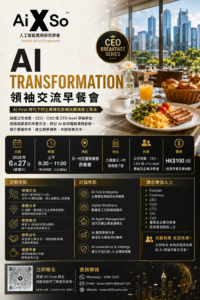
誠邀各位企業創辦人、CEO、CXO、CTO 及管理層參加 AiX Society 領袖交流早餐會。 在 AI First 時代,企業正面臨前所未有的轉型機遇與挑戰。我們將透過輕鬆而深入的早餐交流,分享 AI Agent、Digital Workforce 及企業 AI 轉型的最新趨勢與實戰經驗,並與來自不同行業的企業領袖建立高價值人脈網絡。
HKOEA Consultancy
Licence No. 59684
© 2026 Artificial Intellegence Application Research Society. All rights reserved
by Originals Group – Hong Kong, Malaysia, GBA