

Global News Daily: AI Regulation & Digital China Report (April 30, 2026)
Global News Daily: AI Regulation Crackdown Sounds Compliance Alarm, Digital China Report Reveals 60% AI
Originally published in Chinese on HK01 on 2025-09-07 07:00 | By Michael C.S. So | AiX Society
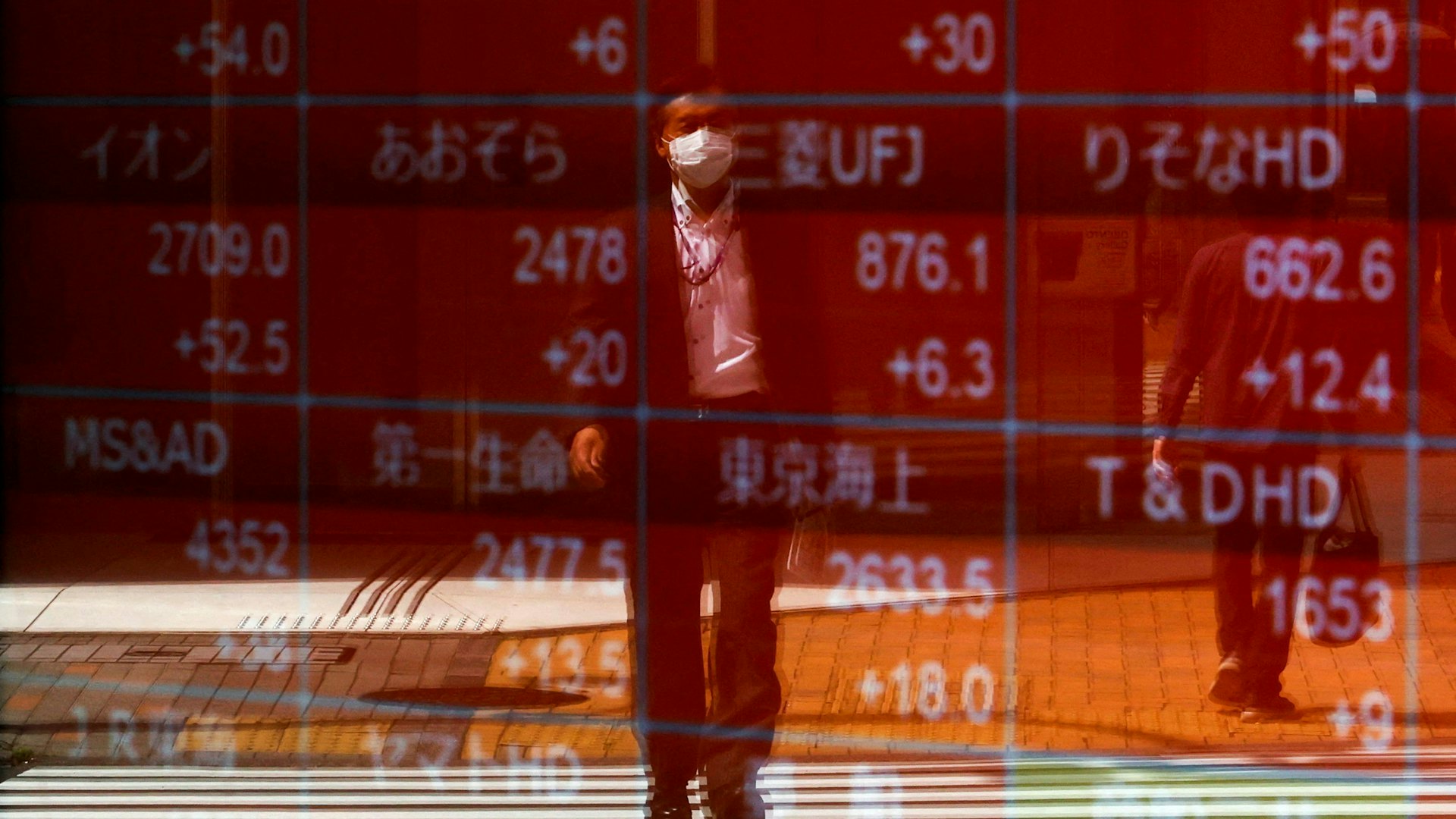
In Hong Kong, a city renowned for its financial prowess, the capital markets are quietly rewriting their narrative. In the past, whenever we discussed IPOs, the conversation inevitably revolved around profitability, cash flow, and stable financial statements. Those “cash-burning dreams” were often dismissed as too immature, relegated to the venture capital world as an insider’s game. However, over the past two years, the introduction of Chapter 18C of the Listing Rules has changed everything. The Hong Kong Stock Exchange has pushed open a door, allowing a wave of pre-profit companies armed with critical technologies to walk into the trading hall with their heads held high. This is not merely a rule tweak — it represents a fundamental shift in capital philosophy: incorporating future possibilities into today’s valuation framework.
The spirit of 18C is to shift the focus from short-term financial performance to long-term technological potential. This stands in almost complete contrast to the logic of traditional Main Board listings. Traditional IPOs ask: “How much money are you making right now?” and “How secure is your market share?” Chapter 18C, on the other hand, asks a different question: “Can the technology in your hands change the rules of the game? In three to five years, could you become the industry frontrunner?” In other words, the Hong Kong stock market used to function like a report card examiner; now it is willing to look at the draft paper — as long as that draft is impressive enough.
A few concrete examples illustrate the power of this new pathway. In June 2024, AI drug discovery company XtalPi went public, becoming the trailblazer of Chapter 18C. The company had no impressive revenue figures to boast about, yet its AI-plus-quantum-computing drug development platform convinced investors that “this is the critical gateway to the future pharmaceutical industry.” The result? Its share price rose nearly 10% on the first day of trading, raising close to HK$1 billion. This story, to a certain extent, validated the logic of 18C: the market is willing to pay for dreams, as long as those dreams carry sufficient scientific substance.
On the same 18C stage, Black Sesame Technologies had a far more turbulent experience. This autonomous driving chip company debuted in August 2024 and should have been riding the global capital wave of “intelligent driving.” Yet its share price plummeted nearly 30% on the first day. The reason was straightforward: the market still harbored doubts about its financial losses. This serves as a reminder that while 18C gives tech companies a shortcut, it is not an immunity charm. The technology narrative needs to be compelling, but capital will always ask one more question: “When will you start making money?” This is another contrast between 18C and the traditional Main Board: one values the technology narrative, the other relies on financial robustness, but both ultimately face the market’s cold scrutiny.
Consider another example — Shenzhen-based Dobot, a company specializing in collaborative robots. In December 2024, it successfully listed through 18C, raising approximately HK$700 to 800 million. Compared to Black Sesame’s volatility, Dobot’s IPO was remarkably smooth. This reflects a practical reality: if a hardware company can demonstrate clear commercial deployment scenarios — for instance, the widespread adoption of robotic arms in manufacturing or logistics — the market is more willing to believe this is a matter of “when” rather than “whether.” This is also a microcosm of the difference between 18C and the traditional Main Board: the former accepts a “future tense” narrative but still requires an imagination that “can be realized”; the latter demands “already realized” numbers.
It is worth noting that in May 2025, WeRide also filed its prospectus with the Hong Kong Stock Exchange. This L4 autonomous driving solutions company already has a certain revenue base and, compared to “pre-commercialization companies” like XtalPi, represents the “already commercialized” category. Its existence perfectly illustrates the two tracks of 18C: one for companies still in the laboratory and R&D stage, and another for tech companies that have begun commercializing but have not yet met traditional profitability requirements. This dual-track design makes 18C more like an experimental arena, capable of accommodating both “long-term dreams” and “medium-term potential” simultaneously.
Of course, it is not just drug research and autonomous driving chips. Digital twin company 51World, AI large language model enterprises, semiconductor startups, and even new energy and agricultural technology companies have all filed prospectuses, preparing to take the 18C stage. This wave of IPOs has not only broadened the industrial structure of Hong Kong stocks but has also helped Hong Kong find a new position on the global tech capital map. It is important to note that over the past decade, most of China’s new economy companies flocked to U.S. stocks or A-shares, leaving Hong Kong in a somewhat awkward position regarding the new economy. To a certain extent, 18C is designed to bring these companies back and put Hong Kong back at center stage in the technology capital arena.
However, this path is far from easy. While 18C has relaxed the profitability threshold, its requirements for R&D investment, intellectual property transparency, and “cornerstone investors” are quite stringent. Companies must prove that more than half of their operating expenses over the past three years have been devoted to R&D. They must also disclose technological feasibility, burn rate, and commercialization plans. More importantly, at least two credible independent investors must be willing to step in and endorse the company. These regulations may seem cumbersome, but their existence highlights the essence of 18C: it is not a blind gamble, but a rational bet within an institutional framework. By comparison, traditional IPOs, while procedurally rigorous, are more like academic exams; 18C is more like a venture capital horse race — just relocated to the public market.
Interestingly, 18C also allows companies to file documents through “confidential submission.” This is virtually unprecedented in Hong Kong’s past listing rules. The benefit is that companies can avoid having competitors “scoop” them before their R&D is fully disclosed. This arrangement reveals the Exchange’s strategy: it wants to attract companies that are “truly at the frontier,” not those that merely excel at packaging stories. This stands in stark contrast to the transparency requirements of traditional IPOs.
Returning to the original question: what exactly differentiates 18C from the traditional Main Board? It is essentially a transformation in values. The traditional Main Board believes in “visible financial numbers”; 18C bets on “visible technological potential.” The former is like buying a restaurant that has been operating for years — you know exactly how much revenue it generates each day. The latter is like investing in a culinary genius who is still developing new dishes but may one day revolutionize the entire food industry. Both are reasonable; only the approach to risk differs. By launching 18C, the Hong Kong Stock Exchange aims to position the Hong Kong market so that in the global technology race, it can both harvest mature enterprises and get early positioning on those still incubating the future.
So, will 18C become Hong Kong’s silver bullet? Not necessarily. Technology narratives are compelling, but the capital markets have never lacked harsh realities. Black Sesame’s share price performance has already demonstrated that the halo of technology cannot entirely overshadow financial concerns. Investor enthusiasm can ignite in an instant — and extinguish just as quickly. What truly determines the long-term value of 18C is not the rules themselves, but whether these companies can find a balance between R&D and commercialization. Those that succeed will become the new economy representatives of Hong Kong; those that fail will become an expensive experiment.
But from a broader perspective, the emergence of 18C has at least ensured that Hong Kong is no longer passive. It has opened a new narrative space for the capital markets: this is not just the domain of finance and real estate, but can also be a proving ground for AI, biotech, semiconductors, and new energy. This carries profound significance for Hong Kong’s future financial positioning. In an era where technology determines national destiny, if financial markets cannot serve technology, they will gradually lose their own value.
Chapter 18C is not merely a new listing pathway — it is a revolution in philosophy. It challenges the conservative logic of traditional IPOs by pulling “the future” into “the present.” As names like XtalPi, Black Sesame, Dobot, and Yunji Technology are written one by one onto the 18C roster, what we see is not just corporate IPOs, but Hong Kong’s market placing bets on the future, time and again. If it wins, it will reshape Hong Kong’s standing in the international capital markets. If it loses, it will have at least proven that this city is still willing to reserve a place for dreams.
Global News Daily: AI Regulation Crackdown Sounds Compliance Alarm, Digital China Report Reveals 60% AI

AiX Society Founding Chairman Michael So recently had the honour of presenting his latest AI

Introduction You’ve decided to implement WuKong in your organization. Congratulations—you’ve taken the first step toward
HKOEA Consultancy
Licence No. 59684
© 2026 Artificial Intellegence Application Research Society. All rights reserved
by Originals Group – Hong Kong, Malaysia, GBA