HKPC Speech: 40% Cost Reduction, 10x Market Growth — The Practical Logic of Expanding AI into Malaysia
HKPC speech by Michael So on expanding AI into Malaysia — covering 40% cost reduction,
Originally published in Chinese on HK01 on 2026-02-12 07:00 | By Michael C.S. So | AiX Society
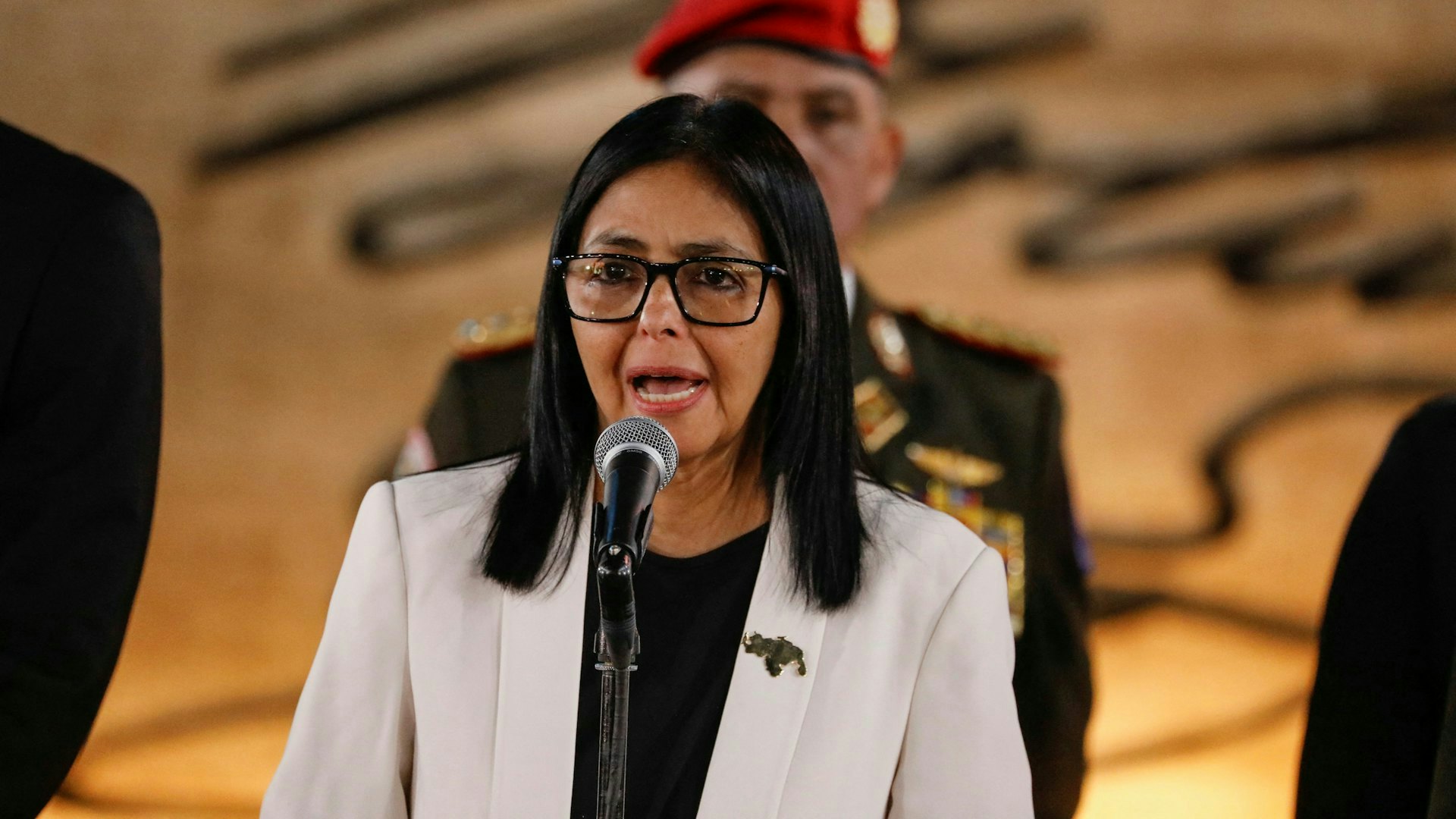
Venezuela’s political situation has once again become an international focal point. Regime change, escalating sanctions, asset freezes, and severance from financial systems — while these events carry a heavy toll for the local population, for other countries, businesses, and individuals, they serve as a clear and practical reminder: politics is never an abstract backdrop. It is a force that directly impacts the flow of assets, information, and freedom.
Events like these are neither new nor likely to be the last. From the Russia-Ukraine conflict to Iran sanctions, to the recent re-examination of tech companies, cloud services, and cross-border data flows by governments worldwide, the world is gradually entering a new phase: political risk is seeping from the “national level” down to the “enterprise level” — and even the “individual level.”
Against this backdrop, Hong Kong actually needs to ask a question sooner than most cities: Where exactly is our data stored? And is it truly under our control?
In the past, when businesses discussed political risk, the conversation rarely went beyond investment locations, supply chains, or tariff policies. But today, politics directly affects three of the most critical things: assets, accounts, and data.
Across multiple international cases, we have already seen:
These are not technology problems — they are institutional consequences of political reality.
When data, identity, and operational systems are highly concentrated on a handful of multinational platforms or within specific jurisdictions, a shift in the political wind makes risk uncontrollable.
Hong Kong has long served as a hub for international finance and information flow. This is an advantage, but it also means we are exposed to the intersection of geopolitical forces sooner than many other places.
The question is not “will something happen” but “are we prepared?”
Many businesses and professionals still harbor a misconception: as long as I haven’t done anything wrong, my data is equally safe wherever it’s stored.
But political risk is never a moral judgment — it is a byproduct of institutional choices. History has proven repeatedly that when institutions change, whether an individual is “innocent” is simply not a factor in the equation.
In the age of AI and the digital economy, data is no longer merely a technical resource — it is an asset with strategic value.
As a result, data is naturally being brought within the scope of national security, economic security, and regulatory policy.
This means that where data is stored, who owns it, whether it can be transferred, and whether it can be deleted are now political questions — not just IT decisions.
For Hong Kong, this is a critically important moment — but one where there is still time to think.
This is not about panic, nor about opposing any system. It is about returning to the most fundamental logic of risk management:
These are questions worth asking — whether you are an enterprise, an NGO, a professional, or even an individual.
Over the past few years, many companies have treated data governance as merely a way to comply with GDPR, privacy ordinances, or audit requirements. But today, data governance has elevated to a matter of organisational resilience.
A truly mature data strategy should encompass:
This is not “decentralization solves everything” — it is a realist approach to risk diversification.
Discussing political risk is not about promoting fear — it is about acknowledging how the world actually works.
Venezuela’s example reminds us once again: politics never gives advance notice, but the consequences always land on real people and real assets.
Hong Kong has long been known for its pragmatism. Pragmatism does not mean short-sightedness, and stability does not mean standing still.
In this new era where AI and geopolitics are deeply intertwined, rethinking how data is stored, controlled, and protected is not a radical act — it is responsible, modern risk management.
The question was never “will we ever need this?” — but rather: when we truly do, will we already be prepared?
HKPC speech by Michael So on expanding AI into Malaysia — covering 40% cost reduction,
By Michael So I recently held a lunch-and-learn session at the office centered on two

Last Tuesday (June 23), I had the privilege of serving as a panelist at Saint
HKOEA Consultancy
Licence No. 59684
© 2026 Artificial Intellegence Application Research Society. All rights reserved
by Originals Group – Hong Kong, Malaysia, GBA