From Pyramid to Diamond: The Management Revolution of the AI Era
By Michael So I recently held a lunch-and-learn session at the office centered on two
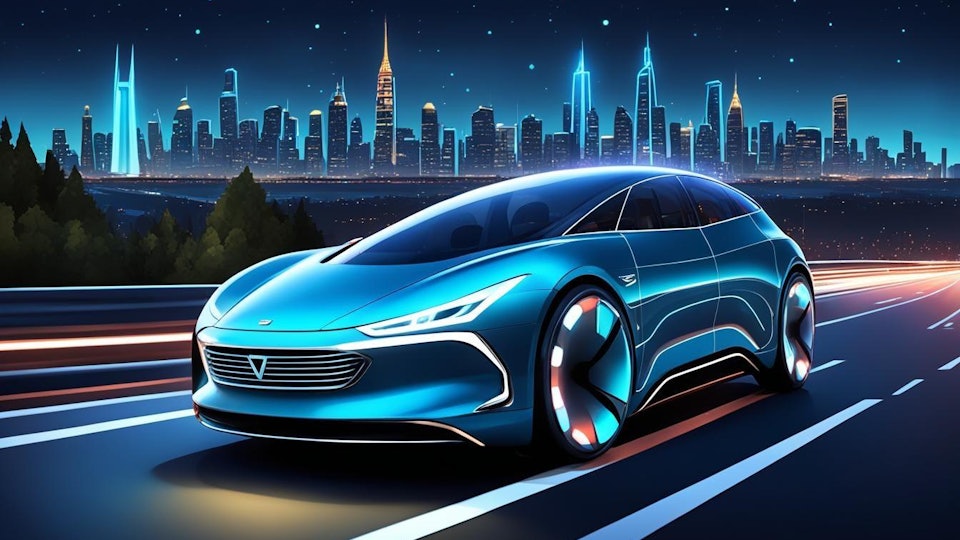
In recent years, while repeatedly restructuring different businesses and exploring new directions, I have noticed a common force quietly changing the underlying logic of every industry: the AI‑First mindset. It is not just an upgrade of tools, but a rewiring of how companies operate. Whenever I redesign company structures, product roadmaps, and service models, one company always comes to mind: Tesla.
It is not only synonymous with electric vehicles; it is a company that uses artificial intelligence to reshape industrial production and market rules. Elon Musk’s strategy shows that “AI‑First” does not mean sprinkling a bit of AI onto products, but allowing AI to permeate the entire nervous system of the enterprise and become the starting point of decisions and innovation.
From Assembly Line to Neural Network: AI’s Industrial Revolution
In Tesla’s world, every car is not just a means of transport, but a learning node. Millions of vehicles around the globe send back driving data, images, and environmental information every day. This data is analysed and trained on Tesla’s Dojo supercomputer to feed the FSD (Full Self‑Driving) system.
Dojo’s design goal is not to improve a single feature, but to give the entire company the ability to “self‑evolve”. Like a human brain, it can discover patterns in massive sensory data, predict behaviour, and adjust decisions in real time. In other words, Tesla is not simply building cars; it is nurturing a learning organism. This kind of large‑scale intelligent feedback leaves traditional carmakers far behind. Toyota and BMW still rely on external chip vendors such as NVIDIA, while Tesla develops almost all of its hardware and software in‑house. It is not a car company, but an AI industrial entity powered by data.
This model has completely flipped production logic. Inside Tesla’s Gigafactories, robotic arms, sensors, and AI models work in tight coordination. Every component and every weld is monitored and fine‑tuned in real time. AI means factories no longer rely on human experience, but on the evolution of algorithms to optimise processes. This is not automation, but “self‑learning” — the factory itself learns how to produce the next generation of products more efficiently.
Watching this shift, it becomes clear that any company wanting to stay competitive in the AI era can no longer treat AI as an add‑on feature. It must be embedded into the central nervous system of the business. AI‑First means redesigning the entire operating skeleton.
An AI‑Evolved Energy Empire
Musk’s ambitions extend far beyond cars. He uses the same AI thinking to re‑architect the energy industry. Behind Tesla Energy and SolarCity’s solar and storage systems runs an AI platform called Autobidder. It can automatically forecast electricity demand, adjust battery output, and even trade in power markets in real time to maximise returns.
What used to require engineers’ judgement can now be completed by AI in milliseconds. This means energy becomes learnable, predictable, and optimisable — in other words, energy itself becomes “intelligent”.
Musk often says: “The future energy system will operate like a neural network.” What he really means is that energy flows and data flows will merge. From solar panels to battery packs, every kilowatt‑hour is routed by AI for optimal allocation. This is AI‑First in its ultimate form at the infrastructure level.
AI at the Edge of Space and Logistics
If Tesla has rewritten transportation on Earth, SpaceX has rewritten the routes to space.
AI’s role at SpaceX mirrors its role at Tesla: rocket attitude control, fuel adjustment, and vertical landing all rely on AI models for real‑time computation. The Starlink satellite network goes further, using AI to coordinate thousands of satellites, avoid collisions, and optimise orbits. The underlying logic is the same: automatic perception, autonomous decision‑making, self‑correction.
What Musk is really doing is turning AI into a common language for both Earth and space, building an intelligent ecosystem that spans energy, transport, and communications.
AI Rewrites the Market: From Manufacturer to Operator
What fascinates me is not only how Tesla uses AI to build cars, but how it uses AI to redefine its “role in the market”.
Musk never intended to survive by simply selling cars. Once FSD reaches full autonomy, Tesla will enter its next stage: a robotaxi network. At that point, Tesla owners can let their cars accept ride requests while idle; AI will handle dispatching, routing, maintenance, and revenue sharing.
Every Tesla will effectively become a small company operated by AI. This is a completely unprecedented model: the product itself becomes a platform, and users become investors.
Future players like Uber, Lyft, and even traditional taxi and fleet operators will all face disruption from this AI‑First business model.
And this is only the beginning.
Tesla’s electric Semi Truck is moving into the autonomous driving phase. When AI can schedule fleets 24/7, monitor energy usage, and plan routes end‑to‑end, Tesla will formally step into the logistics industry. That means it will not only supply vehicles, but directly operate transport services.
This strategic shift is profound: moving from producer to operator.
When a company no longer depends on selling products, but instead runs a sleepless network system through AI, its value creation logic and cash‑flow structure change completely. In the future, Tesla may simultaneously become the largest energy company, the largest transport company, and the largest data company. AI allows it to cross boundaries, integrate, and extend itself.
AI‑First Lessons for Business Leaders
Watching Tesla’s trajectory naturally leads to reflection on the state of many Asian companies.
We are too used to treating AI as a tool for efficiency, and too few treat AI as the core of corporate architecture.
AI‑First does not mean merely introducing AI; it means letting AI determine how the business is designed, how products are built, and how organisations operate.
This demands a cultural shift at the leadership level: treating AI as a decision partner, not as a replacement for employees.
Business owners should start with three questions:
Tesla has answered these questions with real‑world practice. It places AI at the core of the company and redraws the boundaries of products, energy, transport, and space. Every step highlights the same message: AI is not about “enhancement”, it is about “rebirth”.
In re‑organising my own businesses and planning new directions, this AI‑First philosophy has become the most important reference point. It shifts the focus from “how to adopt technology” to “how to give the organisation a built‑in capacity to learn”.
If traditional businesses run on accumulated experience, AI‑First companies survive on continuous learning.
Tesla shows that once a company learns how to learn, it can keep evolving.
AI is not a future trend; it is present reality.
And Tesla is the most concrete proof of that reality.
By Michael So I recently held a lunch-and-learn session at the office centered on two
Last Tuesday (June 23), I had the privilege of serving as a panelist at Saint
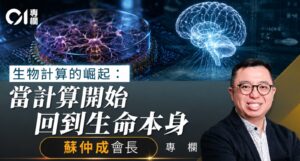
In recent years, a striking term has emerged in the technology world: biocomputing. At first
HKOEA Consultancy
Licence No. 59684
© 2026 Artificial Intellegence Application Research Society. All rights reserved
by Originals Group – Hong Kong, Malaysia, GBA