
HKPC Speech: 40% Cost Reduction, 10x Market Growth — The Practical Logic of Expanding AI into Malaysia
HKPC speech by Michael So on expanding AI into Malaysia — covering 40% cost reduction,
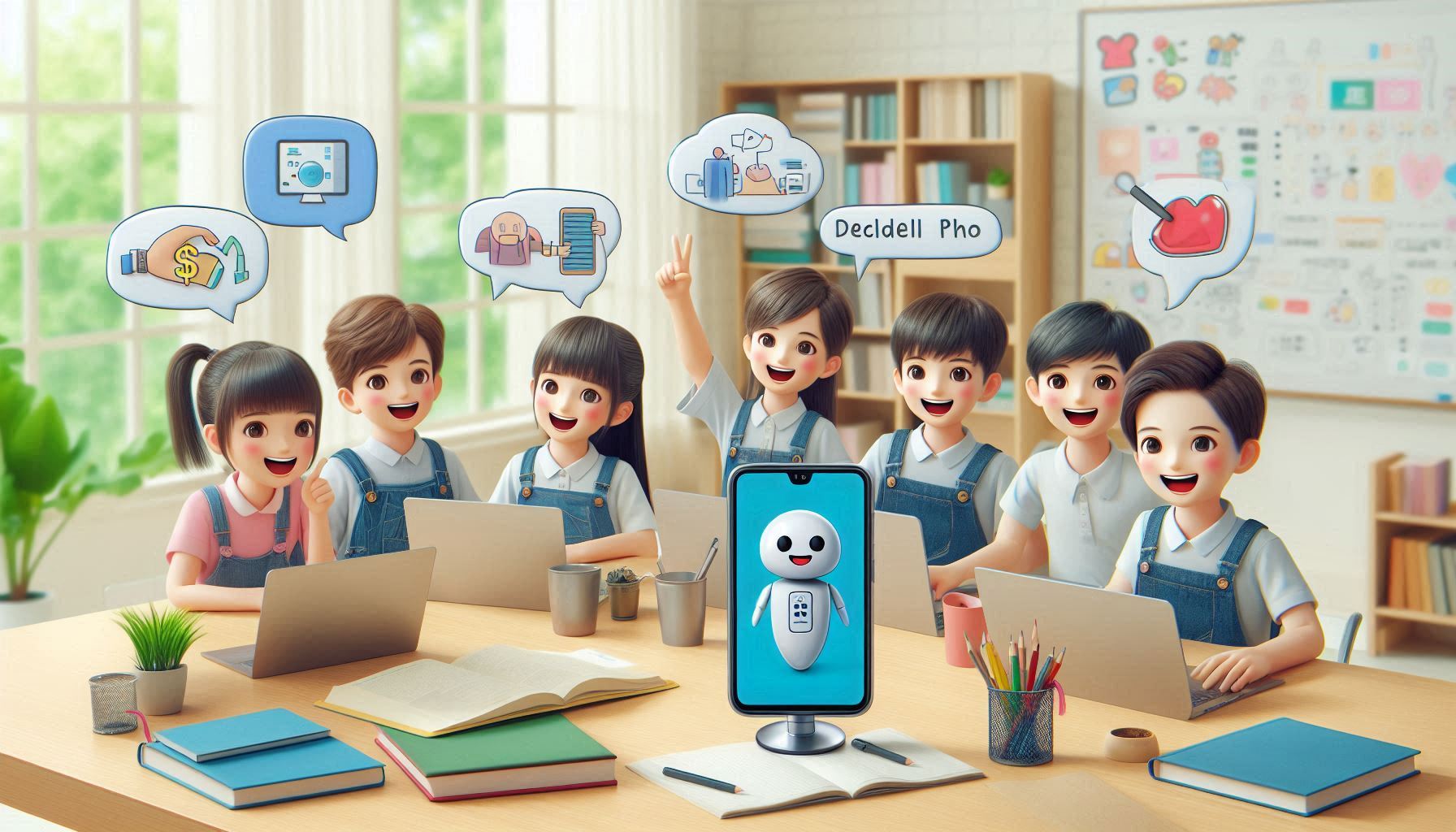
For decades, schools have struggled with digital fragmentation. Class management happens on one system, e-learning on another, and online meetings somewhere else. Teachers switch between platforms, students forget multiple logins, and administrators spend more time reconciling data than focusing on teaching outcomes.
In 2025, this model is no longer sustainable. Education must become more agile, data-driven, and interconnected — and DingTalk, Alibaba’s enterprise collaboration ecosystem, has quietly become one of the most powerful tools enabling that transformation.
Across China, and particularly in Shanghai, DingTalk’s education edition, commonly known as “DingTalk School” , has matured into a fully integrated platform serving tens of thousands of teachers and students across dozens of schools. It doesn’t just digitize school operations — it redefines what a “digital campus” truly means.
Traditional school digitalization often involves three separate teams and tools:
Each system has its own login, database, and maintenance cost. Integrating them usually means weeks of manual syncing, and the lack of unified data makes it hard to measure student engagement or teaching quality in real time.
DingTalk’s education platform solves this with an ecosystem mindset. It merges these functions into a single digital backbone, allowing schools to manage classes, learning, and communication within one secure interface.
Teachers, students, and parents log into the same platform. Attendance data automatically syncs with lesson schedules. Live lessons are automatically recorded and stored within each student’s e-learning dashboard. Homework submission, grading, and performance analytics all appear in one place.
This isn’t just convenience — it’s operational efficiency at scale.
At the heart of DingTalk’s education edition are three interconnected modules:
This is the digital nervous system of the school. Administrators can create hierarchical structures — school, grade, class, teacher, and student — with precise permissions. Teachers can set up timetables, record attendance, post announcements, and communicate directly with students and parents.
Features such as automated attendance tracking (via QR code or facial recognition), behavior and performance records, and instant messaging channels reduce paperwork and streamline day-to-day communication.
When a teacher schedules a class, DingTalk automatically generates a video meeting link and syncs it with the class calendar. No more juggling between apps or re-sending meeting IDs.
DingTalk’s learning module operates as a lightweight but robust LMS. Teachers can upload materials, assign homework, conduct quizzes, and evaluate results — all directly within the DingTalk environment.
Students, in turn, receive notifications, access interactive learning materials, and complete assignments within the same app. The system automatically tracks progress, completion rates, and time spent on each lesson.
It’s not just a storage system — it’s an intelligent assistant that builds a learning data profile for every student. Teachers can quickly identify who is falling behind or excelling, while administrators can monitor teaching effectiveness across departments.
AI-powered analytics also help identify patterns, such as subjects where students tend to spend more time or questions that commonly lead to errors, helping schools refine their curriculum design.
Video conferencing used to be an add-on. In DingTalk, it’s a native function.
The platform supports live teaching, small-group breakout sessions, and large-scale seminars — all with built-in features such as real-time translation, automatic subtitles, and AI-generated meeting notes.
These features are particularly valuable in multilingual regions like Hong Kong, Singapore, and Malaysia, where schools often mix English, Chinese, and regional languages.
After each session, DingTalk automatically stores the full recording, transcript, and AI summary under the corresponding class folder. Absent students can revisit recordings anytime, and teachers can use AI search to find key moments or student interactions.
The result: a complete digital record of teaching and learning that’s searchable, analyzable, and reusable.
Imagine this simple flow:
No data exports, no extra spreadsheets, no separate software. Everything is synchronized under one digital roof.
Fragmented digital systems create administrative friction — invisible but costly. Teachers spend up to 20–30% of their working hours on repetitive tasks such as data entry, file uploads, or cross-platform communication.
When these systems merge, that time can be redirected toward creative teaching and personalized learning.
For administrators, a unified system provides one source of truth. Every attendance record, assignment score, and meeting transcript flows into the same database. That means real-time insights — for example, which classes have declining participation, or which students have frequent absences.
This kind of data-driven governance is becoming the foundation of modern school management across China’s education system. DingTalk’s deep integration with Alibaba Cloud also ensures high scalability, reliability, and compliance with mainland data protection laws — a critical factor as schools move toward digital campuses.
DingTalk’s educational edition started as a pilot in Zhejiang and Shanghai several years ago, but it has since expanded rapidly across multiple provinces. Hundreds of schools — from kindergartens to vocational colleges — are using DingTalk to connect teachers, students, and parents.
What makes it stand out is not just the technology, but the ecosystem mindset. DingTalk isn’t positioned as a traditional LMS vendor; it’s a collaborative operating system for education.
Schools can plug in third-party tools, AI modules, or national curriculum resources directly into the DingTalk environment. Developers can even build custom apps — for example, student performance dashboards or parental engagement tools — through DingTalk’s open API framework.
In Shanghai alone, DingTalk has become part of many schools’ daily routines. Teachers use it to manage both academic and administrative workflows, while students use it for everything from submitting homework to joining online assemblies. The adoption has been so natural that in many schools, “checking DingTalk” is as normal as checking your class schedule.
Hong Kong, Malaysia, and Singapore share a common challenge: schools are highly internationalized, yet often technologically fragmented.
Most institutions still rely on multiple systems — one for attendance, one for Google Classroom or Moodle, and another for Zoom or Teams. These systems don’t talk to each other, creating gaps in communication and data management.
As Hong Kong deepens its cooperation within the Greater Bay Area (GBA), adopting mature mainland platforms like DingTalk could dramatically enhance cross-border school operations.
For example, a Hong Kong school collaborating with a Shenzhen partner could use DingTalk’s real-time translation and AI minutes to bridge language and time-zone gaps. Joint classes could be conducted seamlessly with live transcripts in both English and Chinese.
Parents in both cities could view student progress through the same app, without worrying about regional data compliance or login barriers.
In short, DingTalk’s education model isn’t just about efficiency — it’s about enabling transregional learning ecosystems that align with Asia’s interconnected education landscape.
What’s next for DingTalk’s education vision?
The integration of AI agents will likely redefine how schools operate. DingTalk’s built-in AI assistant already helps summarize meetings, translate content, and answer queries about class activities.
The next evolution could involve AI-driven tutoring, personalized study recommendations, and predictive alerts for at-risk students based on attendance and engagement data.
For administrators, AI can automatically generate reports — such as “Weekly Class Engagement Summary” or “Learning Outcome Correlation by Subject” — turning hours of manual reporting into instant insights.
In essence, DingTalk’s education platform is moving toward autonomous operations: where routine administration runs itself, allowing human educators to focus on what they do best — inspiring and guiding students.
Education digitalization isn’t about using more apps; it’s about using fewer, smarter systems.
DingTalk’s success in integrating class management, e-learning, and live conferencing into one cohesive platform marks a turning point for schools seeking modernization without complexity.
By unifying administrative control, data analytics, and teaching delivery under one ecosystem, DingTalk shows how a school — or even an entire education region — can operate as a truly connected learning community.
As Shanghai’s growing adoption demonstrates, when digital tools stop working in isolation and start communicating, education doesn’t just become more efficient — it becomes more human. Teachers spend less time on logistics and more time on mentorship. Students experience seamless learning journeys. Parents gain clarity and trust.
That is the real value of integration — not technology for its own sake, but technology that brings people, learning, and purpose together.
HKPC speech by Michael So on expanding AI into Malaysia — covering 40% cost reduction,
By Michael So I recently held a lunch-and-learn session at the office centered on two
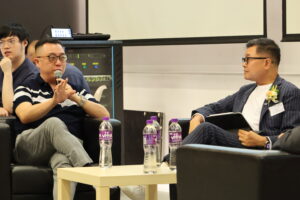
Last Tuesday (June 23), I had the privilege of serving as a panelist at Saint
HKOEA Consultancy
Licence No. 59684
© 2026 Artificial Intellegence Application Research Society. All rights reserved
by Originals Group – Hong Kong, Malaysia, GBA