

Genstore.ai: The AI-Powered E-Commerce Platform Revolutionizing Online Store Management
In today’s digital economy, launching and managing an online store has become increasingly essential for

Hong Kong’s stock market has welcomed the introduction of Chapter 18C listing rules, a revolutionary reform designed to attract high-growth technology companies, particularly those in artificial intelligence (AI), biotechnology, and autonomous vehicle sectors. This groundbreaking regulatory framework represents Hong Kong’s strategic positioning as a global tech innovation hub, offering a pathway for emerging companies that may not yet be profitable but demonstrate exceptional growth potential and technological advancement.
Understanding the 18C Framework
The 18C listing rules, officially launched in March 2022, allow innovative companies to list on the Hong Kong Exchange (HKEX) with relaxed profitability requirements. Unlike traditional listing criteria that demand consistent profitability, 18C focuses on innovation capacity, market potential, and technological advancement. Companies must demonstrate:
Success Stories: Tech Giants Embracing 18C
XtalPi: AI-Powered Drug Discovery Revolution
XtalPi, a leading AI-driven pharmaceutical technology company, became one of the first successful 18C listings. The company’s innovative platform combines artificial intelligence, quantum physics, and cloud computing to accelerate drug discovery processes. XtalPi’s technology reduces drug development timelines from years to months, representing a paradigm shift in pharmaceutical innovation.
The company’s successful IPO demonstrated investor confidence in AI-driven biotechnology solutions. XtalPi’s platform serves global pharmaceutical companies, offering computational drug discovery services that significantly reduce R&D costs while improving success rates. Their listing under 18C rules validated Hong Kong’s commitment to supporting next-generation technology companies.
Dobot: Robotics Innovation for the Masses
Dobot, a collaborative robotics company, leveraged the 18C framework to access capital markets while continuing their mission to democratize robotics technology. The company specializes in developing user-friendly robotic arms and educational robotics solutions that make automation accessible to small and medium enterprises.
Dobot’s innovative approach combines advanced robotics technology with intuitive programming interfaces, allowing non-technical users to deploy sophisticated automation solutions. Their 18C listing enabled continued investment in R&D, particularly in AI-enhanced robotics and machine learning integration.
WeRide: Autonomous Vehicle Pioneer
WeRide represents one of the most significant 18C success stories in the autonomous vehicle sector. The company’s comprehensive autonomous driving technology stack includes perception, prediction, planning, and control systems powered by advanced AI algorithms.
WeRide’s technology platform supports various vehicle types, from passenger cars to commercial delivery vehicles and public transportation. Their 18C listing provided crucial funding for continued technological development and international expansion, particularly in the rapidly growing autonomous vehicle market.
Black Sesame Technologies: Semiconductor Innovation
Black Sesame Technologies, a leader in automotive semiconductor solutions, utilized the 18C framework to accelerate their development of AI chips specifically designed for autonomous vehicles. The company’s system-on-chip (SoC) solutions integrate advanced neural processing units optimized for real-time autonomous driving applications.
Their innovative semiconductor designs address critical challenges in autonomous vehicle deployment, including power efficiency, processing speed, and real-time decision-making capabilities. The 18C listing enabled Black Sesame to compete with global semiconductor giants while maintaining focus on cutting-edge automotive AI applications.
The Broader Impact: Hong Kong as an Innovation Hub
The success of these 18C listings has positioned Hong Kong as a preferred destination for technology companies seeking public market access. The framework addresses several critical needs:
Capital Access: Traditional venture capital and private equity funding often proves insufficient for technology companies requiring substantial R&D investment. 18C provides access to public markets while maintaining focus on innovation rather than immediate profitability.
Regulatory Support: Hong Kong’s mature regulatory environment, combined with the flexibility of 18C rules, offers technology companies a stable foundation for growth while maintaining investor protection.
Global Connectivity: Hong Kong’s position as a bridge between East and West provides technology companies with access to both Asian and Western markets, facilitating international expansion and partnership opportunities.
Challenges and Considerations
Despite the success stories, 18C listings face several challenges:
Market Volatility: Technology stocks often experience significant price volatility, particularly during market downturns or regulatory uncertainty.
Profitability Timeline: Investors require clear pathways to profitability, creating pressure on companies to balance long-term innovation with near-term financial performance.
Competition: The global technology landscape remains highly competitive, requiring continuous innovation and substantial ongoing investment.
Regulatory Evolution: Technology companies must navigate evolving regulatory frameworks, particularly in areas like data privacy, AI ethics, and autonomous vehicle safety.
Future Vision: AI and Technology Innovation
The 18C framework represents more than just listing rules; it embodies Hong Kong’s vision for the future of technology innovation. As artificial intelligence continues to transform industries, Hong Kong’s commitment to supporting AI companies positions the territory as a critical player in the global technology ecosystem.
Emerging Opportunities:
Healthtech Innovation: AI-driven healthcare solutions represent enormous market opportunities, from diagnostic tools to personalized medicine platforms.
Fintech Evolution: The integration of AI into financial services continues to create new possibilities for innovation, from algorithmic trading to personalized financial advisory services.
Smart City Technologies: As cities worldwide embrace smart infrastructure, companies developing AI-powered urban solutions find growing market opportunities.
Sustainability Tech: Environmental challenges drive demand for AI-optimized sustainability solutions, from energy management to climate monitoring systems.
Strategic Recommendations for Tech Companies
Companies considering 18C listings should focus on:
Conclusion: Building the Future
The 18C listing rules have successfully attracted innovative technology companies to Hong Kong’s capital markets, creating a vibrant ecosystem for next-generation businesses. Success stories like XtalPi, Dobot, WeRide, and Black Sesame Technologies demonstrate the framework’s effectiveness in supporting companies that prioritize innovation over immediate profitability.
As artificial intelligence, biotechnology, and autonomous vehicles continue to reshape global industries, Hong Kong’s commitment to supporting technology innovation through the 18C framework positions the territory as a critical hub for the future economy. The success of early adopters paves the way for additional technology companies to leverage Hong Kong’s capital markets while pursuing breakthrough innovations that will define the next decade of technological progress.
For entrepreneurs and technology companies worldwide, the 18C framework represents an opportunity to access capital markets while maintaining focus on innovation and long-term growth. As Hong Kong continues to refine and enhance its regulatory approach to technology listings, the territory’s role as a bridge between innovation and investment becomes increasingly valuable in the global technology landscape.
The future of technology innovation depends on regulatory frameworks that support risk-taking, long-term thinking, and breakthrough development. Hong Kong’s 18C rules exemplify this approach, creating sustainable pathways for technology companies to thrive while contributing to global technological advancement and economic growth.
In today’s digital economy, launching and managing an online store has become increasingly essential for
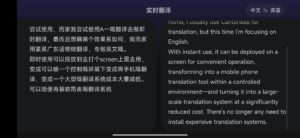
As artificial intelligence continues to migrate from software into physical devices, enterprise collaboration is entering

Over the past few weeks, one unexpected trend has exploded across tech Twitter, Reddit, and
HKOEA Consultancy
Licence No. 59684
© 2025 Artificial Intellegence Application Research Society. All rights reserved
by Originals Group – Hong Kong, Malaysia, GBA